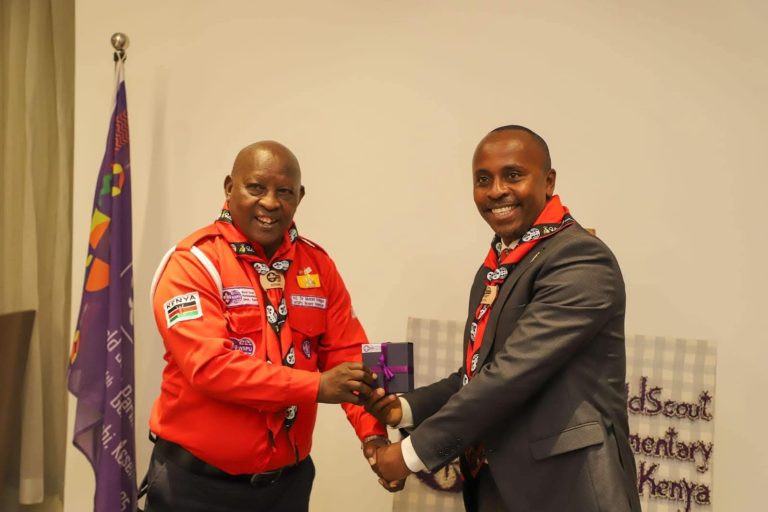
CEREB affiliated counties' leadership during a recent consultative meeting with stakeholders and development partners.

By TEAM
Worth Noting:
- In line with the mission of CEREB, ‘To promote sustainable regional socio-economic development for the welfare of citizens,’ this forum is expected to ensure that it realizes its full potential and attain high-quality life for our Bloc and its citizenry.
- A few weeks ago, Nyeri Governor Mwalimu Mutahi Kahiga waa elected the CEREB chairman.
- Others in its top leadership include Meru governor Kawira Mwangaza as the Vice Chairman, Governor Kiarie Badilisha of Nyandarua county as the Secretary with Laikipia’s Joshua Irungu being the Whip.
- Working as a team, they are expected to improve the economic status through enhancing production and productivity in the agricultural sector, promoting regional industrial and manufacturing investments, as well as developing an infrastructure network to facilitate the socio-economic development of the region.

The Central Region Economic Bloc (CEREB) is expected to unlock the area’s potential and drive its residents to the next level in the standards of living.
With the elections just concluded and a new team having taken over, the locals are optimistic that good things are on their way.
CEREB comprises on 10 counties that have their tentacles bearing at the mountain.
These are Nyeri, Laikipia, Meru, Tharaka Nithi, Embu, Kirinyaga, Murang’a, Kiambu, Nakuru and Nyandarua.
The broad objective of CEREB is influencing economies of scale in joint development projects and activities for its ten member counties.
CEREB’s national contribution through agriculture which is the country’s main economic activity stands at about 35 per cent which remains the highest compared to other similar blocks.
In line with the mission of CEREB, ‘To promote sustainable regional socio-economic development for the welfare of citizens,’ this forum is expected to ensure that it realizes its full potential and attain high-quality life for our Bloc and its citizenry.
A few weeks ago, Nyeri Governor Mwalimu Mutahi Kahiga waa elected the CEREB chairman.
Others in its top leadership include Meru governor Kawira Mwangaza as the Vice Chairman, Governor Kiarie Badilisha of Nyandarua county as the Secretary with Laikipia’s Joshua Irungu being the Whip.
Working as a team, they are expected to improve the economic status through enhancing production and productivity in the agricultural sector, promoting regional industrial and manufacturing investments, as well as developing an infrastructure network to facilitate the socio-economic development of the region.
During a high-powered round table meeting held recently in Nairobi, attended by Governors and Deputy Governors from the ten counties, development partners, donors and sponsors resolved that there is a need to share resources, such as Mt. Kenya and the Aberdares, to improve the livelihoods of people in these counties.
The meeting deliberated on areas of partnership, linkages and relationships between the ten member counties and the mutual benefit of the counties that will help them be sustainable and self-sufficient.
The Bloc is at the advanced stages of developing a one-market protocol where the counties will be amending their finance bills to align, reduce, harmonize and even scrap some levies like distribution licenses to spur manufacturing and lower the distribution cost.
This move will ensure people benefit through free trade treaties in coffee, tea, milk and other cash crops following the creation of an enabling atmosphere by national government.
During that consultative meeting, the bloc also launched its first-ever statistical abstract to allow investors to make informed choices.
Through the Bloc’s cohesion, Nyeri and Laikipia formed joint committees to harmonize cross-border issues on revenue collection and shared services.
The ten-county governments, through development partners and the national government, are helping mitigate economic difficulties facing the residents, small businesses and societies. With the help of the partners, this will open up opportunities for collaboration across such sectors as food security, trade, manufacturing, tourism and health care.
The CEREB Chief Executive Officer (CEO) Ndirangu Gachunia noted that CEREB’s place in Kenya’s economy and contribution to the GDP, leading at 26.3%, should help leverage its national position and propel it to accelerated development.
In line with the Constitution of Kenya, 2010, this provides that the Government at each level, and different governments at the county level, shall cooperate in the performance of functions and exercise of powers and, for that purpose, may set up joint committees and joint authorities.
To this end, these regional economic blocs belong to the people and are solely intended to uplift the well-being of the people within the region.
The time to actualize the Bloc’s objectives, and implement the plan, is now.
“Thankfully, resources from the national government and external partners are available; and our place in the country’s economy gives us better leverage to negotiate and create synergy,” said the CEO.
Some of the CEREB opportunities are; the region having many opportunities including a huge economy and a trading bloc of approximately Sh1.2trillion annually, availability of Natural resources like land, minerals, forests, wildlife, water towers, mountains, rivers and availability of Agricultural land for high-value crop production, horticulture and livestock production.
Other opportunities include; High population of industrious people conversant with trade, agricultural production, trade, enterprise and technology which translates to easy availability of human capital and hand labour, Good physical and service infrastructure such as hydro and geothermal power and roads.
Also in the list of opportunities are Manufacturing Industrial hub areas such as in Thika and Nakuru, Conducive investment environment in terms of social, economic, political environment and relatively high security and safety.
However, despite the many opportunities, some challenges are also exhibited.
These include; Massive sharing of health infrastructure and services against a huge population slightly more than 10 million people which comprises of about 22 percent of the country’s entire population.
Other challenges are huge recurrent health sector expenditure which stands at 35 percent of the entire allocation from the national government, most of which goes to the recurrent expenditure.
Part of the challenge also includes the fact that Income by farmers is not commensurate with the high cost of production and low-level value addition of commodities like coffee, tea, miraa, rice, horticultural produce, dairy and livestock production.
Also in the list is massive unemployment among youth who have high literacy levels, low income from internally generated revenue (data) and lack of a coordinating regional development authority.
The Nnew team is expected to maximumly utilise the opportunities as they address the challenges for the benefit of the locals.
Story complied by Nyeri County government press team and our Correspondents
Similar Posts by The Mt Kenya Times:
- Diaspora Times Global Sep 19 – Sep 25, 2026
- Tibet’s glacial catastrophe: Behind Beijing’s wall of silence, a climate disaster reshapes a region
- Museveni says Uganda overpaid for fuel through Kenyan middlemen as new terminal breaks ground
- Court orders throw KPL season kickoff into doubt
- Can Kenyans abroad become the untapped force that transforms Kenya?
About the Author