Wikimedia Foundation Announces Award Recipients Of The Open The Knowledge Journalism Awards
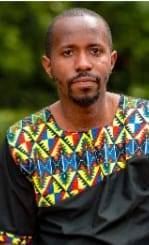
Carlos Mureithi

Kenyan Journalist Carlos Mureithi Receives The First-Place Award Worth KSh300,000
By Our Correspondent
Worth Noting:
- Earlier this year, the Wikimedia Foundation launched the Open the Knowledge Journalism Awards to celebrate the essential role journalists play in creating well-researched articles that volunteer editors can use as source materials to develop content on Wikipedia and other Wikimedia projects.
- Their work helps to grow the knowledge base on one of the world’s most visited websites.
- Between May 3 to June 30, African journalists living on the continent were invited to self-nominate articles they had written that help expand knowledge about Africa under the following categories: Arts, Culture, Heritage, and Sports; Health, Climate Change, and Environment; Women and Youth; Digital and Human Rights.

The Wikimedia Foundation, the non-profit that hosts Wikipedia and other Wikimedia projects has announced the award recipients of the first Open the Knowledge Journalism Awards.
Journalist Carlos Mureithi from Kenya was declared the first place award recipient for the article “How a ‘headstrong historian’ is rewriting Kenya’s colonial history”, published in the Christian Science Monitor in January 2023.
Mureithi’s article profiles Chao Tayiana Maina, a Kenyan historian and Dan David Prize winner who is uncovering buried and overlooked segments of Kenya’s history under the colonial era.
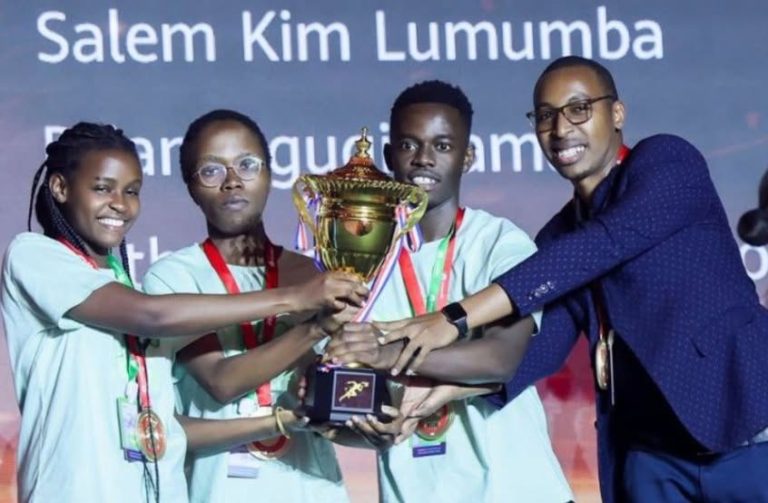
He was presented the award at Wiki Indaba 2023 held over the weekend at an annual gathering of Wikimedia communities across Africa held in Agadir, Morocco.
Earlier this year, the Wikimedia Foundation launched the Open the Knowledge Journalism Awards to celebrate the essential role journalists play in creating well-researched articles that volunteer editors can use as source materials to develop content on Wikipedia and other Wikimedia projects.
Their work helps to grow the knowledge base on one of the world’s most visited websites.
Between May 3 to June 30, African journalists living on the continent were invited to self-nominate articles they had written that help expand knowledge about Africa under the following categories: Arts, Culture, Heritage, and Sports; Health, Climate Change, and Environment; Women and Youth; Digital and Human Rights.
In total 2,110 submissions were received from 37 African countries.
Mureithi’s story shows the importance of filling historical gaps and making history accessible to people.
This recognition validates my work to tell stories of African changemakers and put their voices on the global stage.”
The second place award went to Nigeria’s Osaruonamen Ibizugbe, for her article “FGM: Survivors narrate experiences dealing with absence of the clitoris”, published in the Premium Times in January 2023.
It highlights the stories of women who have experienced female genital mutilation (FGM), and details its negative effects. It highlights the voices of women who often go unheard.
Anusha Alikhan, Chief Communications Officer at the Wikimedia Foundation, said, “We congratulate everyone that has been recognised in this year’s Open the Knowledge Journalism Awards. Their reporting helps to close knowledge gaps on Wikipedia and ensure that the topics, events and perspectives of Africans are there for the billions who visit the site. Wikipedia articles can’t exist without reliable sources. We need more stories like these that help volunteer editors to grow the knowledge base on Wikipedia so that it is more reflective of our world.”
Four other outstanding articles also received Special Mentions in each of the award’s four categories, including: Arts, Culture, Heritage, and Sports – Aanu Adeoye (Nigeria), “The Benin Bronzes and the road to restitution”, (Financial Times); Digital and Human Rights – Philip Obaje Jr. (Nigeria), “The silencing of Sudan’s journalists – again”, (Al Jazeera Journalism Review); Health, Climate
Change, and Environment – Jackson Ambole (Kenya), “How Mombasa’s yoghurt cups powered a reforestation drive”, (Al Jazeera); Women and Youth – Jacqueline Muchazoreka (Zimbabwe), “The story of how a Zimbabwean woman treated obstetric fistula despite criticism from her church & community” (BellaNaija).
Currently, only 104,000 articles of over 6 million English Wikipedia articles (1.5%) are about Africa. This issue reflects content gaps in the wider media ecosystem; new information can only be added to Wikipedia by volunteer editors if it is supported by a citation from a published, reliable source.
Wikipedia is the largest encyclopedia ever assembled. Its knowledge is built on information that is supported by many sources, including news stories. Having a diversity of stories written by a diversity of people is vital to ensuring the encyclopedia is representative of many views, experiences and perspectives.
Olaniyan Ishola Oulushola, President of Wikimedia Nigeria, a group of Wikimedia volunteers in Nigeria, said, “The Open the Knowledge Journalism Awards, has enabled us to cultivate an impressive repository of more than 2,000 quality articles thoughtfully submitted by African journalists for this prestigious recognition. These articles will help facilitate the curation of thematic stories that can enrich Wikipedia’s representation of African heritage. Furthermore, the Awards mirror the cherished African tradition of honoring and motivating those who distinguish themselves in their chosen paths, thus contributing to celebrating the excellence of African journalism.”
This year’s award categories and recipients were decided upon by the Wikimedia Foundation and a working group of volunteer African Wikimedia editors, as well as a group of external experts from across the fields of media, and academia on the continent.
This article was filed by Gugu Mthimkhulu, a Media Consultant based in South Africa
Similar Posts by The Mt Kenya Times:
- Mt Kenya Times ePAPER September 7, 2026
- Lesuuda crosses the floor — and takes Samburu with her
- The Rift Valley is not Ruto’s anymore — and DCP is making sure everyone knows it
- Kalonzo and Muturi march into Gachagua country
- Faith and politics travel together for Gachagua in Washington State
About the Author