NTSA’s road safety crackdown: Duplicated mandates, demoralised police and the question of value for money
 The Mt Kenya Times
By Fredrick Kipchumba Chelimo – PWD
Email; fkipchelimo@yahoo.com
“Road safety is measured by the lives saved, not the number of motorists stopped, number plates removed or penalties collected. When enforcement becomes a spectacle and institutions compete for authority, the nation must ask whether public safety is being served or bureaucracy is merely protecting its own existence.”
Kenya’s persistent road carnage has become a national tragedy whose consequences extend far beyond accident statistics. Every fatal crash leaves behind grieving families, orphaned children, lost breadwinners and households pushed into financial distress. Behind every statistic is a human life that could have been saved through responsible driving, effective enforcement, safer roads and accountable institutions. The National Transport and Safety Authority’s latest Msimu Bila Ajali, Usalama Barabarani campaign, launched ahead of the festive travel season, addresses genuine dangers, including speeding, drunk driving, overloading and driver fatigue. Yet the persistence of these familiar problems, despite years of investment in road safety institutions, demands a difficult question: are our interventions producing results commensurate with the public resources committed to them?
The available statistics make this question unavoidable. According to the National Transport and Safety Authority’s road safety reporting, Kenya recorded approximately 4,748 road fatalities in 2023, compared with 4,690 in 2022. The National Police Service and NTSA subsequently reported 4,748 deaths in 2023 and approximately 4,311 in 2024, reflecting a decline that offered some hope but remained devastatingly high. These figures must be interpreted alongside differences in reporting periods and classifications, rather than treated as proof of a single uninterrupted upward trend. Nevertheless, thousands of deaths annually demonstrate that the country has not yet achieved a satisfactory road safety outcome. The continuing scale of preventable loss raises legitimate questions about the effectiveness of existing strategies, institutional coordination and the value taxpayers receive from road safety expenditure.
Since its establishment under the National Transport and Safety Authority Act, No. 33 of 2012, NTSA has been entrusted with regulating transport, licensing drivers, inspecting vehicles, promoting road safety and coordinating relevant interventions. These are substantial responsibilities, supported by public funding, administrative infrastructure, technology and enforcement-related operations. Yet the existence of an authority, the visibility of its campaigns and the number of vehicles inspected cannot, on their own, establish success. A serious assessment must examine whether fatalities and serious injuries are declining, whether dangerous repeat offenders are being deterred, whether defective vehicles are being removed from service and whether accident blackspots are receiving timely attention. Public institutions must ultimately be judged by outcomes, not activity reports.
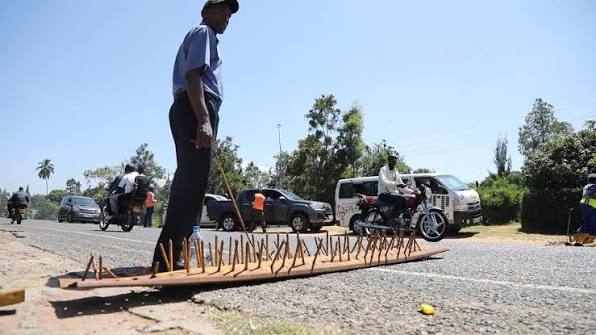
The present enforcement approach also raises concerns about the relationship between NTSA and the Kenya Police Service. Roadside operations involving vehicle inspections, the removal of number plates and the interruption of motorists’ journeys can be justified where the law authorises them. However, temporary, poorly coordinated or unprofessional, impromptu campaigns risk creating the impression that one institution is asserting superiority over another. Police traffic officers have long carried the operational responsibility for enforcing traffic laws, apprehending offenders, managing traffic incidents and maintaining order on public roads. An arrangement that appears to subordinate, sideline or demoralise these officers undermines institutional confidence and public accountability. Cooperation is essential, but cooperation must rest on clearly defined responsibilities, mutual professional respect and a transparent command structure—not competition for authority.
The legal framework itself requires careful scrutiny. Section 4 of the NTSA Act establishes the Authority’s regulatory and road safety functions, including vehicle registration, inspection, public service vehicle regulation, driver licensing, research, education and accident analysis. Section 42 also addresses powers relating to stopping and inspecting vehicles. Meanwhile, section 106 of the Traffic Act, Cap. 403, provides for specified vehicle prohibitions and related enforcement measures, including circumstances in which identification plates and vehicle licences may be removed. Section 106(6) requires the relevant prohibition order to be in writing. These provisions must be read together with the applicable regulations and the legal powers of authorised officers. The concern is not that every NTSA operation is unlawful, but that overlapping powers without clear operational boundaries can create confusion, inconsistent enforcement and uncertainty over who bears responsibility when things go wrong.
Kenya should establish a more coherent division of labour. NTSA should concentrate on technical regulation, licensing standards, vehicle inspection systems, driver education, accident research, safety policy and evidence-based prevention. The police should retain clear operational leadership in routine traffic enforcement, apprehension, incident management and public order, supported by NTSA’s technical expertise and reliable data. Joint operations should be governed by written protocols defining leadership, accountability, communication and the lawful exercise of powers. Such reforms would strengthen both institutions while reducing duplication, friction and unnecessary disruption to motorists.
There is also a legitimate public concern that highly visible crackdowns may prioritise roadside penalties over lasting safety improvements. It would be irresponsible to claim, without audited evidence, that these campaigns exist primarily to generate revenue. Nevertheless, taxpayers deserve transparent accounts of expenditure, collections and measurable results. How much is spent on enforcement campaigns, and how many deaths and serious injuries are prevented? Are dangerous roads being redesigned, speed management strengthened and emergency response improved? Are repeat offenders being deterred? These are more meaningful measures of success than the number of motorists stopped or number plates removed.
Ultimately, NTSA must justify its institutional footprint through demonstrable public value. Parliament should review its mandate, eliminate unnecessary duplication and establish independently verifiable performance targets. If a reformed Authority cannot demonstrate that its essential functions are effective, necessary and more efficiently delivered within existing government institutions, transferring those functions and abolishing the Authority should remain legitimate options. Institutional survival must never take precedence over public safety.
Kenya deserves safer highways, professional and respected police officers, accountable regulators and fewer families condemned to bury their loved ones. Reform the system, clarify the law and measure results honestly. If NTSA cannot justify its existence after meaningful reform, its continued existence should not be beyond question.
“Taxpayers do not finance institutions merely to witness displays of authority; they finance them to protect human life. The ultimate verdict on road safety will not be written in the number plates removed today, but in the number of Kenyan families spared the agony of burying their loved ones tomorrow.”
Similar Posts by The Mt Kenya Times:
- Kenya’s 2027 election: Will political alliances and the fight over transparency decide who wins State House?
- 10 media personalities who never studied journalism
- Yvonne Okwara begins a new chapter at Shuga Global
- No ODM, no State House: Kaluma warns Ruto on 2027 coalition terms
- Raila Odinga Stadium: A political arena in Kenya’s defining election season
About the Author