No ODM, no State House: Kaluma warns Ruto on 2027 coalition terms
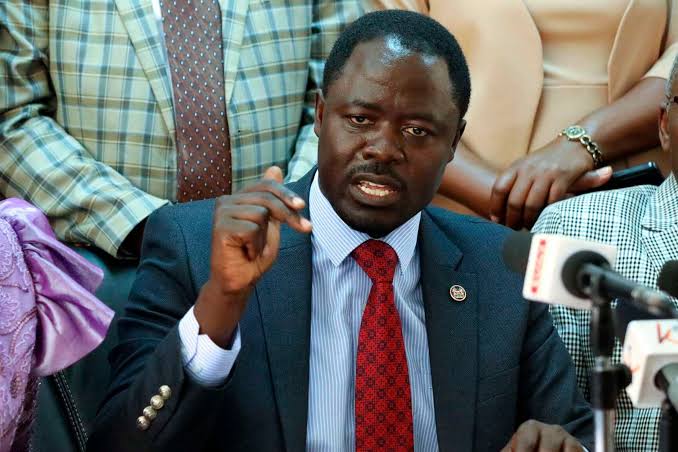
Homa Bay Town MP Peter Kaluma
The Homa Bay MP puts Kenya’s ruling administration on notice as ODM raises the stakes ahead of the next general election
By Yvonne Wambui
With Kenya’s 2027 general election drawing closer by the day, the conversations around political alliances are growing louder — and sharper. Homa Bay Town MP Peter Kaluma has placed himself at the centre of one of the country’s most watched political debates: just how much does President William Ruto need the Orange Democratic Movement, and what happens if he does not have it?
Kaluma has been direct and unapologetic in his position. Speaking in recent weeks, he argued that ODM must secure meaningful representation in any pre-election coalition or walk away entirely. The message, stripped of diplomatic language, is simple: no ODM, no State House. It is the kind of political warning that tends to cut through the noise, and it has done exactly that.
The MP’s remarks reflect a deeper anxiety within ODM about the party’s standing in Kenya’s fluid political landscape. Since joining the broad-based government, the party has faced persistent questions from its own supporters about whether cooperation with a former political rival has come at too high a price. Kaluma’s hard line appears, in part, to be a response to that pressure — a signal that ODM is not simply along for the ride.
The party’s influence remains considerable, particularly in the Nyanza region where it commands a loyal and sizable voter base. For Ruto, whose 2027 campaign will depend on assembling the broadest possible coalition, that kind of regional muscle matters. Losing ODM’s support would not necessarily end his re-election bid, but it would complicate the arithmetic considerably — and open the door to rival candidates eager to fill the gap.
Yet elections are rarely decided by endorsements alone. Kenyans going to the ballot in 2027 will weigh their choices against lived experience: the cost of bread, school fees, job prospects and whether the government’s promises translated into anything tangible. That is the terrain on which Ruto’s campaign will ultimately be won or lost, regardless of which parties stand beside him.
Inside ODM, the debate is far from settled. Some leaders remain committed to working with the administration, while others argue the party should maintain a degree of independence and be willing to challenge government when necessary. Holding those two positions together without fracturing the party’s unity will test the leadership’s political dexterity in the months ahead.
What is beyond dispute is that ordinary Kenyans — young people chasing scarce jobs, families stretched by rising household costs, students anxious about fees — are watching all of this with weary eyes. They have seen political alliances form and dissolve before, often with little consequence for daily life.
The politicians negotiating in Nairobi’s boardrooms and public rallies would do well to remember that. Kenya’s voters are not passive spectators. In 2027, as in every election before it, they will have the final word.
Similar Posts by The Mt Kenya Times:
- Jubilee’s coalition gambit: The opposition clock is ticking towards 2027
- From Moscow with ambition: Ruto bets on Russia to rewrite Kenya’s economic story before 2027
- Kenya’s 2027 election: Will political alliances and the fight over transparency decide who wins State House?
- 10 media personalities who never studied journalism
- Yvonne Okwara begins a new chapter at Shuga Global
About the Author