Kenya’s 2027 election: Will political alliances and the fight over transparency decide who wins State House?
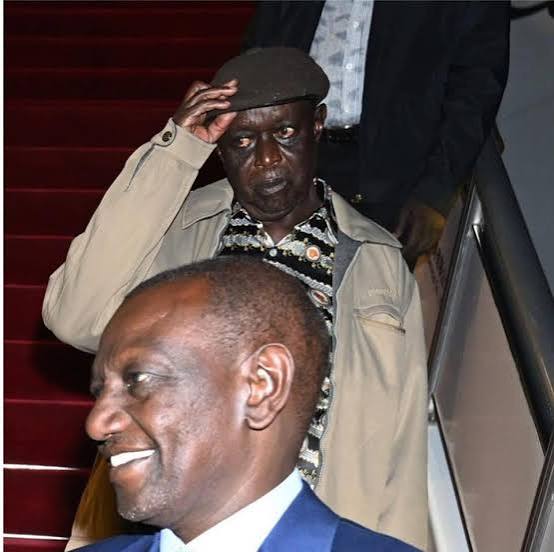
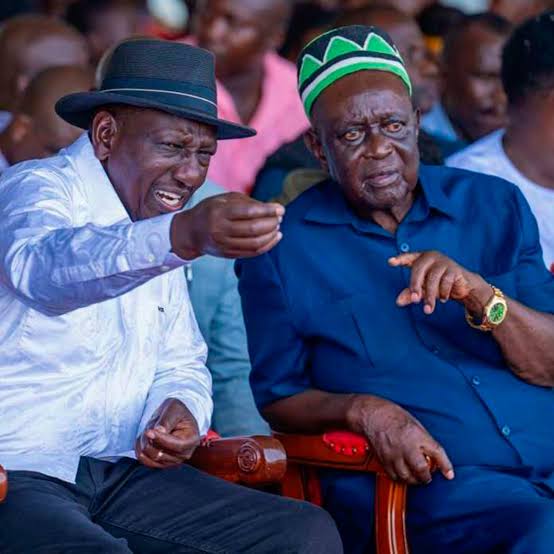
President William Ruto and Oburu Odinga
As coalitions take shape and disputes over electoral law intensify, the contest for Kenya’s next presidency is already under way
By Collins Kibet
Kenya’s road to the 2027 general election is entering a critical stretch. Political parties are accelerating coalition talks, debates over electoral transparency are drawing public scrutiny, and the country’s institutions are quietly preparing for the disputes that competitive elections almost always produce. With President William Ruto seeking a second term and opposition leaders testing various political arrangements, the emerging contest is shaping up as something more than a numbers game. It is, at its core, a test of whether Kenya’s political class can deliver an election that genuinely reflects the will of its people.
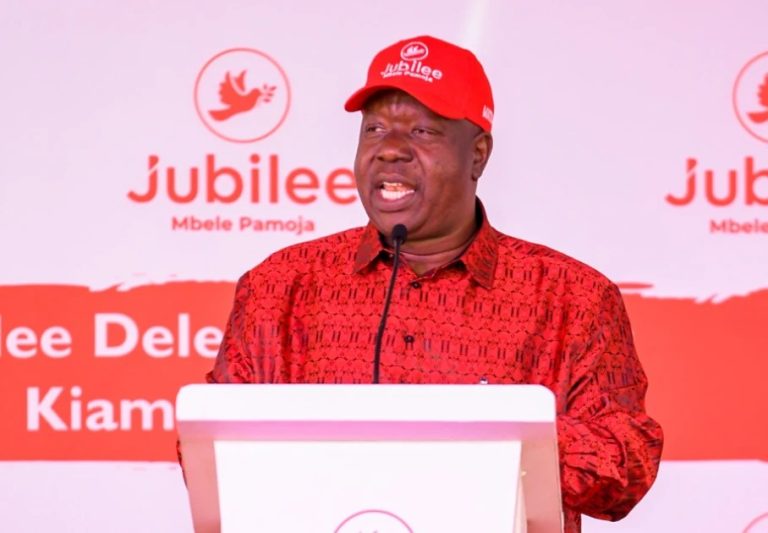
One of the most significant recent developments came yesterday when Jubilee Party announced the formation of an inter-party coalition-building committee tasked with engaging opposition formations ahead of 2027. The decision followed a National Executive Committee meeting chaired by party leader Fred Matiang’i on Monday. The committee, chaired by former Muranga Senator Kembi Gitura and including National Secretary General Moitalel Ole Kenta and Janet Ong’era, is mandated to review the draft agreement for the Ukombozi Alliance, explore partnerships with like-minded parties and develop proposals to strengthen opposition cooperation.
The announcement signals that coalition negotiations are moving, though it would be premature to read it as the conclusion of a final opposition presidential ticket or a comprehensive alliance agreement. The final structure of any opposition front — its candidate, its policy platform and the distribution of roles within the coalition — remains to be formally settled.
Jubilee has simultaneously reaffirmed its association with the Azimio la Umoja One Kenya Alliance, reinforcing the argument for coordinated opposition strategy. Political engagements involving figures such as Martha Karua have added further fuel to speculation about a united front. Yet public appearances and consultations, however high-profile, are not binding agreements. Voters would do well to watch for formal announcements rather than reading too much into campaign-trail choreography.
The deeper challenge facing the opposition is not simply assembling a list of parties but constructing a credible national alternative — one capable of attracting support across Kenya’s diverse regions and beyond its traditional strongholds. Alliances can amplify political weight, but they succeed only when parties agree on leadership, policy priorities, candidate selection and the management of competing ambitions. If individual interests come to dominate the negotiating table at the expense of a shared programme, the opposition risks squandering an opportunity that the electorate is watching closely.
A genuinely persuasive opposition would need to go beyond rallies and seat-sharing arithmetic. A coherent programme addressing unemployment, corruption, public debt, healthcare, education and the cost of living would give voters a reason to switch allegiances — something that political positioning alone rarely achieves. Kenyans in 2027 will want to know not merely who wants to occupy State House, but what they plan to do once they get there.
Electoral transparency has meanwhile emerged as one of the sharpest fault lines in the pre-election period. The People’s Coalition on Electoral Reforms — whose public figures include former Chief Justice David Maraga — criticised Parliament’s handling of proposed changes to election-result procedures earlier this week. The dispute centres on amendments to the Elections Act governing the counting, transmission and declaration of results. The reform coalition is calling for results to be declared at polling stations, for regular electronic updates on voter turnout and for an open national results-aggregation process.
Ruto dismissed claims that the amended law prohibits the livestreaming of election results, describing such assertions as misinformation. The competing interpretations surrounding the legislation deserve careful examination. Political allegations should not be treated as established fact without supporting evidence, but equally, assurances from those in power cannot substitute for clear legal provisions and effective independent oversight. What the public needs — and deserves — is a precise, publicly accessible explanation of what the law actually requires, how results will be verified and which mechanisms exist to challenge irregularities.
The Judiciary, for its part, is not waiting to find out. Yesterday, Chief Justice Martha Koome confirmed that alternative channels — including email and physical document submissions — would be available should the Judiciary’s electronic case-tracking system become unavailable during the election period. The measures are intended to ensure that technical failures or cyberattacks cannot obstruct access to justice at a moment when election petitions must meet strict legal deadlines. More than 400 judges, judicial officers and relevant personnel are currently being trained in election-dispute resolution.
These preparations matter because credible elections require far more than ballots cast and counted. They require impartial institutions capable of resolving disputes fairly, swiftly and within the law. Disputes over party nominations, candidate eligibility and other electoral processes can spiral into uncertainty if not addressed through established procedures. A well-prepared Judiciary reduces the risk that political confrontation fills the vacuum that legal uncertainty creates.
Concerns about political violence are also surfacing, with rights groups renewing calls for investigations into reported incidents. Such concerns warrant serious attention, though allegations must be properly investigated before responsibility is attributed to specific individuals, parties or state agencies. Security forces have a duty to enforce the law without favour, while political leaders must recognise that inflammatory rhetoric — particularly where electoral competition overlaps with historical local grievances — can harden divisions and encourage the very disorder that weakens democracy.
Peaceful elections are not guaranteed by declarations of goodwill. They are built through consistent respect for constitutional rights, accountability for offences and the protection of every citizen’s ability to attend rallies, express opinions and support candidates without fear.
Beyond alliances and procedures, economic conditions will ultimately shape what Kenyans decide at the ballot. Households battling food prices, transport costs, unemployment and shrinking economic opportunity will expect candidates to explain — concretely — how their policies can improve daily life. The government will defend its record; the opposition will argue the case for change. Neither should be taken at its word without scrutiny. Voters need measurable proposals, credible financing plans and honest accounting of what has and has not been delivered.
The 2027 election should therefore be about more than personalities, regional calculations and the mechanics of political power. It should be a genuine contest of ideas. Coalitions may reshape the political landscape, but unity alone has never won an election — nor should it. The decisive question is whether Kenya’s leaders can place citizens’ interests above political expediency and whether the country’s institutions can earn the trust that democracy requires.
That is a responsibility shared by politicians, electoral bodies, civil society, the media and every Kenyan who will walk into a polling booth in 2027.
Similar Posts by The Mt Kenya Times:
- Mt Kenya Times ePAPER October 29, 2026
- Ruto courts Moscow as Africa’s big powers rewrite the rules of engagement
- The running-mate puzzle: Who blinks first?
- Jubilee’s coalition gambit: The opposition clock is ticking towards 2027
- From Moscow with ambition: Ruto bets on Russia to rewrite Kenya’s economic story before 2027
About the Author