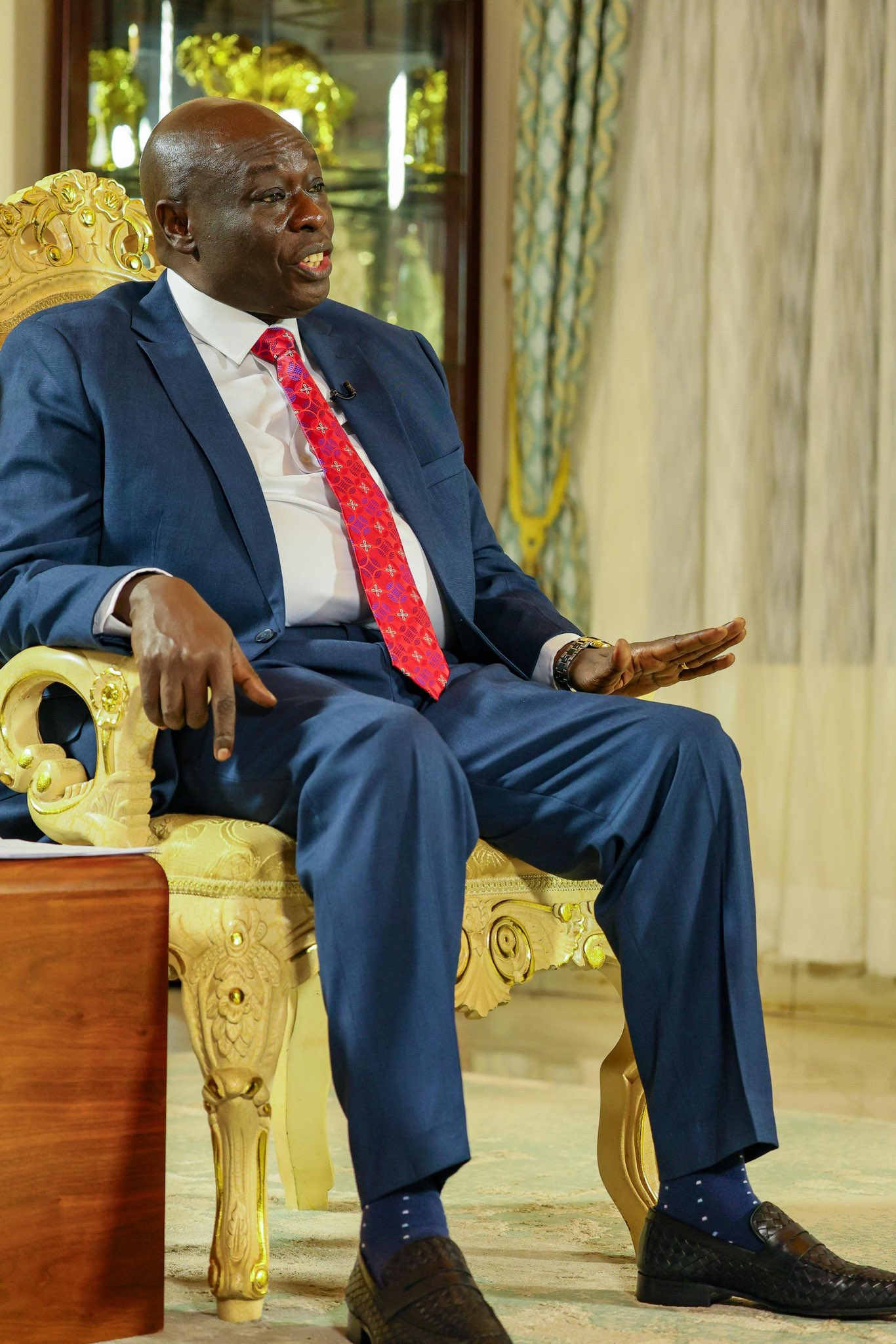
Former Deputy President Rigathi Gachagua
With 2027 closing in, Gachagua’s KTN interview lays bare the high-stakes gamble facing both Ruto and a consolidating opposition
By James Mwangi
Former Deputy President Rigathi Gachagua yesterday named Deputy President Kithure Kindiki, Kirinyaga Governor Anne Waiguru, Kikuyu MP Kimani Ichung’wah, former Agriculture minister Mwangi Kiunjuri and former Kakamega Governor Wycliffe Oparanya as the names circling the running-mate question for 2027, declaring in a combative KTN interview that President William Ruto faces a considerably harder choice than the opposition in deciding who stands beside him on the ballot next August.
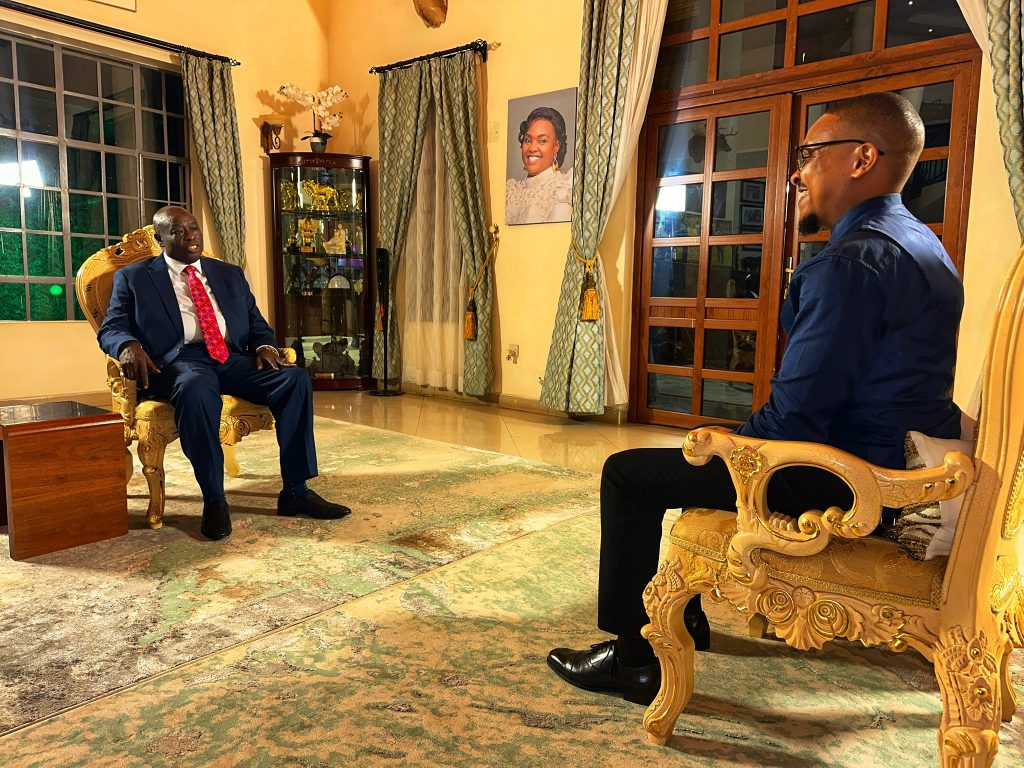
The interview, streamed live and widely shared, was one of Gachagua’s most expansive public appearances since his dramatic impeachment from the deputy presidency in October 2024. It covered ground that ranged from coalition politics and public finance to press freedom, the Moi family’s assets and the shifting mood of Mount Kenya — a region whose electoral weight remains, as it has been for three decades, the single most consequential variable in any Kenyan presidential contest. What emerged was a portrait of a man who has lost none of his political sharpness and who is, by all observable evidence, building something with considerable intent.
On the running-mate question, Gachagua argued that Ruto’s dilemma is more acute than it appears. The president must choose a deputy who consolidates his existing base without alienating the coalition partners he needs, who carries regional credibility without triggering resentment elsewhere, and who is capable enough to serve without becoming a political threat. Each of the names Gachagua floated carries a different set of advantages and complications. Kindiki brings administrative gravitas and a Mount Kenya profile but remains closely associated with the current administration’s most contested decisions. Waiguru offers gender diversity and Gikuyu community roots but has navigated her own political controversies. Ichung’wah is a sharp parliamentary operator but may be too closely identified with the Kenya Kwanza inner circle to bring genuine new votes. Kiunjuri and Oparanya represent potential bridge-building across party lines, though the durability of such bridges in Kenya’s volatile political environment is never guaranteed.
The opposition’s running-mate calculation, while equally consequential, benefits from a different kind of flexibility. A unified opposition front — still being assembled, still subject to the competing ambitions that have wrecked previous coalitions — has more room to be strategic about geography and demographics without the burden of an incumbency record to defend. Gachagua himself, whose political future remains one of the most watched questions in Kenyan politics, has not ruled himself out of the equation, though he spoke yesterday more as kingmaker than candidate.
On the substance of governance, Gachagua was at his most pointed. He pushed back directly against what he characterised as the Ruto administration’s tendency to conflate government infrastructure spending with personal political achievement. “Kenyans know that development is not the personal responsibility of William Ruto,” he said. “Development is done with taxpayers’ money. Any president will continue with development. What we want is a president who will use public resources prudently, not steal them.” The line was precise, carefully worded and clearly designed for circulation — a campaign-ready formulation that strips away the incumbent’s strongest argument and reframes the 2027 debate around accountability rather than achievement.
It is a framing that reflects a broader strategic calculation within the emerging opposition. Rather than contesting the government’s list of completed projects, which can always be disputed, Gachagua and his allies are attempting to shift the conversation to how public money has been managed, who has benefited and whether the ordinary Kenyan’s daily reality has genuinely improved. Given the persistent public anxiety over the cost of living, fuel prices, school fees and unemployment, it is a terrain on which the opposition believes it can win.
The interview also offered a revealing window into the opposition’s coalition architecture. Gachagua spoke warmly and at some length about his growing relationship with ODM’s Nairobi Senator Edwin Sifuna, describing the alliance as something close to destiny. “The advent of Sifuna is God-sent, and I welcomed it wholeheartedly,” he said, adding that he had hosted Sifuna at his Wamunyoro home — a gesture laden with symbolic significance in a political culture where hospitality carries meaning. The Gachagua-Sifuna axis represents an attempt to bridge the historically fraught divide between Mount Kenya and Nyanza, the two electoral blocs whose alignment or antagonism has determined the outcome of every Kenyan presidential election in the multiparty era.
Whether that bridge holds under the pressure of a full campaign is another matter. Kenya’s political history is littered with promising cross-regional alliances that dissolved when the distribution of power became concrete rather than aspirational. Gachagua is aware of this. His public statements have been carefully calibrated to signal unity without over-committing to arrangements that have not yet been formally concluded.
On the subject of Mount Kenya’s political mood, Gachagua was unambiguous. He delivered a sharp warning to any leader within the region who might be tempted to attack former President Uhuru Kenyatta as part of a broader political realignment. “Any leader from the mountain who abuses former President Uhuru Kenyatta will not get a forum anywhere in the mountain to say anything,” he said. “The insults against a retired president are too much. Enough is enough.” The statement was a reminder that Gachagua continues to see himself as a custodian of the region’s political dignity — and that Kenyatta’s standing within Mount Kenya, despite his complicated relationship with the electorate in recent years, remains a factor that ambitious politicians ignore at their peril.
Gachagua also turned his attention to the ongoing controversy surrounding the Moi family’s assets, weighing in with language that was both protective of a political legacy and pointedly critical of the current administration’s approach. “You cannot take Moi’s property. Moi is dead. He served this country with distinction,” he said. “I want to ask William Ruto tonight to leave the Moi family alone and to know he is setting a very dangerous precedent as president.” The intervention is significant not merely for what it says about the Moi family but for what it signals about Gachagua’s broader political positioning — as a defender of institutional norms and historical legacies against what he characterises as an administration willing to bend rules for political convenience.
On press freedom, he expressed solidarity with journalist Alex Kiprotich while casting doubt on the integrity of any official investigation. “Give my condolences to Editor Alex Kiprotich. I wish him well and tell him not to be intimidated,” he said. “However, there is nothing that will come out of those investigations. That attack on Alex was done by the DCI. So, how can they investigate themselves?” The remark speaks to a wider anxiety among Kenya’s media community about the safety of journalists and the independence of investigative institutions as the country moves into a politically charged pre-election period.
Taken together, yesterday’s interview was less a series of statements and more a comprehensive political manifesto — a declaration of intent from a man who left the deputy presidency under pressure but has no apparent intention of leaving the national stage. The running-mate puzzle, the coalition negotiations, the battle for Mount Kenya’s soul and the fight over the government’s record will all intensify in the months ahead. Gachagua, it is now clear, intends to be at the centre of every one of those conversations.
August 2027 is approaching. And in Kenyan politics, the person who controls the narrative heading into an election year frequently controls the election itself.
Similar Posts by The Mt Kenya Times:
- Mt Kenya Times ePAPER October 29, 2026
- Ruto courts Moscow as Africa’s big powers rewrite the rules of engagement
- Jubilee’s coalition gambit: The opposition clock is ticking towards 2027
- From Moscow with ambition: Ruto bets on Russia to rewrite Kenya’s economic story before 2027
- Kenya’s 2027 election: Will political alliances and the fight over transparency decide who wins State House?
About the Author