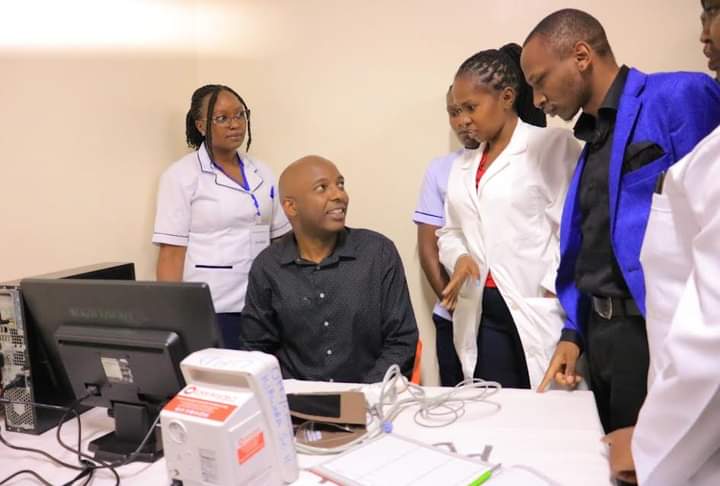

Kirwara level 4 hospital in Gatanga subcounty, Murang’a, has been expanded with the launch of a four-storey building that houses new wards, offices, and theatres. The new facility has increased bed capacity in general wards from 18 to 100 beds and maternity capacity from 11 to 30 beds. The expansion will allow men to be admitted for treatment, as it was previously only available to women and children. Governor Irungu Kang’ata hailed the completion of the project, stating that the building was a priority to boost service delivery and relieve locals who had to seek medical care from neighbouring Kiambu County. The hospital will have both female and male surgical wards, paediatric wards, medical/doctors’ offices, nurse stations, and consultation rooms. The county government will also add nurses and other health practitioners to the facility to enable efficient service delivery. The digitization of operations in the hospital will also increase efficiency, as patients will no longer need to carry cards when visiting the facility. The county government is also working to complete other health facilities that have stalled.
 Kenya Ports Authority (KPA) Head of Corporate Affairs Bernard Osero has urged students and professionals in Mombasa to take short courses offered by Technical and Vocational Training institutions (TVET) to equip themselves with practical knowledge that is up-to-date with evolving labour market demands. Osero believes that institutions should focus on courses that mirror the economic drivers of the region, such as logistics, clearing and forwarding, shipping, tourism, and hospitality, which make up almost 70% of employment absorption in the region. New Dimensions CEO Anne Mburu echoed Osero’s sentiments, stating that mainstream tertiary education should be complemented with practical courses offered by TVET institutions. Mburu also urged the leadership and County government to support local youth willing to take up these practical-based courses with bursaries, ensuring they have the opportunity to grasp the much-needed practical knowledge to make a living.
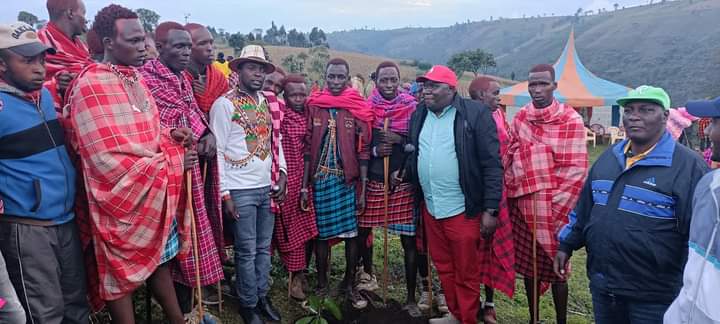 Kojonga residents in Narok East Sub County have received 1,000 avocado seedlings from Mr. Jeff Mathai, a prominent businessman, to improve their livelihoods and conserve the environment. Mathai aims to teach morans to conserve the environment and earn money through the sale of avocados. He challenged residents to plant trees in their farms and institutions, citing their benefits such as firewood, shade, wood, soil erosion prevention, and beautifying the environment. Partners Care Company CEO Samuel Mwangi also donated 100 sewing machines to help vulnerable youth and women boost their livelihoods. The machines will be particularly beneficial to youths who dropped out of school due to retrogressive cultural practices and a lack of stable income. The residents welcomed the move, as they will earn more money from the sale of avocados, and others will use the donated sewing machines for business. The county Forest Conservator, Daniel Mkung, reported that the county has planted over 565,000 tree seedlings since the campaign began.
 Breast cancer survivors in Kitengela have been provided with free breast prostheses and mastectomy bras by the Noonkopir Afya Foundation in partnership with the Mercy Steps Programme. The foundation aims to end the stigma surrounding cancer and help survivors restore their self-confidence and sense of well-being. Breast prostheses are expensive, with one costing Sh 300,000 and the other at Sh 2,000–3,000 per pair. The Mercy Steps Programme’s Niceta Njagi emphasised the importance of embracing cancer survivors and offering support. She urged men to stop stigmatising women who have undergone mastectomy, as this would crush their spirit and will to live. Njagi also urged the government to waive the import tax for Kenyan women who have had their breasts removed due to cancer. The foundation offers counselling, cancer screening, and referral treatment for cancer patients, with over 80 people screened for cancer for free in the past year. Breast cancer is the second-leading cancer in Kenya, with over 5,000 new cases annually accounting for 12.5% of all new cancers.
 Murang’a County has seen an increase in transformer vandalism, causing residents to operate without electricity for days. The Kenya Power Company (KPC) Business Manager, Eng. Harrison Kamau, reported that vandals have attempted to steal four transformers in the Kambiti and Kakuzi areas, stealing copper wires and fuel. The vandals have also caused frequent blackouts in the county, resulting in significant losses for the company. Kamau said security agencies have arrested several suspects, and their prosecution is ongoing. He urges residents to be on high alert and check for any unusual activity at the company’s installations whenever the power goes off. The manager appealed for a multi-agency approach and heavy penalties for vandalism offenders. Murang’a County Commissioner Patrick Mukuria said the county security team and residents have formed transformer surveillance committees to thwart attempts at transformer vandalism.

Prime Cabinet Secretary Musalia Mudavadi has urged Kenyans to allow the National Assembly to debate a report by the National Dialogue Committee (NADCO) to provide direction for the country. Mudavadi disclosed that legislators will discuss and process the report once they resume sittings in February next year. Mudavadi urged Kenyans to respect the new process, as the report will be handled and debated by the legislators once they resume duty. He maintained that President Dr. William Ruto remains focused on fostering peace in the country and that the government has ceded to the demands of the opposition and embraced dialogue to end the frequent demonstrations. However, the PCS took issue with the Jubilee Party for dismissing the report, stating that it was disrespectful to the many Kenyans who took their time to appear before the National Dialogue Committee. Mudavadi also acknowledged the high cost of living but assured Kenyans that the government was working to alleviate the situation, especially with the current enhanced rains contributing to increased food production.
 The Biodiversity and Biosafety Association of Kenya (BIBA Kenya) is urging farmers to preserve indigenous seeds to protect food safety, health, and biodiversity. The lack of quality seeds has led to limited access to nutritious foods, and indigenous seed varieties need to be preserved to provide households with diversified sources of nutritious food. Statistics from the Kenya Plant Health Inspectorate Service (KEPHIS) indicate that the informal (indigenous) seed sector in Kenya accounts for between 60-70 percent of seeds planted by farmers across the country. The preservation and dissemination of indigenous seeds will help promote healthy and sustainable agroecosystems. The Kenyan government should review the Seeds and Plant Varieties Act to allow farmers to share indigenous seeds and establish regulations for seed exchange and selling.
Organic farmers in Kenya are conserving indigenous seeds like bloody butcher maize, turmeric, dasheen arrowroot, and sweet potato to reduce costs and improve livelihoods. These seeds are drought-resistant, nutritious, and have a higher nutritional value than white maize. The Kenya Climate Smart Agriculture Strategy emphasises the importance of adapting to climate change, building resilience in agricultural systems, and minimising emissions for enhanced food and nutritional security.

Basic Education Principal Secretary, Dr. Belio Kipsang, has emphasised the importance of parental involvement in children’s lives to prevent drug abuse and truancy. He stated that 97% and 72% of primary and secondary schools are day schools, with most learners under the custodial care of their parents and guardians. Dr. Kipsang highlighted the need for parents to be more available in their children’s lives to nurture their growth and development. The government commits about a third of the budget to education to address issues of access, equity, and quality at all levels of education. Free Primary and Day Secondary Education has taken care of learners with special needs, and the government supports integrated schools, admitting and supporting learners with special needs in regular schools and those with severe disabilities in special schools. The Ministry of Education plans to revamp Educational Assessment Resource Centres (EARC) in all 47 counties to provide assessments of children with disabilities and recommend placement for full integration into the school system. The budget allocation also includes the school feeding programme for children in Arid and Semi-Arid Areas (ASAL), with an increased allocation from Sh2 billion to Sh4.9 million.
Similar Posts by The Mt Kenya Times:
- Mt Kenya Times ePAPER October 27, 2026
- Sifuna draws hope from Serbia and Brazil as Kenya’s 2027 race heats up
- Uhuru calls for unity as he marks 65th birthday
- Kenya establishes international crimes division: Justice delayed, but will it be delivered?
- World marathon champion Jepchirchir suspended in fresh blow to Kenya’s clean sport drive
About the Author