The Evolution Of Digital Technologies In The Educational System A Historical Account


By: Kakharova Malika
Worth Noting:
- The 1990s–2000s Internet Revolution: The internet’s widespread use in the 1990s transformed education by giving people access to a wealth of resources and knowledge. As schools started to link to the internet, new avenues for communication, cooperation, and research were made possible. Early educational websites, internet forums, and email all developed into valuable resources for educators and learners alike.
- E-Learning and Online Education (2000s–Present): Online education and e-learning platforms first became popular in the 2000s. With the advent of online learning and degree programs, universities now enable students to study from any location with an internet connection. Blended learning models gained broad traction due to the ease with which educators could produce and deliver online curriculum thanks to platforms like Moodle, Blackboard, and Coursera.
We now live in a post-industrial society, where the major focus has switched from the production of products to the production of services, due to the scientific and technical revolution, as well as a notable increase in household incomes. In addition, every infrastructure developed and maintained by society—the military, the medical system, the educational system, science, culture, etc.—provides services.
Digital technology in education has a rich history that has revolutionized teaching and learning. Here’s a quick rundown:
Early Beginnings (1950s–1970s): Mainframe computers were first introduced in the 1950s and 1960s, which is when digital technology in education originally emerged. These computers were initially only used by research institutions and universities due to their size and cost. But they also set the stage for further advancements in educational technology.
The advent of personal computers in the 1970s and 1980s: The advent of personal computers in the 1970s and 1980s increased accessibility to computing for both individuals and educational institutions. Though their use was still restricted by cost and technological limitations, computers such as the Apple II and IBM PC began to appear in classrooms.
The 1980s witnessed the advent of educational software, specifically made for use in classrooms. This trend continued into the 1990s. Popular programs that provided interactive learning experiences in arithmetic, language arts, and history were The Oregon Trail and Reader Rabbit. These pioneering educational software products set the stage for the eventual curriculum integration of technology.
The 1990s–2000s Internet Revolution: The internet’s widespread use in the 1990s transformed education by giving people access to a wealth of resources and knowledge. As schools started to link to the internet, new avenues for communication, cooperation, and research were made possible. Early educational websites, internet forums, and email all developed into valuable resources for educators and learners alike.
E-Learning and Online Education (2000s–Present): Online education and e-learning platforms first became popular in the 2000s. With the advent of online learning and degree programs, universities now enable students to study from any location with an internet connection. Blended learning models gained broad traction due to the ease with which educators could produce and deliver online curriculum thanks to platforms like Moodle, Blackboard, and Coursera.
Apps and Mobile Learning (2010s–Present): The 2010s saw a significant shift in education due to the widespread use of smartphones and tablets, which increased accessibility and mobility for learning. With their personal learning experiences, digital textbooks, and interactive lessons, educational applications and mobile learning platforms have grown in popularity. Additionally, educators started implementing mobile devices into the classroom for multimedia presentations, surveys, and quizzes.
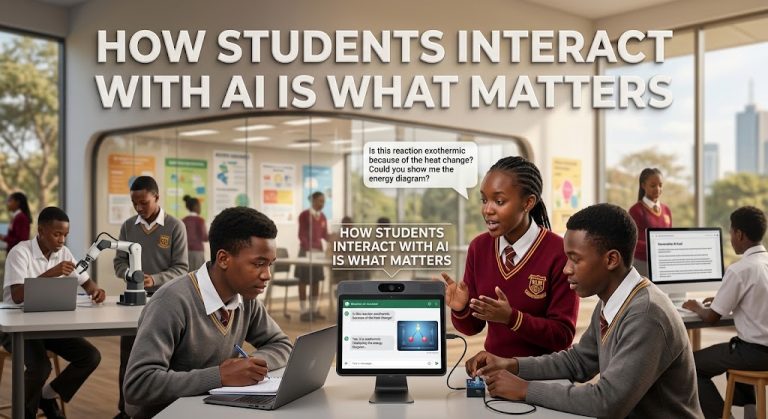
Emerging Technologies: Current and Prospective Future-oriented, cutting-edge technologies with the potential to further transform education include augmented reality (AR), virtual reality (VR), and artificial intelligence (AI). While AR and VR technologies can provide immersive learning environments and simulations, AI-powered adaptive learning systems can tailor lessons for individual individuals.
All things considered, the history of digital technology in education is one of invention and development, with new opportunities for instruction and learning presented by each new development. The way we educate and prepare kids for the future is still being shaped by technology, from the first mainframe computers to the most immersive virtual reality experiences.
This has resulted in both the creation of new forms of interaction between subjects in the educational process and an improvement in the quality of learning. New words like “digital economy,” “digital educational space,” “digital pedagogy,” “digital medicine and healthcare,” etc. have emerged as a result of this scientific and technical revolution that has created a new reality. In order to meet the increasing needs of a changing society, modern educators are always faced with the problem of developing new teaching and learning strategies. Even if technology is being used in education more and more, there are still a lot of issues that prevent instructors from using digital tools widely in their daily work. A significant pattern in the history of educational technologies is that, while a revolution is predicted with each new technology, the high social expectations associated with it often led to subpar implementation and issues in the classroom. This is because they are frequently not designed with education in mind, they might be unstable and challenging to set up, and educators themselves are unsure of the finest ways to use these new resources to raise the caliber of instruction. It is imperative to acknowledge that digital technologies have already gained widespread acceptance and commonality in the business domain. Consequently, they ought to serve as a dependable instrument in the education system, enabling the personalization of educational paths for the younger digital generation.
Kakharova Malika. 4th grade student of the Bachelor’s degree in Primary Education at the Kimyo International University in Tashkent, Uzbekistan. malikakaxorova@gmail.com
Similar Posts by The Mt Kenya Times:
- Mt Kenya Times ePAPER October 17-18, 2026
- Ruto bets billions on Kerio Valley — with one eye on 2027
- Ruto’s health ministry kills Murang’a’s digital hospitals
- Kenya bets on Mount Kenya to drive a billion-shilling tourism revival
- Do you have a wealth vision? Or are you just working until you die?
About the Author