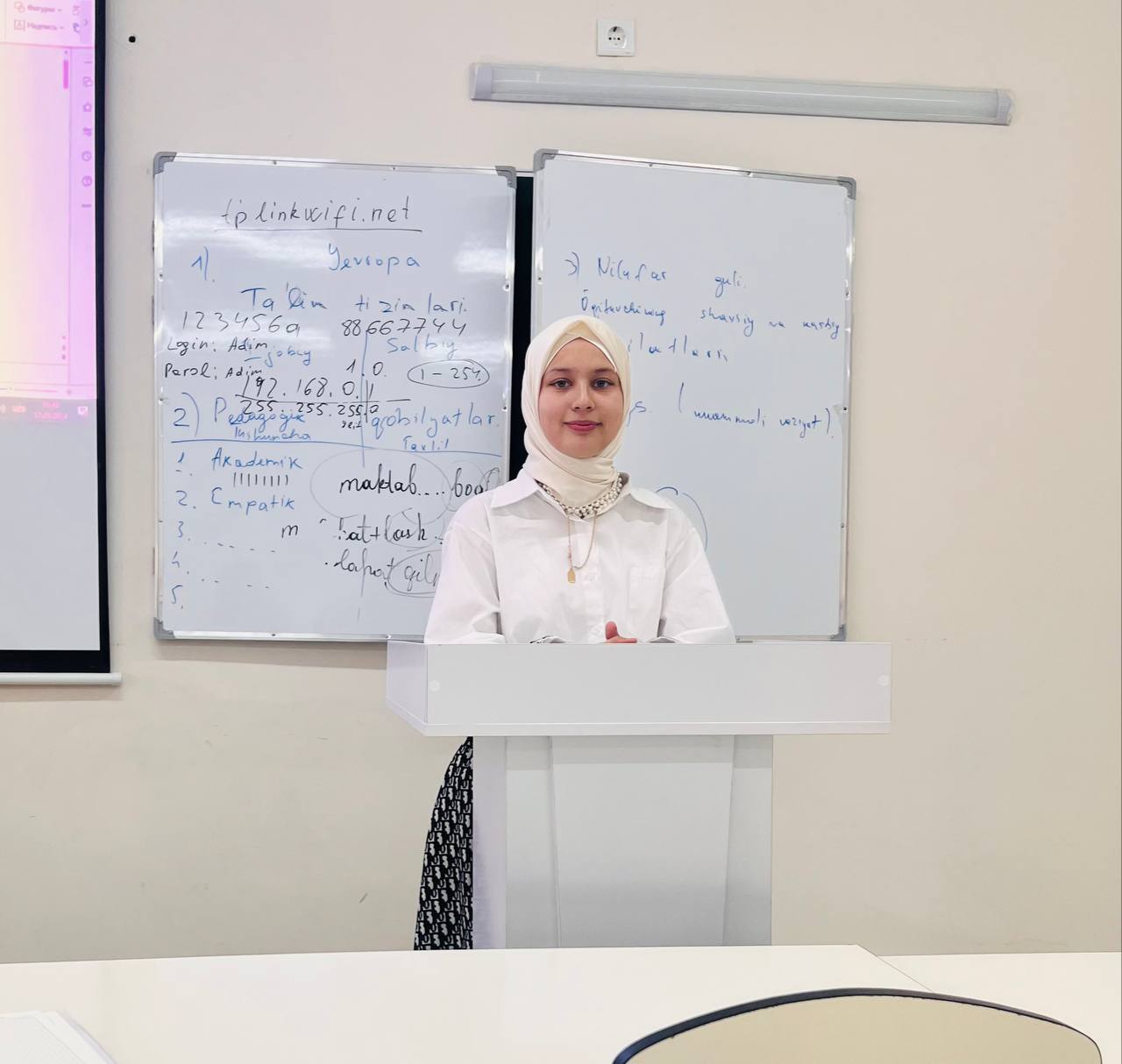
Alimova Diyora

By: Alimova Diyora
Annotation: This article discusses the history of the introduction of the concept of ensemble to Uzbek national music and its activities in different periods. In this process, the importance of direct musical ensembles is special. Ensembles of musicians are included.
Key words: Musical ensembles, ensemble of musicians, musical groups, performance skills.
The rich culture of each nation, which reflects its great past, determines its origin. This culture has served and continues to serve the material and spiritual development of these peoples and the nation since ancient times. He also determined that it is sharply different from the customs, traditions and values of other nations. The Uzbek people, with their rich history, ancient culture and unchanging art of music, are among the historical nations that have made a great contribution to the development of world music culture. This art has been passed down from father to son, from mother to daughter, from ancestors to generations, from teacher to student. As a proof of this, we can see the historical monuments, archeological findings, paintings reflected in miniature art, architecture, works of art described in folk oral and written works that stand tall in our country today.
Culture, music and art have been highly developed in the territory of Uzbekistan since time immemorial. We can see that this is clearly expressed in the fine art monuments found as a result of archaeological excavations in different regions, valleys and oases of our country. The information about the music ensemble issue is confirmed in the treatises of great scholars and musicologists who have rendered meritorious service in the theory, history and practice of Uzbek music art, such as Farabi, Margiloniy, Kavkavi, Darvesh Ali Changchi, and Fitrat in recent years. .
Ensemble (French ensemble-unity, harmony, harmony) is the joint performance of a certain piece of music by several performers. The term ensemble is also used to refer to artistic teams distinguished by high performance. Depending on the number of performers, ensembles are duet (2 people), trio (3 people), quartet (4 people), quintet (5 people), sextet (6 people), septet (7 people), octet (8 people), nonet (9 people) and others.
The first ensemble was founded in 1923 under the leadership of Tokhtasin Jalilov, and in 1927 under the leadership of Yunus Rajabi. Ensembles composed of Turkish compositions became widely popular and widely implemented in practice in the first half of the 20th century. In 1957, under the leadership of Yunus Rajabi and under the supervision of the Uzbek TV and Radio, the establishment of the makomchilar ensemble became a huge event. After this ensemble, teacher Yunus Rajabi’s style of performance and his great legacy are an example for the generation.
A large ensemble
The first leader of this ensemble was Nikolai Nazarovich Mironov. Not long after that, according to the demand of the time, the well-known artist, skilled musician and composer Tokhtasin Jalilov was appointed as the leader of this ensemble. A number of famous artists such as Mulla Toychi Tashmuhammedov, Haji Abdulaziz Abdurasulov, Halima Nasirova, Nabijon Hasanov, Rizqi Rajabi performed in this ensemble. In 1937, the “Big Ensemble” team took part in the first days of Uzbek literature and art in Moscow and achieved great success.
An ensemble consisting of the same instruments
This type of ensembles can include circle players, rubobists, changchiars, dutorchiars, gijjakchirs and similar ensembles consisting of the same instruments. These ensembles have the opportunity to perform both unison and polyphonic works. In the 70s and 80s of the last century, Kashkar rubobchilars and dutorchilar ensembles became popular, and by the end of the 80s, circle and duster ensembles became popular, and special musical works were created for these ensembles.
Ensemble of related instruments.
String instrument ensembles, which are widely used in European music culture under the name of chamber ensemble, have a relatively long history, but after the emergence of instrument families as a result of processing and improvement of Uzbek folk instruments, this type of ensembles was born. Ensembles made up of similar instruments include nay family ensemble consisting of flute and small flute, rubob prima, kashgar rubobi, and rubobchilar family ensemble consisting of Afghan rubobi and others. How many instruments are involved in such ensembles is determined by the sound of the instruments. When determining the number of instruments in the ensemble, it is appropriate to assume that instruments with a strong timbre are less involved, and instruments with a weak timbre are more involved.
A mixed ensemble with the participation of various instruments
Mixed ensembles are more common than other types of ensembles, and refer to a group consisting of different instruments, with the participation of two or more musicians. In order to create an all-round perfect mixed ensemble, it is necessary to include instruments of different timbres and types in the composition of the ensemble. Among these, we can include instruments such as the Afghan rubab, tanbur, which are played by wind, goshnai, sunray: mizrob instruments.
Tuning the instruments
Tuning the instruments to a specific sound source, i.e. a tuning fork, flute, or brass instrument, is explained. Before the start of the training, the unison sounding of the word ensemble is achieved through precise tuning of each instrument. From the very beginning, the leader should pay attention to the exact tuning of the words of the instrument and demand the same from each performer. The leader should tune the instruments of the musicians without musical knowledge in the first lessons and gradually teach the musician to tune the instrument by himself. It is known that almost all Uzbek folk instruments (except wind instruments and tanbur, dutor, ganon, chan) are covered with leather. The climate of the room also plays a role in tuning the instruments. The tuning of most of the folk instruments also depends on the correct placement of the kharak. If the open similar is adjusted and the octave sound does not give a pure octave sound when checked, the desired sound can be achieved by moving the bar forward or backward. If the sound of the octave is higher than the sound of the open string, the chord is forward, and if it is lower, then the opposite position is used. Tuning all instruments based on the above requirements helps the ensemble to sound unison and pure.
General rules of ensemble performance
Mastering the skills of performing in an ensemble, first of all, the musicians must sit correctly, hold the sound of the instrument correctly, acquire the skill of producing sound from the instrument, form the performance movements correctly, and fully comply with the rules of collective performance. requires compliance. During the performance, the body should be held in such a way that the performer is comfortable for all movements of playing the instrument and the appearance is beautiful: without leaning on the backrest, sit in the middle of the seat, the musician’s left legs are slightly ahead of the right leg to be: achieving freedom of performance due to the correct placement of the hand on the handle of the instrument:
Composers should focus on the lead musician or circle when starting the performance of a piece:
Simultaneous endings of the ensemble azos at the end of the piece:
Adherence to collective performance culture in ensemble performance:
During the performance, the musician hears not only his own voice, but also the sound of the instruments in the whole ensemble:
The selection of a comfortable and sitting position for performance serves the good sounding of the ensemble, the quality and attractiveness of the performance.
In conclusion, it is worth saying that the creativity in the ensemble is exciting and difficult. Currently, inculcating the concept of an ensemble in the minds of young people is considered one of the honorable tasks. There is no doubt that this education will serve as a basis for future great countries to shape the present young generation as outstanding teachers.
Alimova Diyora, 1st year student of musical education at Andijan State Pedagogical Institute
Similar Posts by The Mt Kenya Times:
- AI Curse or boon: The Future of Intelligence: Artificial or Emotional?
- Dr. Ekrah Ndung’u wins TVET advocacy award after 12 years
- Mt Kenya Times ePAPER October 17-18, 2026
- Ruto bets billions on Kerio Valley — with one eye on 2027
- Ruto’s health ministry kills Murang’a’s digital hospitals
About the Author