
Marcella Karimi: The Visionary Woman Behind Kenya’s Ai-Powered Somasoma Platform
 The Mt Kenya Times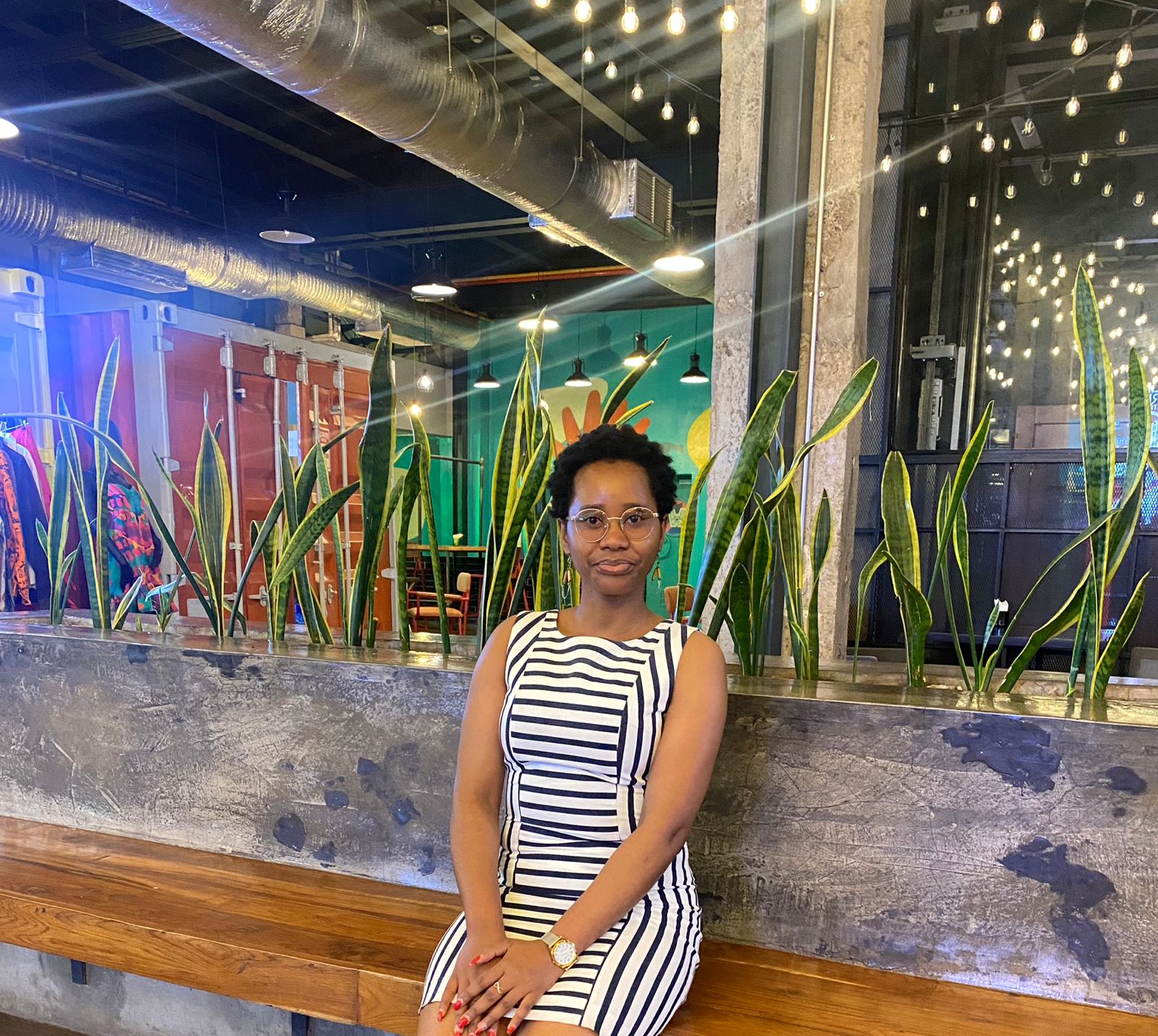
Marcella Karimi
By Alfred Lobawoi
Worth Noting
“As a published author, I wrote books like Legends of Kaya and Other Stories and Nguli wa Kaya na Hadithi Nyingine and through my role in education publishing, I became passionate about creating resources tailored directly to the Competency-Based Curriculum (CBC), also known as Competency-Based Education (CBE)
Somasoma directly addresses these gaps by automating administrative tasks and providing curriculum-specific content from schemes of work to video lessons, freeing educators to focus on what matters most: their students.
The platform is compliant with education data policies in Kenya, and we prohibit the sharing of any student information with third-party companies.
We are careful to give parents control and visibility over their children’s progress and data.”
- Tell us about your journey
My name is Marcella Karimi. Somasoma’s dream began in high school, when I was at Starehe Girls’ Centre, where we were fortunate to have smart classrooms and internet access. That experience opened my eyes to the potential technology holds in education.
After high school, I enrolled at the University of Nairobi to pursue a Bachelor’s degree in Education (Arts). After graduation, I worked in a leading publishing company in Kenya, where I got a broad view of what happens in classrooms, from designing books to understanding the struggles of both teachers and learners.
During my teaching practice at Alliance High School, I saw firsthand the heavy workloads teachers face, from manually drafting schemes of work and writing numerous lesson plans by hand. It was a time-intensive process that made me realise something needed to be done.

As a published author, I wrote books like Legends of Kaya and Other Stories and Nguli wa Kaya na Hadithi Nyingine and through my role in education publishing, I became passionate about creating resources tailored directly to the Competency-Based Curriculum (CBC), also known as Competency-Based Education (CBE)
With the evolution of Artificial Intelligence, I saw a huge opportunity to streamline this process. I had a clear education-centric solution in mind, but I’m a teacher and a storyteller, not a software engineer. So I teamed up with Shadrack Apollo, a software engineer and entrepreneur, who has previously successfully founded tech companies and platforms.
Together, we turned my education expertise and his technical skills into Somasoma AI, a powerful tool designed to ease workloads for educators and empower children to learn smarter.
- 2. What specific gaps in Kenya’s CBC/CBE curriculum did you see that prompted the creation of Somasoma?
We noticed a huge gap in quality, context-specific resources and administrative tools for teachers and parents to implement the Competency-Based Curriculum (CBC) effectively.
Most available materials were either hardcopy books or disconnected from the local context.
Additionally, teachers were spending countless hours manually preparing schemes of work, exams, and reports, which meant less time for actual teaching.
On the student side, we also realised there was a critical need for tailored Kenyan video content.
When you search on platforms like YouTube, you rarely find videos that match our curriculum and context.
Somasoma lets Kenyan teachers create and share video lessons aligned to the CBC, and our AI is encrypted to follow the Kenyan curriculum, making sure the content is accurate, relevant, and safe for children.
Somasoma directly addresses these gaps by automating administrative tasks and providing curriculum-specific content from schemes of work to video lessons, freeing educators to focus on what matters most: their students.
- 3. What has been the reception so far among schools and educators who are using Somasoma?
The reception has been positive and enthusiastic.
Teachers appreciate how much time it saves them, generating schemes of work, assessments, and reports instantly and parents appreciate having a safe, personalised platform to help their children revise and learn without distractions.
Some have called it a “game-changer” for their classrooms, reducing their workloads by nearly 80%.
- How do you ensure safety and privacy of students using this platform, especially in a digital-first environment?
Safety and privacy were a top priority from the outset.
Somasoma is designed to be a closed, curated environment, free from distractions and harmful content.
We employ age-appropriate controls, strong password protection, and data encryption to safeguard all information.
The platform is compliant with education data policies in Kenya, and we prohibit the sharing of any student information with third-party companies.
We are careful to give parents control and visibility over their children’s progress and data.
- How does this platform use AI to support teachers in creating lesson plans and schemes of work?
Somasoma’s AI parses the curriculum’s requirements and instantly generates schemes of work, lesson plans, exams, and marking schemes tailored to the grade and subject.
Instead of spending hours manually drafting these documents, a teacher simply enters a few details, and the platform produces high-calibre, curriculum-specific materials in minutes.
This lets educators devote their time and energy toward delivering impactful lessons and mentoring their students instead of being bogged down by administrative tasks.
Somasoma is built with a teacher in mind.
Instead of using generic AIs that require numerous prompts and trial-and-error, our AI already understands the Kenyan curriculum and a teacher’s needs.
It provides effortless, context-specific automation, allowing educators to do their best to teach and inspire their learners.
- Is the platform accessible and usable in areas with limited internet? How?
Somasoma is designed to be light and adaptable.
It performs well on smartphones and low-cost tablets, which are more available in rural areas and we’re currently working on adding offline capabilities.
Once implemented, this will enable students and teachers to continue accessing resources, including the AI, interactive flipbooks, and video lessons, even when the internet drops or is unreliable.
Learners will be able to study safely and effectively from home, replay video lessons and use personalised, curriculum-specific content without needing a constant internet connection.
For now, we’re optimising the platform to use minimal data and run smoothly on low-cost devices, while we develop these future offline features to make education more accessible for all.
- What challenges did you face while creating the Somasoma platform?
Some of the main challenges were:
Aligning the technology directly with the (CBC/CBE) and keeping up with a Kenyan education system that evolves daily with new policies and guidelines.
We overcome this by working closely with educators and policymakers, trialling the platform in classrooms and making iterative improvements based on their feedback.
Convincing parents and educators to embrace AI:
Some were unsure whether technology would be helpful or harmful to their children’s education.
We had to demonstrate that Somasoma is designed to be a safe, personalised and interactive tool, not a shortcut, helping children learn to think and adapt to a changing world.
We overcome these obstacles by engaging directly with parents and educators, listening to their concerns, and demonstrating through workshops and trial sessions how Somasoma nurtures deep understanding and problem-solving skills, not just memorisation.
- 8. What are your future plans concerning digital learning in Kenya?
We aim to expand Somasoma’s reach to all 47 counties in Kenya and then across East Africa.
We want to develop additional modules like gamified literacy and numeracy content for lower primary, certification programs for teachers, and analytical tools for education policy makers.
Ultimately, we hope Somasoma becomes the leading education ecosystem, a tool that transforms education delivery and prepares Africa’s children for future success.
- What advice would you give to young innovators who want to create solutions for classroom challenges?
My greatest advice is just start with or without funding and leverage whatever skills you already have to bring your ideas to life.
I initially thought I’d need an accelerator or a lot of funding first, but after meeting Shadrack, we put our brains together, he took care of the technical side while I provided education expertise — teamwork makes the dream work.
It’s also okay to seek communities of people who share your passion and mission, to learn from them and grow together.
Be proactive in asking questions and don’t sit on your ideas. start and learn along the way.
Most of all, do your research.
Talk to teachers, learners, and parents, find the gaps, listen to their struggles and resonate with their needs.
Your innovations should solve real problems in the classroom and empower future generations.
Using what you have and staying true to your mission, you can make a huge, lasting impact.
10. How can one reach out to learn more or check out your platform?
Visit our platform: https://somasoma.app
Follow us on LinkedIn: Somasoma AI
Or write to us directly at info@somasoma.app, we’re happy to share more or collaborate!
Similar Posts by The Mt Kenya Times:
- The woman building more than rooftops
- Mt Kenya Times ePAPER August 15-16, 2026
- Kenya’s dairy sector at a turning point as quality, growth and farmer welfare take centre stage
- From salary to student loans: New bill targets faster repayment of graduate debts
- The ballot must be mightier than the stone
About the Author


Very crucial