The Unassailable Gavel: When Decisional Independence Becomes A Shield For Systemic Dysfunction
 The Mt Kenya Times
Jerameel Kevins Owuor Odhiambo
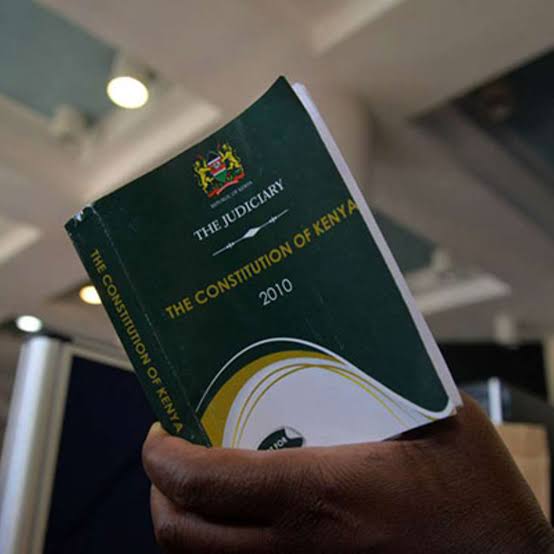
The dawn of Kenya’s 2010 Constitution was heralded with fervent optimism, particularly concerning the Judiciary. Envisioned as a veritable game-changer, the new constitutional order promised a radical transformation of the justice system, anchoring it firmly on principles of integrity, accountability, and the efficient delivery of justice. A more independent, professional, and citizen-centric judiciary was not merely a hope but a constitutional imperative. Indeed, the early days saw a flurry of judicial reforms, vetting processes, and a renewed emphasis on judicial officers’ autonomy, an independence designed to free them from external manipulation and ensure fearless adjudication. Yet, a decade and a half later, the echoes of that constitutional promise sometimes ring hollow against the backdrop of persistent judicial challenges that threaten to erode public trust.
Despite the constitutional safeguards, the operational reality within Kenya’s courts frequently presents a disquieting spectacle. Instances abound where judicial pronouncements appear starkly incongruous with established legal principles, or where procedural dictates seem to be willfully disregarded. One observes judgments so glaringly devoid of sound legal reasoning that they defy basic comprehension, or judges issuing final orders at the ex parte stage, effectively condemning parties unheard. More perniciously, there are regrettable delays in granting real-time orders to halt egregious illegalities, rendering a litigant’s subsequent triumph in court a pyrrhic victory, a legal remedy arriving long after the injury has become irreparable, rendering the entire suit nugatory. Such scenarios, sadly, are not isolated aberrations but rather an increasingly visible pattern that leaves citizens questioning the very efficacy of the judicial process.
The predicament intensifies when aggrieved citizens, clutching their evidence of what appears to be judicial ineptitude, approach the Judicial Service Commission (JSC), the constitutional body mandated with the promotion of judicial independence and accountability. One might expect a robust mechanism for scrutinizing such grievances, but the response often follows a well-worn, almost ritualistic, refrain: the Commission asserts its inability to undertake a “merit review” of a judicial decision. Litigants are advised, with an almost poetic consistency, that their recourse lies exclusively in seeking a review or an appeal through the hierarchical court system. This official stance, while seemingly adhering to the separation of powers and the appellate structure, inadvertently cultivates an environment where the quality of primary judicial work appears to be insulated from direct disciplinary accountability.
This institutionalized response, therefore, begs the question of whether the noble concept of decisional independence has been inadvertently transmuted into a convenient shield for various forms of judicial shortcomings. It creates an almost impenetrable fortress around the individual judicial officer, implying that any error, however egregious or patently unsound, falls solely within the purview of the appellate system, rather than reflecting on the competence or diligence of the decision-maker themselves. Such an interpretation, if widely embraced, risks turning the constitutional guarantee of independence into a license for unchecked discretion, where the quality of justice administered at the trial level becomes a perpetual gamble. One might cheekily suggest that this interpretation effectively grants judicial officers a legal equivalent of diplomatic immunity, but for errors of judgment.
The constitutional framers, in their wisdom, sought to secure judicial officers from undue influence and coercion, recognizing that fear of reprisal could compromise impartial adjudication. Decisional independence, as scholars like Shimon Shetreet and others have articulated, is fundamentally about protecting judges from political interference or public clamor when making rulings. It ensures judges can interpret the law and apply it to facts without fear of being penalized for unpopular but legally sound decisions. It is not, however, traditionally understood as a carte blanche for demonstrable incompetence or, dare one say, even willful dereliction in decision-making. The very premise of delegated power that judges act as custodians of the citizenry’s sovereign authority implies a corresponding duty of accountability.
Indeed, the emerging judicial philosophy, as espoused by the JSC and within certain judicial circles, appears to suggest that judges and magistrates can only be disciplined or removed from office for misconduct not tied to the quality of their primary work. In other words, a judicial officer might face sanctions for corruption, insubordination, or gross moral turpitude, but rarely for persistently rendering decisions that are legally indefensible. This creates an unsettling dichotomy: competence in one’s core professional function, which is to decide cases fairly and lawfully, becomes decoupled from the standards of professional accountability. It is almost as if a surgeon could be disciplined for poor bedside manner but never for leaving a tool inside a patient, so long as the patient could (theoretically) seek a second opinion.
The practical ramifications for litigants are profound and often devastating. A party subjected to a patently wrong decision at a lower court is then forced into the labyrinthine appellate process, incurring additional costs, enduring prolonged delays, and often suffering further prejudice while waiting for correction. This is not merely an inconvenience; it represents a significant barrier to justice, particularly for the indigent or those lacking the financial fortitude to traverse the entire judicial hierarchy. Moreover, if the “decisional independence” doctrine holds sway at every level, then the appellate judge, too, enjoys a similar immunity from disciplinary action for their own potential errors, raising the satirical specter of an endless parade of flawed judgments, each impeccably insulated by the same principle, all the way to the apex court.
This state of affairs risks fostering a culture of impunity, where the quality of initial adjudication is relegated to a secondary concern, with the appellate system serving as the sole, albeit costly and protracted, corrective mechanism. It undermines the very essence of judicial excellence and public accountability that the 2010 Constitution so passionately sought to entrench. For the citizenry, whose power is merely donated to the judiciary, this feels less like justice being administered and more like a high-stakes lottery, where the initial draw can be profoundly unfair, and the only recourse is to buy another ticket (an appeal) hoping for a better outcome.
Ultimately, a nuanced understanding of decisional independence is imperative. It must protect judges from improper external influence, but it cannot, and should not, shield them from accountability for demonstrable and persistent professional incompetence or deliberate misapplication of the law. The JSC’s mandate for judicial oversight must extend beyond matters of external misconduct to encompass a rigorous, albeit judicious, evaluation of judicial performance directly tied to the quality and soundness of decisions. Failure to address this growing chasm between constitutional aspiration and practical reality risks not just a loss of public faith, but the dangerous institutionalization of a system where the pursuit of justice becomes an increasingly elusive and financially punitive endeavor for the ordinary Kenyan. The ugly head of unaddressed judicial ineptitude, left to fester under the guise of independence, will indeed, one day, begin to devour the very fabric of our democratic society.
The writer is a lawyer and legal researcher
Similar Posts by The Mt Kenya Times:
- Diaspora Times Global Sep 19 – Sep 25, 2026
- Tibet’s glacial catastrophe: Behind Beijing’s wall of silence, a climate disaster reshapes a region
- Museveni says Uganda overpaid for fuel through Kenyan middlemen as new terminal breaks ground
- Court orders throw KPL season kickoff into doubt
- Can Kenyans abroad become the untapped force that transforms Kenya?
About the Author