The Shifting Geography Of Marginalization: Understanding Injustice Beyond Borders
 The Mt Kenya Times
By Jerameel Kevins Owuor Odhiambo
In 1952, French demographer Alfred Sauvy coined the term “Third World” to describe nations that were neither aligned with NATO (First World) nor the Communist bloc (Second World). Hitherto today, over seven decades later, we find pockets of “Third World” conditions in the heart of Manhattan, while gleaming skyscrapers pierce the skyline in Mumbai and Lagos. This paradox reveals a profound truth: poverty, marginalization, and systemic injustice are not permanently attached to specific places on a map they are mobile, shape-shifting phenomena that transcend geographical boundaries.
The statement that the “Third World as a concept is not inflexibly moored to a fixed and unchanging geography” challenges us to rethink how we understand global inequality. Traditionally, we’ve imagined the world divided into neat categories: developed versus developing, Global North versus Global South, rich versus poor. But this binary thinking obscures a more complex reality. When we visit Detroit, Michigan, with its abandoned factories and crumbling infrastructure, are we not witnessing conditions typically associated with “underdevelopment”? Conversely, when we observe the luxury enclaves of Nairobi or São Paulo, complete with world-class amenities, are these not spaces of “First World” privilege? The concept being presented here is that “Third World-ness” characterized by lack of access to resources, political marginalization, economic exploitation, and social vulnerability exists as a condition rather than a location.
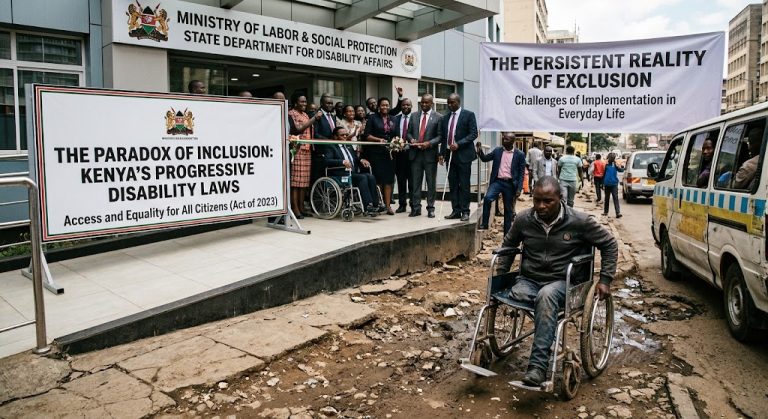
This geographical fluidity becomes even clearer when we examine what scholars call “geographies of injustice.” These are spatial patterns where systemic unfairness concentrates in specific places, creating zones where people experience compounded disadvantages. Consider the predominantly Black neighborhoods in Flint, Michigan, where residents were poisoned by lead-contaminated water while wealthier, whiter areas nearby had safe drinking water. Or think about the favelas of Rio de Janeiro, situated on hillsides overlooking opulent beach communities sometimes separated by mere hundreds of meters yet worlds apart in terms of safety, opportunity, and basic services. These are not accidents of geography but deliberate outcomes of political decisions, economic systems, and historical patterns of discrimination.
The critical insight here is that injustice has its own geography that doesn’t respect national borders or conventional development categories. In practical terms, this means a child growing up in rural Appalachia may face educational deprivation, limited healthcare access, and economic hopelessness that mirrors conditions in rural parts of sub-Saharan Africa. Both experience what we might call “peripheral status” being relegated to the margins of economic and political systems that concentrate resources and opportunities elsewhere. Similarly, a tech worker in Bangalore, India, might enjoy living standards, healthcare, and career prospects comparable to their counterpart in Silicon Valley. The “Third World” and “First World” coexist within nations, cities, and sometimes even neighborhoods.
This understanding fundamentally challenges how development policy and humanitarian aid have traditionally operated. For decades, international organizations directed resources based on country classifications low-income, middle-income, high-income. But if injustice is geographically fluid, then poverty in Mississippi deserves the same analytical attention as poverty in Mozambique. A homeless encampment in Los Angeles represents a “geography of injustice” just as much as an informal settlement in Nairobi. Both reflect systems that fail to ensure housing as a human right. Both concentrate vulnerable populations in spaces with inadequate sanitation, security, and social services. The ZIP code or country code may differ, but the underlying structural conditions producing marginalization show remarkable similarities.
The concept also illuminates how globalization has created new geographies of exploitation. Consider the garment worker in Bangladesh who sews clothes for a European brand, earning wages insufficient to cover basic needs, working in unsafe conditions, while the profits flow to shareholders in London or New York. Then consider the warehouse worker in Amazon’s fulfillment centers in rural America, monitored by algorithms, denied bathroom breaks, unable to afford the products they ship. Both occupy positions within a global economic system that extracts maximum value from their labor while denying them dignity, security, and fair compensation. The “Third World” condition here is not about geography it’s about positionality within exploitative economic relationships.
Race, class, and historical power dynamics deeply influence these geographies of injustice. In the United States, the legacy of slavery and Jim Crow has created persistent racialized geographies where Black and Indigenous communities disproportionately experience poverty, environmental pollution, police violence, and limited access to quality education. The water crisis in Flint, the food deserts in Chicago’s South Side, the lack of broadband internet in rural Native American reservations these are internal “Third World” conditions produced by systemic racism. Similarly, caste discrimination in India, apartheid’s legacy in South Africa, and colonial histories throughout the Global South have etched injustice into the landscape, creating durable patterns of who gets clean water, good schools, and political voice.
Environmental injustice provides perhaps the clearest example of how marginalization creates its own geography regardless of national boundaries. Whether it’s the Cancer Alley along Louisiana’s Mississippi River, where petrochemical plants cluster near predominantly Black communities, or the toxic waste dumps near informal settlements in Accra, Ghana, the pattern is identical: polluting industries and hazardous facilities locate where resistance is weakest and communities are already marginalized. Climate change intensifies these geographies coastal flooding threatens both wealthy Miami Beach and impoverished Pacific Island nations, but within each location, poor communities have fewer resources to adapt or relocate. The “Third World” experience of environmental vulnerability appears wherever power imbalances allow some people’s health and safety to be sacrificed for others’ profit or convenience.
Understanding that the Third World is a fluid concept rather than a fixed geography has profound implications for solidarity and social movements. It means that workers in an Indian call center and workers at a Detroit auto parts plant may have more in common with each other than either has with the executive class in their own country. It suggests that effective organizing against injustice requires building connections across traditional geographic boundaries, recognizing shared structural conditions. The Fight for $15 minimum wage movement in the United States, protests against austerity in Greece, and demonstrations against inequality in Chile during 2019 all responded to similar dynamics economic systems that concentrate wealth while leaving working people behind. These movements understood intuitively that injustice flows along economic and political lines that cut across national borders.
Ultimately, recognizing geographies of injustice as mobile and multi-scalar phenomena empowers us to challenge inequality more effectively. Instead of viewing poverty and marginalization as problems “over there” requiring charity or intervention, we can see them as outcomes of interconnected systems operating “here” and “there” simultaneously. A more just world requires not just development aid to poor countries, but transforming the economic rules, power structures, and political systems that create marginalization in all its locations. Whether addressing homelessness in San Francisco, water access in rural Kenya, or wage theft in Bangladesh, the work involves confronting the same fundamental questions: Who decides how resources are distributed? Whose voices matter in political processes? How do we ensure that every human being, regardless of where they live or the circumstances of their birth, can access what they need to thrive? These questions don’t respect the boundaries we’ve drawn on maps, and neither should our efforts to answer them.
The writer is a social commentator
Similar Posts by The Mt Kenya Times:
- Mt Kenya Times ePAPER October 27, 2026
- Sifuna draws hope from Serbia and Brazil as Kenya’s 2027 race heats up
- Uhuru calls for unity as he marks 65th birthday
- Kenya establishes international crimes division: Justice delayed, but will it be delivered?
- World marathon champion Jepchirchir suspended in fresh blow to Kenya’s clean sport drive
About the Author