The Mt Kenya Times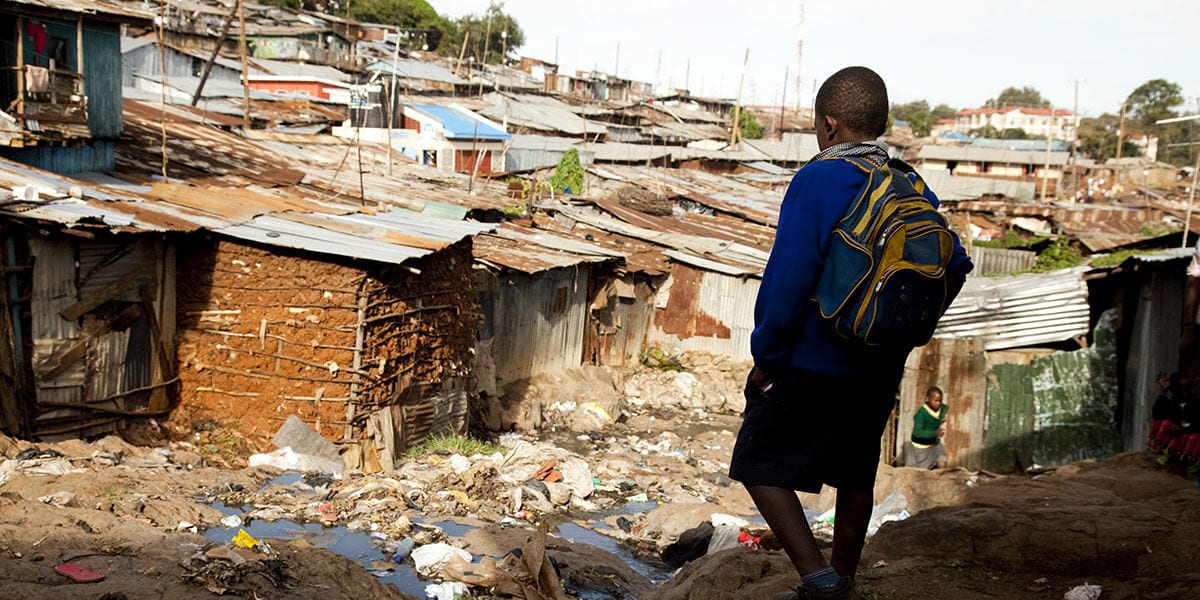
By: Jerameel Kevins Owuor Odhiambo
As of 2024, 839 million people approximately 10.3 percent of the global population live in extreme poverty, surviving on less than three dollars per day. This staggering statistic from the World Bank’s September 2025 Poverty and Inequality Platform update represents not merely a number to be calculated and recalculated, but 839 million individual human stories of struggle, resilience, deprivation, and denied dignity. Each percentage point contains millions of lives constrained by circumstances far beyond their control, embedded in systems of inequality that no algorithm can adequately capture or computational model can fully comprehend. Poverty is fundamentally a social issue; a manifestation of historical injustices, structural inequalities, power imbalances, and policy failures that demands social solutions rooted in human understanding rather than mathematical reductionism.
The contemporary obsession with quantifying poverty through income thresholds and statistical models, while useful for tracking progress, dangerously obscures the lived reality of deprivation. As Matsime Simon Mohapi powerfully articulates in “Poverty in the Land of Riches – South Africa,” poverty transcends statistics: “Poverty is what you see in the eyes of a Black child living in the squatter camp.” This visceral description captures what no poverty line can measure the psychological weight, the erosion of hope, the accumulated trauma of economic exclusion. The World Bank’s recent adjustment of the international poverty line from $2.15 to $3.00 per day in 2021 purchasing power parity terms resulted in an upward revision of extreme poverty rates, with Sub-Saharan Africa’s rate jumping from 37.0 percent to 45.5 percent in 2022. Nonetheless this mathematical recalibration changes nothing about the daily reality of hunger, homelessness, and humiliation that constitute poverty’s true burden. As Mohapi further notes, “Poverty is when there is no food and a child is forced to fill its stomach with water for the night” a reality that no equation can solve.
Sub-Saharan Africa bears the disproportionate weight of global poverty in ways that expose poverty’s fundamentally social and historical nature. The region, home to only 16 percent of the world’s population, contains 67 percent of those living in extreme poverty according to the World Bank’s “Poverty, Prosperity, and Planet Report 2024.” In Nigeria alone, over 11 percent of the world’s extreme poor resided in 2024, with the Democratic Republic of the Congo accounting for another 10 percent. These concentrations are not mathematical coincidences but the direct legacy of colonialism, resource exploitation, structural adjustment programs, and continued economic marginalization. Zimbabwean writer Tapiwanaishe Pamacheche poses the critical questions that statistics cannot answer: “Is poverty leading us to the stagnant sea of prostitution? Is the pauperism playing a role in tarnishing our image? Is paucity injecting a lethal poison in our morals? Is penury eating civilization and destroying families?” These rhetorical interrogations remind us that poverty corrodes social fabric, moral frameworks, and community cohesion in ways that GDP calculations cannot measure.
The mathematical approach to poverty fails spectacularly when confronted with the reality of inequality within and between nations. South Africa, Namibia, and Zambia possess the highest income inequality in the world, with Gini coefficients approaching 63, 59, and 58 points respectively. In South Africa specifically, youth unemployment stood at 62.2 percent in 2024, while the expanded unemployment rate including discouraged workers reached 42.9 percent. These are not merely statistical anomalies but manifestations of systemic exclusion rooted in apartheid’s legacy and neoliberal economic policies that have concentrated wealth while abandoning the majority. As South African Archbishop Desmond Tutu articulated through the concept of ubuntu, “a person is a person only through other persons, that my humanity is caught up in yours.” When the richest 10 percent in Africa hold over 71 percent of the continent’s wealth while the poorest 50 percent possess only 1.2 percent, we witness not a mathematical distribution problem but a profound moral failure and social rupture that severs the interconnectedness essential to human flourishing.
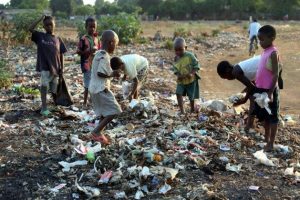 Global efforts to reduce poverty have stalled dramatically, revealing the inadequacy of technocratic approaches divorced from political and social transformation. The World Bank’s “Poverty, Prosperity, and Planet Report 2024” notes that between 2024 and 2030, only 69 million people are projected to escape extreme poverty, compared to 150 million who did so between 2013 and 2019 a devastating deceleration. The COVID-19 pandemic reversed decades of progress, with extreme poverty increasing for the first time in generations from 8.9 percent in 2019 to 9.7 percent in 2020. This regression, driven primarily by South Asia where extreme poverty surged by 2.4 percentage points, demonstrates poverty’s vulnerability to shocks that mathematics cannot predict or prevent. As Nigerian literary giant Chinua Achebe insisted, “art is, and always was, at the service of man,” arguing that literature must have purpose and message a philosophy applicable to all human endeavors including poverty alleviation, which cannot be value-neutral or purely technical but must be guided by commitment to justice and human dignity.
The concentration of poverty in fragile and conflict-affected states underscores poverty’s political and social dimensions. By 2025, more than three-quarters of the global extreme poor will live in Sub-Saharan Africa or in fragile and conflict-affected countries according to the UN SDG Report. The Middle East and North Africa region experienced increases in poverty even before COVID-19, with extreme poverty rising from 8.5 percent in 2022 to 9.4 percent in 2025, primarily due to fragility and conflict. These patterns reveal that poverty flourishes where governance fails, where violence destroys social institutions, where displacement ruptures communities, and where political instability prevents long-term planning and investment. Nelson Mandela’s observation remains urgently relevant: “Poverty is not an accident. Like slavery and apartheid, it is man-made and can be removed by the actions of human beings.” Poverty persists not because we lack mathematical models but because we lack political will to address its root causes in exploitation, marginalization, and structural violence.
The inadequacy of income-based poverty measures becomes evident when examining multidimensional deprivation. While 839 million people lived below the extreme poverty line in 2024, an additional 1.5 billion lived on less than $4.20 per day, and 3.8 billion survived on less than $8.30 per day nearly half the global population. These gradations reveal that poverty is not a binary condition amenable to simple calculation but a continuum of exclusion from full participation in society. In African literature, this multidimensional understanding is inherent. Ghanaian writer and feminist Ama Ata Aidoo eloquently stated, “For us Africans, literature must serve a purpose: to expose, embarrass, and fight corruption and authoritarianism.” Similarly, poverty analysis must expose the systems that create deprivation, embarrass those who perpetuate inequality, and fight for comprehensive transformation rather than incremental adjustments to poverty lines. The International Labour Organization’s 2025 report notes that 240 million workers globally 6.9 percent of the employed population live in extreme poverty, demonstrating that employment alone cannot solve poverty when work is precarious, informal, and inadequately compensated.
Social protection systems, essential for poverty reduction, reveal the political choices underlying poverty’s persistence. In 2023, for the first time, more than half the world’s population (52.4 percent) received at least one social protection benefit, yet 3.8 billion people remained unprotected according to the UN SDG Report. While high-income countries approach universal coverage at 85.9 percent, low-income countries provide coverage to merely 9.7 percent of their populations. Countries spend on average 19.3 percent of GDP on social protection, but this ranges from 24.9 percent in high-income countries to just 2.0 percent in low-income nations. Guaranteeing basic social security in low- and middle-income countries requires an additional $1.4 trillion annually, 3.3 percent of their aggregate GDP. These disparities are not mathematical inevitabilities but political decisions about resource allocation, taxation, and priorities. As Tapiwanaishe Pamacheche laments, “Mother! Ripped apart. Reaped stones of poverty, weeds that sprouted” poverty reproduces itself across generations not through mathematical laws but through social neglect and policy abandonment.
Working poverty exposes the fiction that market participation alone constitutes escape from deprivation. The global working poverty rate fell from 37.4 percent in 1991 to 6.9 percent in 2024 at the extreme poverty line, yet in least developed countries, nearly three in ten workers remained in extreme poverty in 2024. The difference between poverty rates among the employed versus the unemployed is less than two percentage points, revealing that employment provides minimal protection against poverty when work is exploitative, when wages are insufficient, and when labor rights are denied. Kenyan writer Ngũgĩ wa Thiong’o, in “Decolonizing the Mind,” emphasizes that language and culture shape consciousness, arguing that true liberation requires mental as well as material transformation. Similarly, poverty eradication requires not just employment statistics but transformation of economic relationships fair wages, worker power, social protection, and recognition that labor has dignity beyond its market price. The persistence of working poverty reveals that poverty’s causes lie in social relations of production rather than individual productivity deficits.
Land rights and tenure security illustrate how poverty intertwines with historical dispossession and contemporary exclusion. Based on 2022 data from 85 countries, only 43 percent of adults possess official land tenure documents, falling to just 15 percent in Sub-Saharan Africa. This means nearly 1.4 billion adults in developing regions are excluded from formal land markets, lack access to mortgage-based finance, and have no legal means to protect their land rights. In one in five reporting countries, fewer than one in ten adults hold official land documentation. These patterns reflect colonial land grabs, postcolonial elite capture, gender discrimination, and legal systems that privilege formal documentation over customary rights. As Idowu Koyenikan writes in “Wealth for all Africans,” “It takes nothing to stay in poverty, but everything to break free from it.” Yet when property rights are denied, when legal systems exclude, when documentation requires resources the poor lack, breaking free becomes structurally impossible regardless of individual effort. Poverty’s persistence reflects not inadequate mathematical modeling but systematic denial of economic rights and resources.
Climate vulnerability disproportionately impacts the poor, creating a vicious cycle that mathematical interventions cannot interrupt without addressing underlying injustices. One in five people globally faces risk of extreme weather events in their lifetime, yet those most vulnerable contributed least to climate change. Sub-Saharan Africa, bearing 67 percent of extreme poverty, produces minimal greenhouse gas emissions compared to upper-middle and high-income countries that account for four-fifths of global emissions. The “Poverty, Prosperity, and Planet Report 2024” emphasizes that achieving a world free of poverty on a livable planet requires serious, immediate action addressing these interconnected crises. Former South African President Thabo Mbeki warned, “A global human society, characterized by islands of wealth, surrounded by a sea of poverty, is unsuitable.” Climate change intensifies this unsustainability, flooding poverty-stricken regions while prosperity insulates the wealthy. Addressing climate-induced poverty requires not better climate models but transformative justice; debt forgiveness, technology transfer, climate reparations, and recognition that historical emissions create contemporary obligations.
In 2024, 839 million people live in extreme poverty not because of insufficient mathematical sophistication but because of social choices about distribution, about power, about whose lives matter, about whether we recognize our fundamental interdependence. As Desmond Tutu reminded us through ubuntu philosophy, our humanity is inextricably bound together. The solution to poverty cannot be found in poverty lines, regression analyses, or econometric models, however useful these tools may be for measurement. Poverty will end only through social transformation: redistribution of resources and power, decolonization of economic structures, establishment of universal social protection, guarantee of economic rights, and recognition that every human being deserves not just survival but dignity, opportunity, and full participation in society. The numbers tell us the magnitude of the challenge, but the solution lies in our collective commitment to justice, our willingness to recognize that in enriching others we enrich ourselves, and our courage to build societies whereas Nelson Mandela proclaimed, poverty becomes history not because we calculated better but because we chose better, we chose each other, we chose justice, we chose humanity. Poverty is indeed not a mathematical problem to be solved through superior algorithms, but a moral catastrophe to be ended through social solidarity, political transformation, and unwavering commitment to the inherent dignity and worth of every human being.
The writer is a social commentator.
Similar Posts by The Mt Kenya Times:
- Mt Kenya Times ePAPER October 27, 2026
- Sifuna draws hope from Serbia and Brazil as Kenya’s 2027 race heats up
- Uhuru calls for unity as he marks 65th birthday
- Kenya establishes international crimes division: Justice delayed, but will it be delivered?
- World marathon champion Jepchirchir suspended in fresh blow to Kenya’s clean sport drive
About the Author