Gender inclusion in climate change adaptation and mitigation is very vital
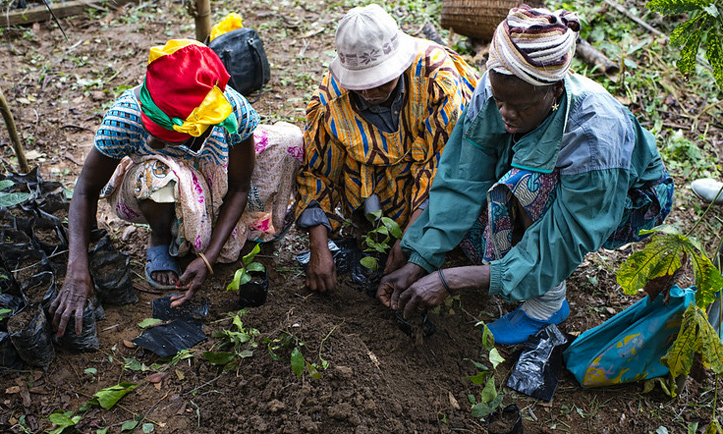
Women Planting Trees in Uganda

By Ireen Twongirwe
Worth Noting:
- More so, gender inequality has dramatically limited the resilience and adaptive capacity of women, families and communities. It has also restricted options for climate change mitigation. It’s clear to note that women’s empowerment and advancing gender equality can deliver results across a variety of sectors, including food and economic security and health. It can also lead to more environmental friendly decision making at household and national levels.
- Further, countries need gender Action Plan to develop comprehensive action that integrates gender concerns and builds on women’s unique knowledge and perspectives in climate change adaptation and mitigation.
We need to first appreciate that we have incredible women who persist in a world that limit them. We all need to know that gender inclusive in climate change adaptation and mitigation is very vital in social economic transformation.
8th March, 2022 was international women’s day under the theme” Gender Equality today for Sustainable Tomorrow”. Following the celebrations of the day, women are all unique and that’s the beauty of it all. There are uniqueness, play important role in conserving and protecting the environment from natural calamities.
It’s noteworthy, that women are the champions and bread givers of the family though they have been limited to express their talents and skills in climate change solution. This is due to the fact that women are not allowed to own land and other natural resources and yet they interact with them in their day to day life through collecting firewood, grazing animals, agriculture, herbal medicine among others. Due to climate change impacts, extreme weather events such as droughts and floods have greatly impacted the poor and most vulnerable, 70% of the world’s poor are women.
Despite women being disproportionately affected by climate change, they play a crucial role in climate change adaptation and mitigation. Women have the knowledge and understanding of what is needed to adapt to changing environmental conditions and to come up with practical solutions. But they are still largely untapped resource, restricted land rights, lack of access to financial resources, training and technology, and limited access to political decision-making spheres often prevent them from playing a full role in tackling climate change and other environmental challenges.
More so, gender inequality has dramatically limited the resilience and adaptive capacity of women, families and communities. It has also restricted options for climate change mitigation. It’s clear to note that women’s empowerment and advancing gender equality can deliver results across a variety of sectors, including food and economic security and health. It can also lead to more environmental friendly decision making at household and national levels.
Further, countries need gender Action Plan to develop comprehensive action that integrates gender concerns and builds on women’s unique knowledge and perspectives in climate change adaptation and mitigation.
What can we do to include gender in climate change adaptation and mitigation?
We need to ensure equal space and resources for women and men to participate in climate change decision making and action at all levels. Climate finance should be accessible to both men and women and designed to generate mutual benefits, not exacerbate patterns of inequity. We also need to know that women have proven to be leading the way towards more equitable and sustainable solutions to climate change. And so this gives them the platform to be included in climate change solutions.
Further, we also need to appreciate women’s innovations and expertise to transform lives and livelihoods, and increase climate resilience and overall well-being of communities.
In addition, we need to recognize the important contributions of women as decision makers, stakeholders, educators, carers and experts across sectors and at all levels can lead to successful, long-term solutions to climate change.
In conclusion, adaptation is effective when it is equitable, providing opportunities and benefits for all people. The urgency of adapting to climate change has never been clearer and so , we have an opportunity, through global commitments like the Paris Agreement, to rapidly scale up action in this area. For this to be effective, we need to start from the premise that everyone matters either rich or poor, farmer or civil servant, woman or man. In this, we shall bring diverse voices, including those that are typically excluded, into decision making to identify the best solutions for adapting to climate change.
And lastly, we need to ensure that investments in adaptation provide equitable benefits for people of all genders and social groups. This is the only way we can build families, communities and societies that are resilient to the impacts of climate change.
For God and my Country,
Ireen Twongirwe
Executive Director, Women for Green Economy Movement Uganda.( WoGEMU)
Similar Posts by The Mt Kenya Times:
- Mt Kenya Times ePAPER October 26, 2026
- Sakaja challenges Kamukunji police over Eastleigh suspect bail
- Muturi demands binding livestreaming rules for 2027 polls to prevent repeat of 2022 chaos
- NTSA calls for road safety to be declared a national disaster after 24 die in Mtito Andei crash
- Ruku turns on Waiguru over deputy president ambitions: ‘That seat is not being contested for’
About the Author