The Mt Kenya Times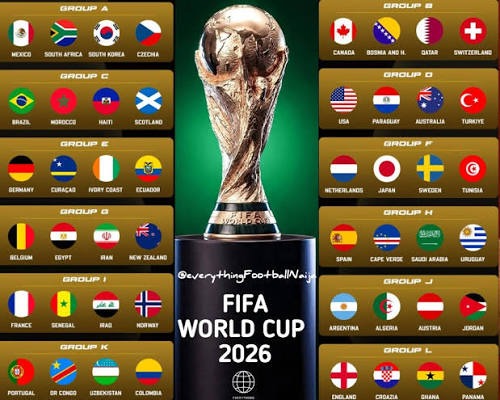
World Cup 2026
As the tournament narrows toward its climax, federations, coaches and fans agree on one thing — the final will be won on the margins
By Norman Mwale
“This World Cup feels wider open than any in a generation. The margins are tiny, and belief will decide it.”
The tournament has passed its midpoint, and the conversation has shifted. What began in June as 48 teams with a theory has narrowed to a handful with a genuine chance. By 19 July, two nations will walk out at MetLife Stadium, and the world will be watching. Until then, the debate rages on — from boardrooms in Zurich to fan zones in Mexico City, from dressing rooms in Europe to training pitches in Africa.
FIFA’s technical observers remain cautious. This edition has levelled the field in a way no previous World Cup has managed. There are fewer mismatches, more tactical discipline, and a depth of talent stretching well beyond the traditional powers. Yet one truth still holds. “We are seeing greater parity, but the teams with multiple match-winners still carry an advantage in the July heat,” a senior member of the FIFA Technical Study Group said. Recovery, rotation and nerve, the group believes, will matter more than reputation.
Across the federations, confidence is being weighed carefully. The Spanish federation described La Roja’s passage as a statement of control and clarity — a side that dictates the game without panic. The German FA has warned that this tournament will be decided on the margins of squad management, not in 90 minutes of brilliance. From Buenos Aires, the tone is different. Argentina carry the weight of champions and show no sign of buckling under it. “Argentina have the mentality of winners. That does not disappear because the tournament is bigger,” an AFA spokesperson said. In Africa, officials are hoping for a breakthrough. “If one of our sides reaches the semi-finals, the belief across the continent will lift everyone,” a CAF executive committee member noted.
The coaches themselves are less interested in predictions than in survival. Spain’s 3-0 win over Austria in the round of 32 — inspired by a Mikel Oyarzabal double — was the clearest statement yet of La Roja’s credentials, and it drew a striking response from the losing side. “I cannot remember any unforced error they made,” said Austria coach Ralf Rangnick. “I think they showed us their best performance. I would dare to say we did not only meet the European champion, but possibly the next world champion.” Spain boss Luis de la Fuente was characteristically measured in reply: “Our only focus is to remain thinking that we need to exceed our own expectations. Today’s match is just the prelude to what’s next, because in the next match we will try to play even better.” The players echo the same caution. Captains speak of one-game seasons; veterans warn against looking past the next whistle.
Away from the pitch, the commercial stakes are enormous. Broadcasters and sponsors are hoping for a final that travels. An Argentina–Brazil showpiece would break the internet across South America. A USA–Mexico final would own North American television. A European–South American final remains the safest bet for a global audience. “The storylines are what sell,” said a senior rights-holder in Europe. “A first-time finalist, a defending champion, or a host nation — any of those would shatter viewing records.”
Among analysts and former players, three patterns keep emerging. Argentina are backed for their experience and their capacity to win ugly when it matters. Europe is expected to supply at least one finalist, with Spain praised for youth and control, France for individual brilliance, and England for balance and set-pieces. Then there are the outsiders with a genuine claim. The United States have home advantage and growing depth. Brazil have the flair, though questions remain at the back. Morocco carry the hope of a continent following their run to the semi-finals in 2022. “Do not rule out a CONCACAF or CAF team making history,” said a lead commentator in North America.
In the stands and online, the mood is less clinical and far more visceral. Latin American supporters are demanding another final between their giants. European fans are backing the new generation. American audiences are daring to believe. A supporters’ representative in Mexico City put it plainly: “For the first time, it genuinely feels like 20 teams could win it. That makes the final unpredictable — and that is good for football.”
What unites officials, coaches, players and fans is this: the 2026 final will not be decided by pedigree alone. It will come down to who manages heat, travel, suspensions and pressure across three countries — and it will likely be settled in the last 15 minutes of tight matches, when legs are heavy and minds must stay clear.
As one FIFA official put it, “This will be the World Cup of squad management. The finalists will be the team that makes the fewest mistakes when it matters most.” Whether that team arrives in blue and white, in red, or in stars and stripes, the world will be watching on 19 July.
Similar Posts by The Mt Kenya Times:
- Mt Kenya Times ePAPER October 10-11, 2026
- Cabinet clears path for pending bills payout in relief for Kenya’s struggling suppliers
- Karanja quits UDA and targets Nakuru governorship on Gachagua’s DCP ticket
- Gachagua’s team plants DCP flag in Kiambu as 2027 battle lines harden
- A moment of recognition for service in energy
About the Author