Ruto leads the 2027 race—but is Kenya already deciding its next president?
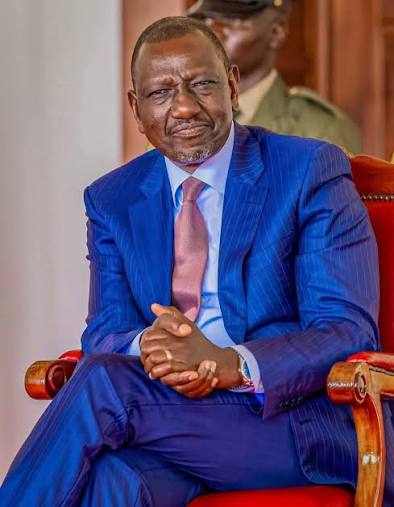
President William Ruto
New opinion poll sparks debate as President William Ruto emerges as frontrunner in the race to State House
By Hadassah Karangu
With more than a year still to go before Kenyans head to the ballot box in 2027, the political landscape is already taking shape. And if the latest opinion polls are anything to go by, President William Ruto has every reason to smile.
According to a new survey by Infotrak Research and Consulting, Ruto currently commands 32 percent support among likely voters, placing him well ahead of a crowded field that includes Wiper leader Kalonzo Musyoka at 13 percent, Nairobi Senator Edwin Sifuna at 12 percent, and former Interior Cabinet Secretary Fred Matiang’i, also at 12 percent. The poll, which surveyed 3,000 respondents between June 22 and June 26, found that 18 percent of Kenyans remain undecided.
The findings have reignited a familiar national conversation: is President Ruto steadily securing a second term, or is this simply an early snapshot of a race that remains wide open?
For many Kenyans, the results are both surprising and expected. Surprising, because the country has weathered a difficult stretch marked by a high cost of living, unemployment concerns and public frustration over taxation. Expected, because despite these challenges, Ruto remains one of the most visible and politically active leaders in the country. His administration continues to launch development projects, engage citizens across counties and maintain a strong presence in national discourse.
Politics, after all, has always been as much a game of perception as of performance. While critics point to economic hardship and unfulfilled promises, supporters argue that the government has made significant investments in infrastructure, affordable housing, agriculture, healthcare and digital opportunities for young people. Whether these efforts have fully translated into improved livelihoods remains open to debate, but they appear to have helped keep the President politically relevant.
One of the more telling aspects of the poll is not Ruto’s lead itself, but the state of the opposition. While several leaders continue to draw support, none has emerged as a dominant challenger. Support instead remains scattered among various personalities, each commanding influence in different regions and demographics.
That fragmentation may be working in Ruto’s favour. History has shown that a divided opposition often struggles to present a united front capable of challenging an incumbent. As long as opposition leaders keep competing for the same political space, Ruto may find it easier to maintain his advantage.
Still, polls do not vote. Citizens do.
Kenyan politics has repeatedly shown that public opinion can shift dramatically within a short period. Alliances change, new issues emerge, and unexpected events often reshape the electoral calculus. A candidate leading today may find themselves facing an entirely different reality tomorrow.
Young voters are likely to play a decisive role in shaping the country’s future. This generation is increasingly vocal, digitally connected and eager for leaders who can offer practical solutions to unemployment, education gaps, entrepreneurship and economic instability. Their priorities may ultimately count for more in 2027 than traditional political loyalties.
The economy will be another critical factor. Across markets, towns and cities, many Kenyans continue to judge leadership through the lens of daily life: Can families afford basic necessities? Are jobs being created? Are businesses growing? Are graduates finding opportunities? These questions may carry more weight at the ballot box than any campaign slogan.
The opposition, for its part, still has room to regroup, sharpen its message and present a compelling alternative vision. Elections are won not merely by criticising those in power, but by convincing citizens that a better path exists. The months ahead will test whether opposition leaders can turn public dissatisfaction into a coordinated political movement.
For President Ruto, the poll is undoubtedly encouraging. It suggests that despite the criticism, he retains a solid base of support. Yet it would be premature for any political camp to claim victory this early. Kenya’s political environment remains dynamic, unpredictable and often prone to dramatic turns.
As the countdown to 2027 continues, one thing is clear: the race has begun. Opinion polls may offer clues about the current mood of the nation, but the final verdict will belong to the millions of Kenyans who will ultimately decide the country’s future at the ballot box.
For now, President Ruto may be leading the pack — but the road to 2027 remains long, competitive and full of political surprises.
Similar Posts by The Mt Kenya Times:
- The hidden pressure of being a university student
- Youth surge in Kenya’s 2027 elections: From protest to power
- Kenya’s educated jobless: A generation waiting for a chance
- Eldoret must deliver more than a ceremony
- The long road back: How to conquer PTSD
About the Author