The Mt Kenya Times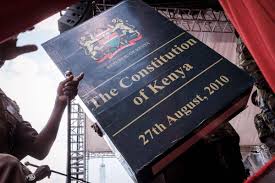
By Jerameel Kevins Owuor Odhiambo
There is a question that Socrates would have pressed upon us in the agora, one that Chinua Achebe would have understood as a story told not merely with words but with the weight of things fallen apart and it is this: what is a constitution, truly, if stripped of the moral imagination that first breathed life into it? Not the parchment. Not the clauses. Not the procedural architecture of rights and duties arranged in numbered articles. The question cuts deeper. It asks us to consider whether a constitution is, at its irreducible core, a moral proposition; a public declaration that a people, having surveyed the ruins of disorder and the tyranny of unaccountable power, have agreed that there is a better way to live together, and that they shall pursue it in good faith. Thus it is wise to state that behind every constitution lies a moral idea, and woven into that idea is a moral expectation of good faith compliance.
To understand what this means, one must first resist the temptation of the purely positivist reading of constitutions the reading that sees the law as nothing more than commands backed by sanctions, as H.L.A. Hart’s predecessors in jurisprudence might have had it. That reading has its uses. It gives us clarity about enforceability, about the hierarchy of norms, about what a court may do when a law is breached. But it cannot answer the more fundamental question of why anyone should comply with constitutional commands when no enforcement mechanism is watching. Lon Fuller understood this when he argued, in his masterwork The Morality of Law, that law has an inner morality: a set of principles without which legislation degenerates into a mere instrument of coercion. Ronald Dworkin went further still, insisting that courts deciding hard cases are always already operating within a moral framework that principles, not just rules, supply. The Kenyan Constitution of 2010 arguably the most transformative constitutional document in the country’s history and among the most progressive on the African continent did not emerge from a vacuum. It emerged from blood, from the post-election violence of 2007–2008 that left over 300 people dead and 600,000 displaced, from the long accumulating anguish of a people who had watched their constitutional order used as an instrument of ethnic patronage and executive excess rather than as a shared moral compact.
Achebe once wrote, in Arrow of God, that a man who brings home ant-infested faggots should not complain when the lizards come visiting. It is a metaphor that constitutional scholars rarely invoke but perhaps should. When the framers of the 2010 Constitution assembled at Naivasha and through the long process of the Committee of Experts chaired by the late Senior Counsel Nzamba Kitonga, after years of constitutional review that began with the Ghai-led Constitution of Kenya Review Commission they were not merely rearranging legal furniture. They were making a moral argument. They were saying, in effect: we have brought home the wrong faggots too many times. The faggots of concentrated executive power. The faggots of a rubber-stamp Parliament. The faggots of a judiciary that answered to the telephone calls of the powerful. And they resolved to bring home something different a constitutional order grounded in sovereignty of the people, the Bill of Rights, devolution, and institutional independence. Article 1(1) of the Constitution of Kenya 2010 declares with the force of a moral axiom that “all sovereign power belongs to the people of Kenya.” This is not merely a legal statement. It is a moral proclamation of the highest order, and it carries with it a corollary that too few state actors have honoured: that every exercise of power is an act of trusteeship, not ownership.
One must pause here, because the philosophical sediment in that single article is extraordinary. Socrates, in the Crito, refused to escape from prison because he had entered into an implicit compact with the laws of Athens and to escape would be to betray that compact. He was, in his martyrdom, articulating what we now call the moral obligation to comply with law. But Socrates’ compact was between a citizen and a state. The Kenyan constitutional compact of 2010 reverses the polarity: it is a compact in which the state through its organs, its institutions, its officers is bound to the citizen as trustee to beneficiary. This reversal is philosophically significant. It means that when a Cabinet Secretary awards a tender in violation of procurement law, when a court delays justice for years beyond any reasonable timeline, when a county government fails to publish its budget as required by Article 220 of the Constitution, these are not merely administrative infractions at best. They are breaches of a moral compact. They are acts of bad faith against a document that only has force because the people willed it into existence and consented to be governed by it. The 2010 Constitution was endorsed in a referendum on 4 August 2010 with 67% of voters in favour; a supermajority of moral endorsement that no subsequent administration can pretend is simply technical text.
The data is sobering when one confronts it honestly. According to the 2023 Auditor General’s Report, the Kenyan government had unresolved audit queries totalling over KSh 500 billion funds that could not be accounted for, procurements that defied procedure, transfers that dissolved into the opacity of discretion. The Office of the Controller of Budget has repeatedly reported that county governments spend as little as 18–22% of their development budgets in any given financial year, leaving the bulk of allocated resources unspent while constituents wait for water, roads, and health facilities. The National Cohesion and Integration Commission’s own surveys have documented that ethnic considerations remain the primary driver of public service appointments in defiance of Article 232 of the Constitution, which demands merit, fair competition, and representation of Kenya’s diversity. These are not mere statistics. They tell a story of a constitutional text honoured in rhetoric and violated in practice, of state actors who treat the constitution as a ceremonial garment to be worn on national days and hung in a wardrobe the rest of the year.
It is at precisely this juncture that Achebe’s wisdom about the relationship between a society and its stories becomes constitutionally indispensable. In Things Fall Apart, the tragedy of Okonkwo is not simply personal. It is the tragedy of a man who cannot adapt the moral framework of his world to the demands of a new order who clings to form while substance slips away. There is a version of this tragedy playing out in Kenya’s constitutional life. The form is preserved with remarkable fidelity: we hold elections, we have a Supreme Court, we have a Senate and a National Assembly, we have forty-seven county governments, we have a Judiciary Fund established by Article 173. But the substance, the moral purpose behind these forms, is frequently hollowed out. The devolution project, which was the 2010 Constitution’s most radical innovation and which transferred 15% of national revenue to county governments (a figure now closer to 22% in amended form under Article 203), was designed on a moral premise: that power exercised closer to the people is power exercised more accountably and more responsively. Nonetheless, survey after survey, including those conducted by the Institute for Social Accountability and Twaweza East Africa, has found that citizen participation in county budget-making which Articles 174 and 196 of the Constitution require as a constitutional duty remains largely theatrical, a box-ticking exercise rather than a genuine moral conversation between governors and the governed.
Ubuntu; the Southern African philosophical framework that Desmond Tutu rendered as “I am because we are” understands the self as constituted through relationship and community. A constitutional order built on Ubuntu logic, as the South African Constitution of 1996 explicitly acknowledges in its postamble, recognizes that rights are not atomistic entitlements but relational goods: my right to dignity is only meaningful if the state, and my fellow citizens, are morally committed to honouring it. Kenya’s constitution imports a similar sensibility through its emphatic communitarian provisions. Article 10, which lists the national values and principles of governance including human dignity, equity, social justice, non-discrimination, protection of the marginalised, and integrity does not speak only to courts. It speaks to every state organ, every public officer, and in a profound sense to every citizen. It creates what one might call a constitutional moral community: a community of persons bound to one another and to their governing institutions by shared normative commitments, not merely by coercive legal rules. Good faith is what prevents constitutional text from becoming what Oliver Wendell Holmes called “the parchment barrier” a document that exists in name only while power arranges itself without reference to it.
One of the most revealing moral stress-tests of the Kenyan constitutional order came in the aftermath of the 2017 presidential election. The Supreme Court of Kenya, in a judgment that sent shockwaves through the continent and the world, nullified the election of Uhuru Kenyatta as President, citing systemic irregularities in the transmission of results. Chief Justice David Maraga, delivering the majority opinion, did something philosophically extraordinary: he invoked not only the letter of the constitutional provisions on elections but their spirit, their moral purpose. He found that the Independent Electoral and Boundaries Commission had failed to conduct the election in accordance with the Constitution, not merely that a technical provision had been breached. This was constitutional morality in action. It was an assertion that the constitution demands more than procedural compliance; it demands fidelity to the values that the procedures exist to serve. However, what followed was a masterclass in bad faith constitutional conduct: the opposition called for a boycott of the fresh election, effectively refusing to participate in the constitutional remedy that the Supreme Court had provided; the government contested the court’s jurisdiction aggressively; threats were made against judicial officers. The moral expectation embedded in the constitutional order was strained to breaking point by the very political actors whose power derived from it.
Socrates, in the Meno, asked whether virtue can be taught. The constitutional equivalent of this question is whether good faith compliance can be institutionalised; whether a moral expectation can be converted into a systemic habit rather than left to the individual conscience of office-holders. The framers of the 2010 Constitution were not naïve about this. They created a remarkable architecture of accountability institutions precisely because they understood that moral expectations, without structural reinforcement, are aspirations only. The Ethics and Anti-Corruption Commission, the Auditor General, the Controller of Budget, the Salaries and Remuneration Commission, the various independent commissions under Chapter Fifteen these are not bureaucratic ornamentation. They are the constitutional framers’ attempt to translate a moral expectation into an institutional reality, to build structures that compel good faith even from those who would otherwise prefer opacity. The tragedy is that the moral idea behind these institutions has itself been subject to constitutional bad faith: appointments to these commissions have been repeatedly weaponised for political patronage, their budgets have been starved in retaliation for independence, and their reports have been received with what one can only describe as institutional contempt. The Independent Offices and the National Cohesion and Integration Act exist, but existence on the statute book is not the same as life in the moral community.
There is a specifically African dimension to this analysis that must not be elided in the rush to apply Western jurisprudential categories. Ngugi wa Thiong’o, writing from a different register than Achebe but with the same moral seriousness, has argued that colonialism’s deepest wound was not economic but epistemological; it taught colonised peoples to regard their own frameworks of meaning as inferior and derivative. The Kenyan Constitution of 2010, in a gesture of deliberate decolonization, recognised customary law and African jurisprudence as legitimate sources of law alongside the received English common law tradition (see Article 159(2)(c), which requires courts to apply customary law in civil cases subject to the Constitution and statute). The Kayas of the Mijikenda, the age-set governance structures of the Turkana, the council-of-elders jurisprudence of the Kikuyu these contain within them a deep moral logic of constitutional relevance: that power is held in trust for the community, that the elders govern only with the consent of the governed expressed through custom and expectation, and that a leader who violates this trust has violated something more fundamental than a rule. He has violated a relationship. The problem is that the state actors who populate the constitutional order are frequently educated in a tradition that treats law as technique rather than as moral relationship and the consequences are written in the audit reports and the destitution of marginalised communities waiting for a constitutional promise to arrive.
The Preamble to the Constitution of Kenya 2010 is a document of extraordinary moral density, and it deserves to be read not as ceremonial throat-clearing but as a statement of constitutional philosophy. “We, the people of Kenya,” it begins — establishing immediately that the moral authority of the document flows from popular sovereignty, not from the state. It acknowledges “the aspirations of all Kenyans for a government based on the essential values of human rights, equality, freedom, democracy, social justice and the rule of law.” The phrase “essential values” is not accidental. It speaks the language of constitutional morality, of goods that are prior to any particular legal rule and which give those rules their force and legitimacy. And then it commits: “Committed to nurturing and protecting the well-being of the individual, the family, communities and the nation.” This is a commitment not merely a goal or an aspiration. A commitment, in the moral lexicon, is a promise. It creates obligations. It generates legitimate expectations. And legitimate expectations, in constitutional law, have legal consequences: they can be enforced in court, the Courts have held that legitimate expectations arising from official representations are cognizable in law. The Preamble, properly understood, is Kenya’s foundational promise to itself and the moral expectation of good faith compliance is nothing less than the expectation that the promise will be kept.
The philosophy of constitutional morality demands that we reckon honestly with what happens when good faith compliance is abandoned not by rogue actors at the margins but by the constitutional order itself when the violation is systemic. John Rawls, in A Theory of Justice, argued that the stability of a just constitutional order depends on what he called the “overlapping consensus” a shared agreement among citizens with different comprehensive doctrines on the basic principles of political justice. When that consensus is eroded by repeated bad faith, the legitimacy of the constitutional order itself comes into question. Kenya has lived through this erosion more than once: the structural adjustment-era amendments of the 1980s that concentrated power in the presidency to a degree that the original independence constitution never contemplated; the Section 2A amendment of 1982 that made Kenya a de jure one-party state; the constitutional vandalism of the Moi era that the Bomas constitutional process was convened to reverse. The 2010 Constitution was, in a very real sense, a response to the accumulated moral deficit of prior constitutional bad faith a people’s declaration that the overlapping consensus had been shattered and needed to be rebuilt on firmer moral ground. The Bill of Rights in Chapter Four which is non-derogable in its core provisions by virtue of Article 25, and which encompasses economic and social rights under Articles 43 that are justiciable before Kenyan courts represents the moral floor below which constitutional compliance cannot legitimately descend.
What, then, is to be done? The question is Socratic in its simplicity and Achebian in the complexity of its answer. Socrates would counsel us to begin with self-knowledge to ask what we truly believe about the constitution, and whether our practices reflect those beliefs. Do we treat the constitution as a moral compact or as a technical obstacle to be navigated? Achebe would caution us that the answer is not found only in the city, in the court buildings and the parliament and the executive offices, but also in the village in the question of whether the people themselves regard the constitution as theirs, as an expression of their moral will, or as something that was done to them by educated strangers in a language they do not speak. This is not a trivial question. A recent survey by Afrobarometer found that only 36% of Kenyans felt they could influence what government does; a measure of felt constitutional agency that ought to alarm every person committed to the idea that the constitution belongs to the people. The cure is not primarily legal. It is moral and pedagogical. It requires what Wole Soyinka, accepting the Nobel Prize for Literature in 1986, called the “moral climate” that makes institutions work, a shared understanding, cultivated through education, through civic culture, through the example of leaders who actually comply with constitutional commands, that the constitution is not an aspiration for special occasions but a daily moral practice.
A constitution that is not morally inhabited by those who govern under it is a constitution that has already failed, regardless of how elegantly its provisions are drafted or how courageously its judiciary defends it. The Kenya of 2010 made a moral covenant with itself, a covenant of fifty million people and those who would come after them. It said: we shall be governed by principles, not by the whims of the powerful. We shall account for every shilling. We shall include the Turkana and the Ogiek and the woman in Kisii and the young person in Kibera as full beneficiaries of the constitutional order. We shall build institutions that outlast the individuals who lead them. Every time a public officer submits a false certificate of compliance with constitutional requirements, every time a county assembly rubber-stamps a budget it has not scrutinized, every time a presidential appointment is made on the basis of ethnic arithmetic rather than merit that covenant is broken. And broken covenants, as the histories of states remind us, do not remain abstract. They become lived injustice. They become the young person with no public hospital within reach, the widow whose land was grabbed because the Land Commission could not process her title in time, the graduate who cannot find employment because the public service has been carved up among the politically connected. Constitutions do not fail in the abstract. They fail in the body of the citizen who needed them to work. That is why good faith compliance is not a matter of legal nicety. It is a matter, in the most ancient and enduring sense of the word, of justice.
The writer is a legal writer and researcher
Similar Posts by The Mt Kenya Times:
- Mt Kenya Times ePAPER October 1, 2026
- Museveni backs Lamu but keeps Uganda’s money at home
- Sifuna’s party wins its name — and Kenya’s opposition race begins in earnest
- Lamu’s $16B gamble: Africa’s biggest refinery divides the region
- Ruto launches KSh2.2 trillion Lamu refinery in East Africa’s biggest energy bet
About the Author