The Mt Kenya Times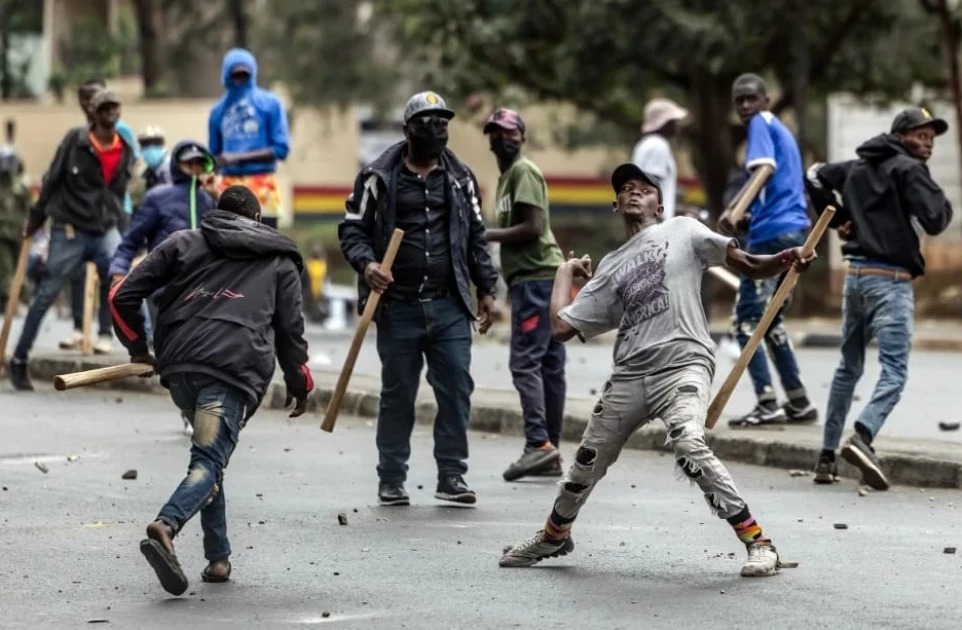
Political goonism is becoming a national security threat
The resurgence of organised criminal gangs requires far more than periodic police crackdowns.
By: Dennis Wendo
Across different parts of the country, organised groups of violent youths have once again surfaced during demonstrations, political gatherings and public events. Whether acting independently or under the influence of powerful interests, their growing visibility presents a disturbing trend that should concern every Kenyan.
Recent events have demonstrated just how quickly organised violence can undermine democratic processes and public safety. The violence witnessed during the Ol Kalou parliamentary by-election campaigns,where campaign activities were disrupted, allegations of hired gangs emerged, property was destroyed and innocent citizens found themselves caught in the chaos, should serve as a stark reminder of the consequences of allowing political competition to descend into lawlessness.
Regardless of political affiliation, such incidents undermine public confidence in democracy and erode respect for the rule of law.
This is no longer merely a policing challenge. It is steadily evolving into a national security concern with far reaching implications for public safety, constitutional order, economic stability and democratic governance.
From politically instigated violence witnessed during the election periods of the 1990s, through the devastating 2007–2008 post-election crisis, to more recent attacks accompanying demonstrations, political rallies and by-election campaigns, the country has repeatedly paid a heavy price whenever violence has been allowed to infiltrate democratic competition.
What often begins as isolated acts of intimidation gradually develops into organised criminal networks capable of disrupting businesses, attacking innocent citizens, intimidating political opponents and weakening confidence in state institutions.
The danger today lies not simply in the existence of these groups, but in their increasing organisation, coordination and apparent sense of impunity.
As we gradually enter the political season ahead of the 2027 General Election, all stakeholders must resist the temptation to weaponise unemployed young people for short-term political gain. Such arrangements may appear expedient during campaigns, but history consistently demonstrates that criminal networks rarely disappear once elections are over. Rather, they evolve, diversify into organised crime and eventually threaten the very individuals and institutions that once tolerated or sponsored them.
A nation cannot build democracy on intimidation.Political competition must be won through ideas, policies and the ballot, not through fear, violence or hired militias. The greatest tragedy is that the primary victims of organised political violence are often the very young people recruited to participate in it. Many are driven by unemployment, economic hardship, hopelessness, peer influence and substance abuse. They become disposable instruments in political contests, only to be abandoned when the campaigns end, leaving them exposed to arrest, injury, lifelong criminal records or even death.
As a nation we owe our youths something better. They deserve quality education, meaningful employment, entrepreneurial opportunities, mentorship and a genuine stake in the country’s future, not exploitation as foot soldiers in conflicts that serve other people’s ambitions.
Equally worrying is the gradual normalisation of organised violence. When citizens begin expecting criminal gangs to accompany political meetings or public demonstrations, society slowly accepts lawlessness as an ordinary feature of politics. In doing so, public confidence in the rule of law diminishes while the authority of legitimate security institutions is steadily eroded.
The solution cannot rely exclusively on arrests and police operations. Effective law enforcement remains indispensable, but sustainable peace demands a broader national strategy.
Government must strengthen intelligence gathering, early warning systems and preventive security measures. Political leaders across the divide must publicly reject the financing, mobilisation or protection of violent groups. Independent institutions must investigate and prosecute not only those who carry out acts of violence but also those who organise, finance or incite them.
At the same time, greater national investment is needed in youth employment, vocational training, entrepreneurship, sports, mental health services and community-based peacebuilding initiatives. Every young person diverted from organised crime represents not merely a personal success story but a significant investment in Kenya’s long-term peace and security.
Civil society, faith-based organisations, the private sector, educational institutions, community leaders and the media all have an equally important role to play. Through civic education, responsible leadership, peace messaging and active community engagement, they can help cultivate a political culture founded on dialogue rather than confrontation.
This is not a challenge that government alone can resolve.
Kenya has overcome profound national challenges before because its people chose dialogue over division, unity over hatred and nationhood over narrow political interests. That same spirit is needed now more than ever.
The period leading to the 2027 General Election should be defined by issue-based campaigns, peaceful engagement, respectful political competition and unwavering adherence to constitutional values—not fear, destruction and organised violence.
The resurgence of organised goons must therefore serve as a national wake-up call.
If ignored, these criminal networks risk evolving into even more sophisticated structures capable of undermining peace, discouraging investment, weakening democratic institutions and threatening national cohesion. If confronted decisively, lawfully and collectively, however, Kenya still has an opportunity to reverse this dangerous trajectory before the country heads to the ballot in 2027.
Ultimately, the strength of our democracy will not be measured by the intensity of our political contests but by our ability to conduct them peacefully, fairly and without intimidation.
Every Kenyan deserves the freedom to campaign, vote, assemble and express their political beliefs without fear. Protecting those freedoms is not the responsibility of government alone. It is a shared national obligation that demands courage from political leaders, professionalism from our security agencies, vigilance from our institutions and active commitment from every citizen.
The decisions we make today will determine whether future generations inherit a nation governed by the rule of law or one held hostage by organised violence. Kenya still has a choice. We must choose peace. We must choose justice. Above all, we must choose the Republic over politics.
Dennis Wendo
Governance and Public Policy Analyst. Integrated Development Network (IDN–Kenya).
Web: www.idnkenya.org
Email: idn.kenya@gmail.com
Similar Posts by The Mt Kenya Times:
- Diaspora Times Global Oct 17 – Oct 23, 2026
- Is social media a blessing or a curse for university students?
- Light at last: How electricity is reshaping Nandi and Uasin Gishu
- The triple squeeze: how EPRA’s fuel price hike is reshaping the survival equation for the common mwananchi
- Zelenskyy accuses Trump of rewarding Putin as Pope pleads for peace from a hospital bed
About the Author