Flipping the rulebook: Women thriving in careers once reserved for men
 The Mt Kenya Times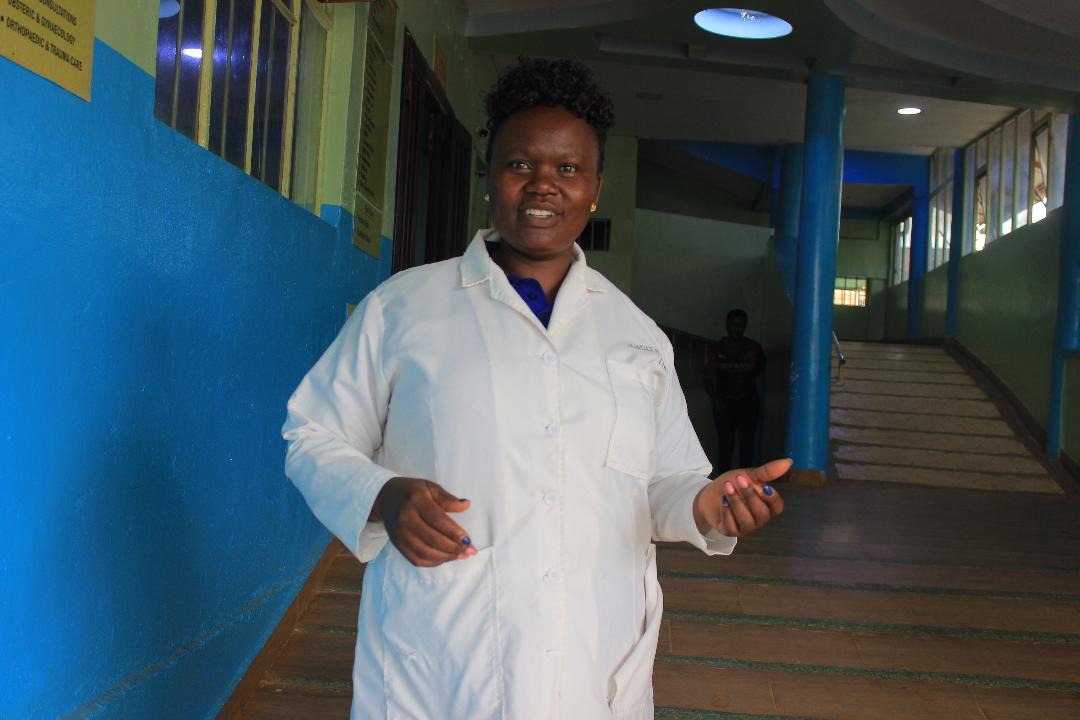
Judith Moraa a mortician working in one of the hospital in Kisii County , she thrives into the career once reserved for men photo/Elizabeth Angira
At 32, Judith Moraa spends her days in a space most people dread even to view inside – the mortuary. As a licensed mortician, she prepares bodies for burial with quiet precision and deep respect. Her work blends anatomy, embalming, and grief counseling, skills she honed through years of training and apprenticeship.
In Kenya and Africa, where mortuary work has long been seen as a men’s domain, Judith’s presence and those of thousands of other women who have ventured into what for generation were considered “men’s work”, challenge the societal norms and expectations, which condemned women to remain in the background in careers like teaching, nursing or as house wives caring for children, cooking, farming and engaging in small retail businesses considered socially acceptable.
Moraa, however, did not choose the job for shock value. After watching her childhood dream career of nursing getting flooded with jobless graduates, a personal experience triggered her to venture into a profession she never imagined even in her wildest dreams.
“We went to a local mortuary pick the body of a relative who had passed on and I witnessed bodies being handled in an undignified manner. There and then I decided that this will be my career and my work would be the opposite—every person will leave any mortuary I will work for with their dignity intact, ” the single mother of one from Getai Village in Nyangoso, Bobasi Constituency in Kisii County, silently vowed.
She applied for and pursued a Diploma in Mortuary Science from Kisii University in 2018 and started working as a mortician in 2020, handling bodied of grieving families in a calm and dignified manner while paying attention to cultural rites.
A career just like any other
Yet, as expected, when she first started working as a mortician, some members of her family were skeptical and unsure about her choice of profession.
“Over time, most of them have changed their perception and have come to accept my career choice as any other career and greatly supported me after seeing how passionate I was about my work,” she explains.
Indeed, many of them have see how it has been source of income, enabling her to purchase land and build her own home.
“I even drive my own car,” she says proudly.
Walking the untrodden path
It is not just Moraa who decided to walk the untrodden path as a mortician. Tens of other women across towns and villages are breaking the invisible career barriers.
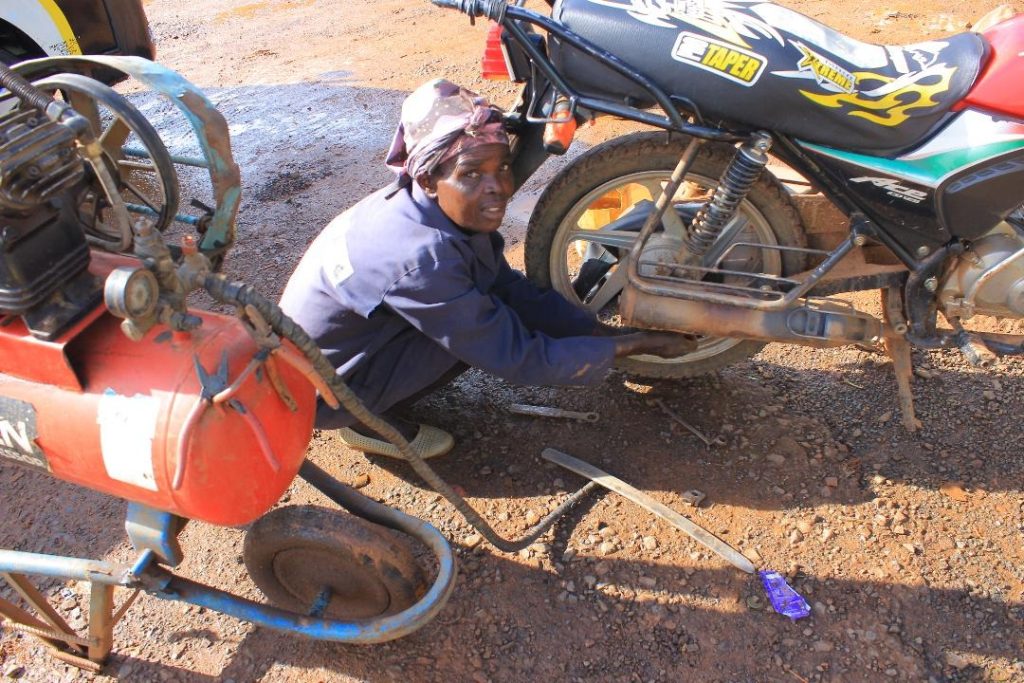
Her namesake but not related, Dorcas Moraa, 50 and a mother of four, has boldly ventured into the male-dominated profession of repairing punctured tyres for vehicles and boda bodas in Kisii town.
Her journey into the unusual trade began years ago in Olulunga, Narok County, where she operated a small hotel. A man, Paul Momanyi, operated a business of repairing tyres for motorists and boda boda riders outside her small hotel business. Curious and determined, Moraa developed a keen interest in learning the skill.
“I would stand there silently watching how he repaired the tyres. I told myself that one day I would try my hand it and become the best at fixing punctured tyres,” she says.
Whenever business at her hotel was slow, she would assist Momanyi with tyre repairs.
“He would tell me that I was doing well, and that gave me confidence,” she recalls.
On some occasions when Momanyi would be held by something and fail to report at his work, she would step in and ensure his customers were assisted by fixing their tyres.
One day, Momanyi handed her the tools and machine and asked her to repair a tyre on her own.
“At first, I was nervous, but I reminded myself that learning is a continuous process. Someone had given me an opportunity, and I had to make the best out of it,” she says.
She successfully repaired the tyre, impressing both the boda boda owner and Momanyi.
“They told me my work was perfect, and that gave me the courage to continue,” she says with a smile.
When Momanyi later relocated from the area, Moraa saw an opportunity. Since customers had already become familiar with her services, she purchased her own tools in 2006 and officially started the business.
According to her, the business quickly flourished because of the quality of her work and recommendations from satisfied customers.
“At first, many residents were shocked to see a woman repairing tyres because society viewed it as a man’s job,” she explains.
People, however, never looked down upon her despite being the only woman in the area doing the work.
Following the 2007/2008 post-election violence, Moraa relocated to Kisii town, where she continues with the business to date.
“I am the only woman in Kisii and Nyamira counties engaged in tyre repair work,” she says with laughter.
Many people still question her choice of a male-perceived job.
“This job pays well. I wanted to venture into a unique business that was not overcrowded. In many other businesses, competition is too high and profits are low,” she says.
It has been a fulfilling career.
“This job has enabled me to pay school fees for my children and put food on the table. I am very proud of that,” she says.
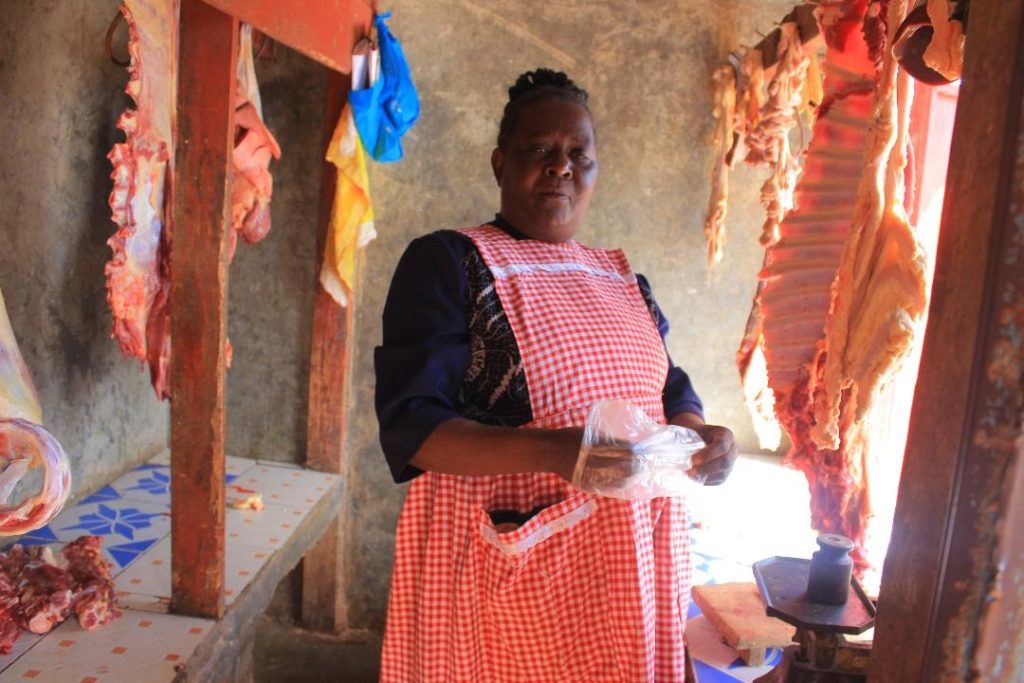
Meat butchery business is another area that has long been viewed as a man’s trade. Of late, however, women such as Peris Kemunto Mageto, a mother of six from Bosamaro Ward in Nyamira County, are giving men a run for their money as they break free of stereotypes and redefine the operational boundaries of the trade.
What is encouraging about Kemunto is that she began her beef-selling business in 2006 after being inspired by her husband, Yuvinnalis Mageto.
“I learned the skills of running a butchery business from him,” she says with a smile.
Hers was a case of stepping in when her husband was away attending to their farming activities.
“He would close the butchery whenever he was engaged elsewhere and we would lose our customers,” she says, “ Life was difficult and we struggled to make ends meet.”
When she informed of her desire to step in form him, he was skeptical but she assured him she could manage it and he gave in. She would prove it to him in no time.
“He soon realised that I would handle even the most difficult customers well and successfully sell meat,” she says proudly, “ he was impressed and became my cheer leader.”
Despite the challenges, the business has transformed her family’s life. Through the butchery, she has been able to feed her family, pay household bills, and educate her children.
“I am proud that our butchery has enabled us to move from a rental house to our own house we built on a one acre plot we purchased by our business proceeds,” she says.
Always challenging
Moraa, whose career as a mortician looks bright, says many men fear approaching her because of her work.
“Many men are uncomfortable with my job and this has played a role in me being a single mother,” she confesses.
She also notes that she has very few friends because whenever she talks about her work, many people stare at her with fear and suspicion.
“Still society expects women to do the “right jobs,” making it difficult for people to accept women working in professions traditionally associated with men,” she says.
She, however, urges members of the public to embrace and support women who have chosen any career, noting that, for instance, her being a mortician is just like being in any other profession and there is nothing to fear about her.
“Do not use my work define me,” she says.
Her namesake, equally faces challenges of her own.
Despite her success, since Moraa operates in an open space, rainy seasons greatly affect her work.
“When it rains, I have to look for shelter, and that means losing customers and income. Customers also need a place to shelter from rain or scorching sun, but I do not have a shed,” she explains.
She is appealing to the Kisii County Government to support the informal sector by putting sheds for them.
Like many entrepreneurs, Kemunto faces several challenges in her butchery business. One of the biggest difficulties is waking up very early to search for cows to slaughter. For, unlike in big towns where slaughterhouses supply meat to butcheries, in rural Kenya the butchery owner has to purchase animals and slaughter to get the meat to sell.
“I have to move around the market looking for someone willing to sell cows at a fair price,” she explains, “Sometimes it is very time-consuming, especially now that the prices of cows have gone up.”
Encouraging the youth not to choose jobs
Moraa encourages the youth to consider mortuary science in their career choices, noting that it offers many job opportunities.
“Mortuaries have long been run by people who were not well trained, explaining why many of them were unhygienic and their services were often not supportive to the bereaved family,” she says.
On her part, Moraa encourages women, especially the youth, to think outside the box and embrace any honest work, including sealing punctured tyres that can earn them a living.
“With the current economy, you cannot sit and wait to be fed by your parents or spouse,” she says.
She notes that even the married women should work to support their partners in reducing financial pressure in families.
“When one partner carries all the burden alone, it can even lead to mental health challenges,” she says.
She believes women should step out of their comfort zones, embrace unconventional jobs, and strive for financial independence.
Kemunto encourages women and young people not to fear venturing into professions traditionally reserved for men.
“In order to succeed, you must be willing to try and not allow fear to bring you down. With proper training and determination, anyone can succeed in the beef butchery business,” she says.
Through her dedication, expertise, and resilience, Kemunto has earned the respect of her customers and community while thriving in a profession traditionally dominated by men.
Expert opinion
According to studies on women’s work choices in Kenya, economic pressure, education, urbanization, and changing gender attitudes are among the key reasons pushing women into careers traditionally dominated by men.
Economist Dr Abel Mokoro says the rising cost of living has forced many families to rethink traditional gender roles.
“Today, a single source of income is no longer enough for many households. Women are entering every sector not because they want to compete with men, but because families must survive economically,” she says.
Mokoro explains that unemployment among the youth and the shrinking formal job market have also pushed women to venture into informal and unconventional jobs where opportunities still exist.
“In the past, society taught women to wait for opportunities to come through men. Modern economic realities have changed that completely,” he adds.
According to Mokoro, in Kisii town, women repairing tyres and selling meat openly challenge stereotypes that have existed for decades.
“What once attracted criticism is slowly attracting admiration. Customers now care more about quality service than gender,” he says.
Dennis Anyoka, an advocate of the High court of Kenya, believes constitutional protections and human rights awareness have empowered women to pursue careers freely.
“Our Constitution guarantees equality and freedom from discrimination. Women today understand their rights better than before. They no longer feel confined to roles assigned by culture,” he says.
Anyoka notes that exposure through education, social media, and advocacy by community-based organizations (CBOs) has encouraged women to challenge outdated beliefs.
According to Stella Achoki, the Director of Center for Community Empowerment (CECOME), several CBOs working on women empowerment across Kenya have also intensified campaigns encouraging women to pursue technical skills, entrepreneurship, and leadership opportunities.
Achoki say says that, such programmes have helped women gain confidence to enter fields once feared or culturally restricted.
“This women transformation, however, is not happening without resistance,” she observes.
Within the Abagusii Community, traditional expectations have long defined what men and women should do. Men were historically associated with wealth creation and physically demanding roles while women were expected to nurture families and support domestic life.
Samwel Bosire, Abagusii Council of Elders Secretary General, says culture is slowly evolving with time.
“In our days, some jobs were seen as shameful for women. Times have, however, changed because life itself has changed. We cannot stop women from working where they can earn a living,” he says.
Still, he cautions that society should not completely abandon cultural values.
“We must find a balance. Culture gave families structure and respect. Even as women enter different careers, families should continue respecting one another and preserving unity,” Bosire says.
Bosire believes the trend is likely to continue as more women gain more education, get financial independence, and exposure to technology.
Afrobarometer findings show that most Kenyans now support gender equality in employment and property ownership, signaling changing public attitudes.
“Changing gender roles, especially among younger generations. Some celebrate women’s empowerment, while others fear traditional family structures are weakening,” says Bosire .
The UN Women says women constitute over 60 per cent of the 74 per cent of Kenyans living in rural areas, where poverty levels remain high. Prevalence of absolute poverty in rural Kenya remains at 49.1 per cent. Rural women are at a bigger disadvantage compared to their urban counterparts in terms of access to political, economic and social development opportunities
Ruth Mogaka, a Sociologist, argues that the shift could positively transform families and communities.
“When women earn stable incomes, households often experience improved education for children, better healthcare, and reduced poverty levels,” she says.
Mokoro says poverty among women shows that economic empowerment can reduce dependency and vulnerability among women.
He says empowering women economically should not be viewed as a threat to men.
“A working woman strengthens the household economy. This is not about replacing men. It is about partnership,” Mokoro explains.
Bosire warns that society must prepare for changing family dynamics.
“As women gain economic power, traditional ideas about male authority and female dependency may continue fading,” he says, “This may create tension in some homes where communities still strongly believe in rigid gender roles.”
Anyoka says open dialogue will be important.
“Families must learn to adapt. Respect in marriage should not depend on who earns more money or who performs certain jobs,” he says.
Achoki cites that, for many women now entering male-dominated professions, the motivation is simple survival, dignity, and independence.
What was once considered impossible is now becoming visible on Kenyan streets every day: women confidently occupying spaces society once denied them.
Benefits
The World Bank says countries can only reach their full potential when everyone can contribute.
Its consultants, Tazeen Hasan, Sundas Liaqat and Kavell Joseph, observe that, globally, women’s labor force participation remains just over 50 per cent, compared to 80 per cent for men.
“Closing these employment disparities could raise average incomes of countries by nearly 20 per cent,” the trio say in an article titled Five ways evidence is unlocking women’s economic participation published on March 5, 2026.
The Bank’s economists, Precious Zikhali, Naomi Mathenge and Shubha Chakravarty, say Kenya has made strides in advancing gender equality, with a constitution that enshrines it and progressive policies in Vision 2030.
“But the reality tells a different story: Women still face barriers to equal economic participation,” they say in their blog titled Empowering Kenyan women key to unlocking inclusive growth, published on May 07, 2025.
They say gender disparities do not just hurt women, they hold Kenya back.
“Research shows that closing gaps in education and labor force participation could boost Kenya’s GDP by 10 per cent,” they say.
They observe that when women thrive, economies grow, poverty declines, and social outcomes in education and health improve for everyone.
“However, we know that economic empowerment is not just about jobs,” they say, “It is about financial independence, leadership, and breaking generations of societal expectations. It is about ensuring that our daughters (and sons) don’t just dream big, they achieve bigger.”
Similar Posts by The Mt Kenya Times:
- Zelenskyy accuses Trump of rewarding Putin as Pope pleads for peace from a hospital bed
- Mashujaa Day 2026: What does Kenya owe the heroes it exports?
- My Mother Tongue — The Most Sacred Voice Of My Heart
- General conditions for the development of preschool-age children
- The Poet’s Silence, The World’s Noise: Who Needs Literature Today?
About the Author