The Mt Kenya Times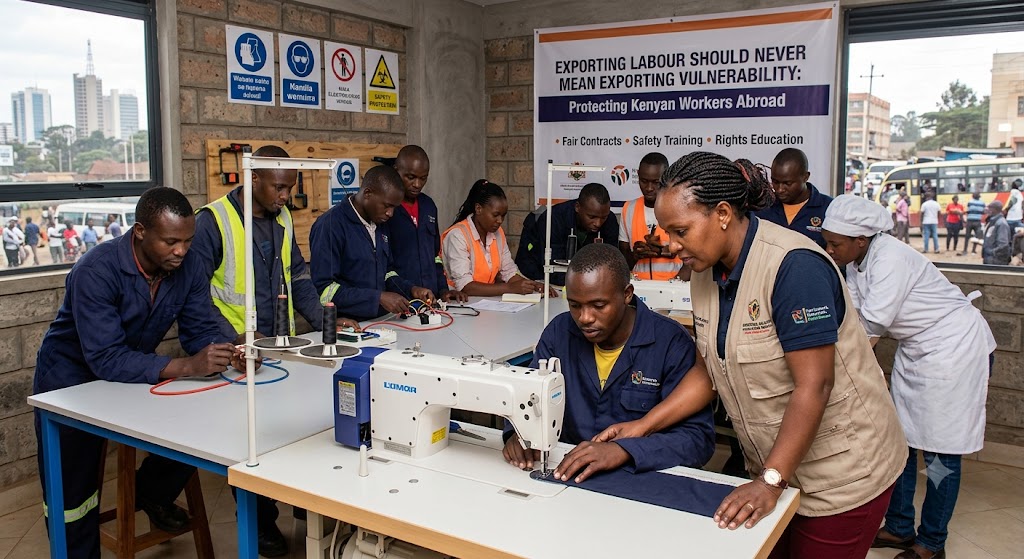
Kenya must protect its people as fiercely as it promotes them abroad
By Dennis Wendo
For generations, Kenyans have looked beyond our borders in search of better opportunities. Today, overseas employment has become a central pillar of the Government’s strategy to tackle unemployment, empower young people, and position Kenya as a competitive source of skilled labour in the global economy. Through bilateral labour agreements and structured recruitment programmes, thousands of Kenyans are finding work abroad, lifting household incomes and contributing meaningfully to the country’s economic growth.
Labour migration has, without question, become one of Kenya’s most valuable economic assets. Every year, Kenyans working overseas remit billions of shillings that support families, finance education, stimulate investment, and strengthen the national economy. These remittances now rank among the country’s leading sources of foreign exchange, a clear testament to the diaspora’s contribution to national development.
Yet as Kenya accelerates labour export, one question deserves just as much attention: are we doing enough to protect the very citizens we encourage to seek opportunities abroad?
Success should never be measured solely by how many Kenyans are deployed overseas. It should also be judged by whether they secure decent employment, earn fair wages, work under safe conditions, enjoy effective legal protection, and return home with their dignity intact.
The experiences of many Kenyan migrant workers, particularly in parts of the Gulf Cooperation Council region, are a sobering reminder that overseas employment can expose workers to serious risks. While many Kenyans have built successful careers abroad, others have faced contract substitution, unpaid wages, passport confiscation, excessive working hours, physical and psychological abuse, sexual exploitation, arbitrary detention, and, in some tragic cases, death under circumstances that remain unresolved.
Many workers finance their journeys through costly loans, hoping overseas employment will transform their lives. When recruitment promises turn out to be false, or working conditions differ sharply from what was contracted, debt becomes another form of captivity, trapping workers in exploitative situations simply to repay what they owe.
Labour migration, then, must never be treated as merely an employment programme. It is equally a matter of human rights, good governance, and national responsibility.
The Government’s commitment to expanding overseas employment opportunities is commendable, as are the ongoing reforms to strengthen labour migration governance. But these efforts must keep evolving alongside emerging risks and shifting labour markets.
The Ministry of Foreign and Diaspora Affairs carries a crucial responsibility to safeguard Kenyan workers abroad. Kenyan embassies and diplomatic missions should be properly equipped to provide timely consular assistance, legal support, and emergency intervention whenever citizens find themselves in distress. Safe houses, responsive reporting channels, and stronger engagement with host governments should become standard features of Kenya’s diplomatic protection framework.
The Ministry of Labour and Social Protection must continue strengthening bilateral labour agreements to guarantee minimum employment standards, fair remuneration, insurance coverage, accessible dispute-resolution mechanisms, and effective enforcement of workers’ contractual rights. Equally important is rigorous oversight of recruitment agencies, to root out fraudulent and exploitative practices.
The National Employment Authority should continue tightening regulation of private recruitment agencies while expanding pre-departure orientation programmes. Every Kenyan leaving the country for work should understand the contract they are signing, the laws of their destination country, the support mechanisms available to them, and their rights as migrant workers.
The Central Organization of Trade Unions also has an important role to play, extending labour rights advocacy beyond Kenya’s borders through partnerships with international trade unions and workers’ organisations. Labour rights should not end the moment a Kenyan boards an international flight.
Technology, too, should become part of migrant worker protection. A coordinated digital system linking relevant government agencies with Kenyan diplomatic missions would improve worker registration, emergency communication, and timely government intervention during crises.
Recruitment agencies must be held to the highest standards of accountability. Those engaged in fraud, illegal recruitment, contract substitution, human trafficking, or worker exploitation should face swift deregistration, criminal prosecution, and meaningful penalties. Such operators do not only exploit vulnerable citizens; they damage Kenya’s international reputation.
Prospective migrant workers also carry responsibility. They should verify the licensing status of recruitment agencies, carefully review employment contracts, attend pre-departure training, and ensure that close family members hold copies of all essential documents. Informed migration is safer migration.
As Kenya continues positioning itself as a reliable source of skilled and disciplined labour, protecting migrant workers must remain a national priority. Economic opportunity should never come at the expense of human dignity.
Ultimately, the success of Kenya’s labour migration programme will not be measured simply by how many citizens work abroad, or how much they remit home. It will be measured by whether every Kenyan who leaves in search of a better future does so safely, works under fair and dignified conditions, enjoys meaningful protection from their government, and returns home with hope rather than hardship.
As Kenya expands opportunities for its citizens across the global labour market, it must also strengthen the systems that protect them. Overseas employment should be a pathway to prosperity, not vulnerability. The promise of greener pastures should never become a journey into exploitation or despair. By placing the dignity, rights and welfare of migrant workers at the heart of labour migration policy, Kenya will not only strengthen its international standing but also fulfil its enduring duty to protect its citizens, wherever they may be.
Dennis Wendo is a Governance and Public Policy Analyst at the Integrated Development Network–Kenya (IDN–Kenya).
Email: idn.kenya@gmail.com | Website: www.idnkenya.org
Similar Posts by The Mt Kenya Times:
- Mt Kenya Times ePAPER October 21, 2026
- Kenya confirms ninth Ebola case as outbreak remains contained within single cluster
- Musk pledges SpaceX share for every American child in 2027
- Abiy calls for deeper Kenya-Ethiopia trade partnership at Eldoret ceremony
- Kenya’s oil moment: Promise, responsibility and the long road from Turkana to market
About the Author