Treasury scandal deepens: Nine arrested over KSh1.57B PROFIT programme fraud
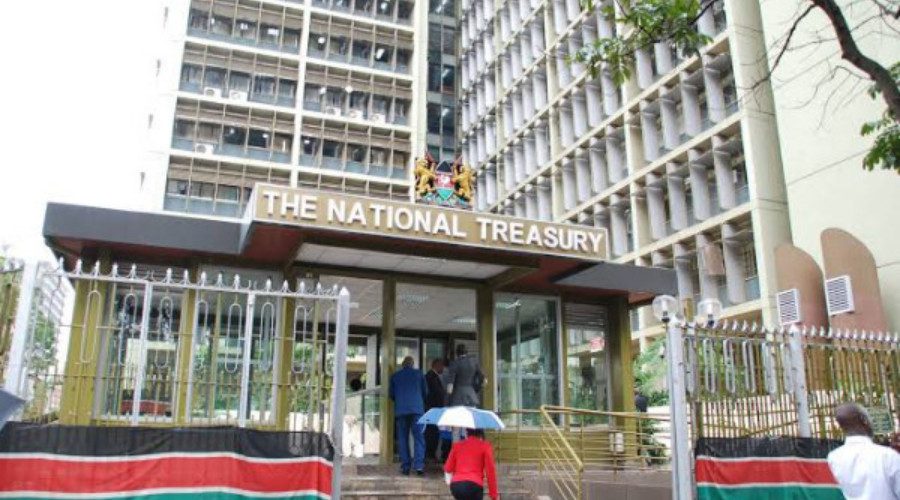
Kenya's National Treasury
Senior National Treasury officials and six business owners face charges after the EACC unravels an elaborate scheme to plunder funds meant for Kenya’s small-scale farmers.
By Angela Mwanga
A major corruption scandal has hit Kenya’s National Treasury after the Ethics and Anti-Corruption Commission (EACC) on Tuesday arrested nine suspects over the alleged embezzlement and fraudulent disbursement of KSh1.57B under the Programme for Rural Outreach of Financial Innovations and Technologies (PROFIT), an IFAD-funded initiative designed to expand access to affordable financing for small-scale farmers.
The EACC has described this as one of the largest financial recovery cases it is currently pursuing. The arrests follow a lengthy investigation into one of the most brazen alleged frauds to emerge from Kenya’s public financial management system in recent years — a scheme that investigators say ran for years, involved forged documents, an unauthorised bank account and the siphoning of billions of shillings into private hands.
The nine suspects arrested yesterday are John Ngure Kabutha, the PROFIT Programme Coordinator; Namwel Moturi Motanya, Head of the Accounting Unit at the National Treasury; John Maina Muriithi, a Senior Accountant at the National Treasury; Gladys Juliet Oroni, proprietor of Mawindo Enterprises, Brigs Agencies and Green Basil Agencies; Brian Kiprop Chepkarat, proprietor of El Konyinta Technologies; Ian Kwemoi Chepkarat, director of O20 Investments Limited and Vidi Vici Ltd; Josephat Kamau Kamoshe, director of Blue Dart Agencies Limited; James Omwodo Ndai, proprietor of Ednas Agencies, Prozepp Technologies and Steeren Enterprises; and Jimmy Carter Odoyo Osodo, proprietor of Cadnic Investments.
The PROFIT Programme was implemented by the National Treasury between the 2013/14 and 2023/24 financial years with funding from the International Fund for Agricultural Development (IFAD), with the stated goal of facilitating small-scale farmers’ access to affordable financing. Investigators allege that KSh1,569,582,338.20 was fraudulently disbursed from the National Treasury Development Account into the programme — and then systematically looted.
The mechanics of the alleged fraud, as established by EACC investigators, are deeply troubling. Fraudsters allegedly opened a new bank account in the programme’s name using forged National Treasury documents, even though the PROFIT programme had already ended and its official bank account been closed. Suspects then allegedly used fake payment vouchers and forged single-step authorisations to push through disbursements disguised as PROFIT funding requests.
Approximately KSh784.7 million was wired to 23 companies, while another KSh768.2 million was withdrawn directly in cash — a scale of cash movement that raises serious questions about internal controls at both the Treasury and the banking institutions involved. EACC also established financial links between programme officials and some of the private entities that received the funds, in apparent contravention of public financial management and accountability requirements.
The response from IFAD has been swift. After learning of the court proceedings filed by the anti-graft agency, the international fund referred the matter to its Office of Audit and Oversight, saying it takes “all allegations of fraud seriously” and emphasising its zero-tolerance approach to corruption.
The Director of Public Prosecutions (DPP) has approved prosecution of all nine suspects. The charges to be preferred include abuse of office, unlawful acquisition of public property, uttering a false document, financial misconduct, acquisition of proceeds of crime and money laundering.
The EACC has also moved beyond the criminal courts. The commission has approached the High Court seeking recovery of luxury properties allegedly bought with the stolen funds in Nairobi, Machakos and Uasin Gishu counties.
The nine suspects are expected to be arraigned at the Milimani Law Courts today. It bears emphasis that the arrests and allegations do not amount to convictions, and all suspects remain entitled to due process and the presumption of innocence until the courts determine otherwise.
What is not in dispute is the gravity of what is alleged. The PROFIT programme was not an abstract budget line — it was money earmarked to help Kenya’s most economically vulnerable farmers access credit, purchase farm inputs and improve their livelihoods. Every shilling allegedly stolen was a shilling that never reached a small-scale farmer depending on it.
The case also raises uncomfortable questions about the systems meant to prevent exactly this kind of fraud. The alleged scheme — involving a closed programme’s account being reopened using forged documents, fake payment vouchers and cash withdrawals on an industrial scale — suggests multiple layers of oversight failed either to detect or to act on red flags that, in retrospect, should have been impossible to miss.
As Kenya continues to grapple with persistent concerns over the misuse of public and development funds, the PROFIT Programme scandal is a sobering reminder that accountability is not a bureaucratic formality. For the farmers this programme was supposed to serve, it is the difference between a helping hand and an empty promise.
Similar Posts by The Mt Kenya Times:
- Mt Kenya Times ePAPER October 7, 2026
- Ruto signs KSh389B electric vehicle deal at State House
- Kenya mobilises KSh70B to fight Ebola as US and World Bank step in
- High Court freezes law school admissions over disputed entry rules
- Grade 11 textbooks head to schools as CBC transition gathers pace
About the Author