South Africa’s xenophobic resurgence: A test of our collective conscience
 The Mt Kenya Times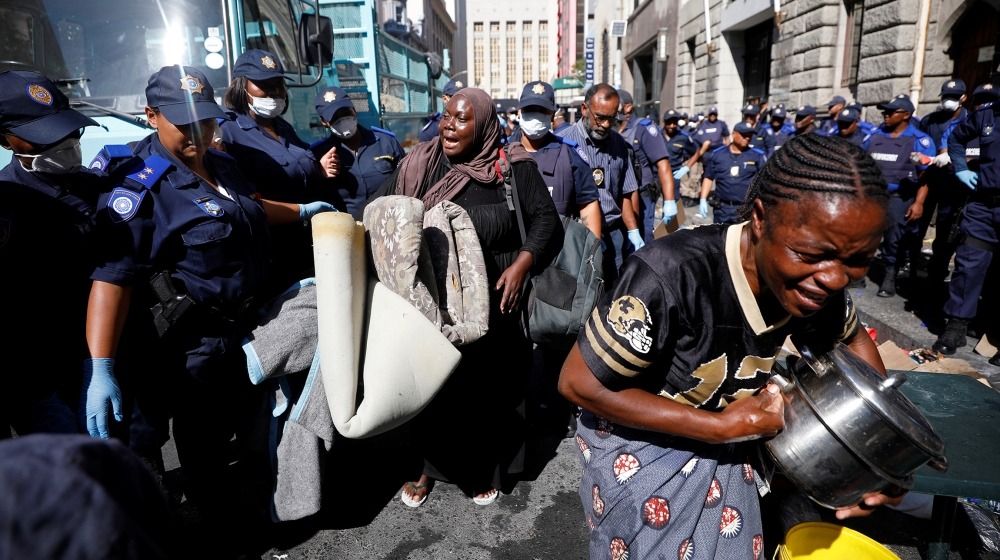
Xenophobic violence in South Africa
Every attack on a fellow African wounds not just the victim but the continent’s founding ideals.
By Dennis Wendo
The resurgence of xenophobic violence in South Africa is more than an isolated security concern. It is a painful reminder that Africa’s enduring dream of unity remains fragile and, at times, elusive. Every attack against a fellow African diminishes not only the victim but also the ideals upon which the continent seeks to build its future.
For decades, Pan-Africanism has embodied the aspiration of a continent united by shared history, mutual respect and collective prosperity. This vision is reflected in the African Union’s Agenda 2063, the African Continental Free Trade Area and the growing commitment among African states to promote trade, investment and the lawful movement of people across borders. Yet these aspirations cannot be fully realised if Africans continue to fear one another.
Renewed hostility towards foreign nationals in parts of South Africa has once again shaken the conscience of the continent. Businesses have been looted, livelihoods disrupted, families displaced and communities traumatised. Violence founded on prejudice has no place in a constitutional democracy governed by the rule of law, regardless of the nationality of those targeted.
History offers no comfort here. The xenophobic attacks of 2008, followed by further outbreaks in 2015 and 2019, claimed lives, destroyed property and displaced thousands. Each episode attracted widespread condemnation and fresh commitments to address underlying causes. Yet the recurrence of similar violence suggests those causes remain insufficiently confronted.
South Africa’s socio-economic challenges are undeniable. High unemployment, persistent inequality, poverty and growing public frustration place enormous pressure on communities. These realities demand serious policy attention. But economic hardship cannot justify violence against people whose aspirations differ little from anyone else’s — to work, pursue education, build businesses and provide for their families.
Periods of economic uncertainty have historically produced convenient scapegoats. Migrants become easy targets for frustrations whose origins lie in far more complex structural and governance failures. Blaming foreign nationals does not create employment, reduce inequality or improve public services. It risks weakening social cohesion, discouraging investment and undermining confidence in the rule of law.
States have a legitimate right to regulate immigration, secure their borders and enforce immigration laws. Irregular migration must be addressed through lawful, fair and effective systems. But immigration status should never become a justification for dehumanisation or violence.
Migrants — including some without regular status — nevertheless participate in the economies in which they live. They work, trade, rent homes, purchase goods and services and contribute to economic activity. Those in formal employment contribute through taxation; their consumption generates indirect tax revenues. Kenya offers an instructive example: in construction, agriculture, domestic work, hospitality and small-scale trading, foreign nationals have taken up roles that some local residents are increasingly reluctant to fill. This is not an argument for illegal immigration. It is an argument against the simplistic assumption that an undocumented migrant is automatically an economic burden.
The appropriate policy question is: what economic role are migrants playing, under what conditions, and how can governments regulate that contribution fairly and lawfully? Governments should enforce immigration laws while protecting labour rights, preventing exploitation, ensuring tax compliance and addressing genuine security concerns. A person can be in violation of immigration law and still make an economic contribution. These realities can coexist.
For Kenya, developments in South Africa carry particular weight. Thousands of Kenyans have established careers, businesses and professional networks there — working as teachers, healthcare professionals, engineers, entrepreneurs, academics, hospitality workers and employees of multinational organisations. Their contribution extends beyond South Africa through investment, remittances, knowledge exchange and stronger commercial and cultural ties between the two countries.
Although Kenyans have not consistently been the principal targets of xenophobic violence, hostility towards foreign nationals rarely remains confined to one nationality. Once xenophobia becomes normalised, every African migrant becomes vulnerable. Kenya must therefore continue strengthening mechanisms to protect its citizens abroad. The Ministry of Foreign and Diaspora Affairs, the Ministry of Labour and Social Protection, the National Employment Authority and Kenyan diplomatic missions should enhance diaspora registration, bilateral labour agreements, crisis communication, legal assistance and emergency response capabilities.
South Africa, meanwhile, must ensure that immigration enforcement remains the responsibility of legitimate state institutions — not vigilante groups, criminal gangs or mobs. Those who incite or participate in xenophobic violence should be investigated and prosecuted. The principle is straightforward: a country can enforce its immigration laws without dehumanising immigrants.
Political leadership matters equally. Rhetoric that portrays migrants collectively as the cause of unemployment, crime or pressure on public services risks converting legitimate public grievances into prejudice. If unemployment is the problem, governments must address job creation, skills development and investment. If crime is the concern, law enforcement must pursue criminals regardless of nationality. If public services are strained, governments must improve planning and delivery. Foreign nationals should not become the convenient explanation for failures of governance.
The responsibility extends further. The African Union, the Southern African Development Community, the East African Community and other regional bodies should treat recurring xenophobic violence as a continental human security concern. Stronger early warning systems, preventive diplomacy, civic education and migrant protection mechanisms are needed to break recurring cycles of violence. Continental integration is not simply about moving goods and capital. It is also about ensuring that Africans can travel, study, work, trade and invest across borders without fear.
South Africa’s own history provides a powerful reminder. During the struggle against apartheid, countless South Africans found refuge across the continent. Tanzania, Zambia, Botswana and Mozambique offered sanctuary, education and solidarity to those fleeing oppression. That generosity represented some of the highest ideals of African unity.
Today, Africa must ask whether it is prepared to extend that same spirit of solidarity to migrants, students, workers and entrepreneurs who cross its borders in search of opportunity. The philosophy of Ubuntu — expressed through the idea that “I am because we are” — reminds us that our humanity is interconnected. It does not require African states to abandon sovereignty, border controls or immigration laws. It challenges them to exercise those responsibilities without abandoning their humanity.
The answer to unemployment is sound economic policy, not hatred. The answer to crime is effective policing, not collective blame. The answer to irregular migration is effective management and lawful enforcement, not mob justice. And the answer to inequality is inclusive development — not violence against neighbours seeking opportunity, dignity and hope.
South Africa’s xenophobic resurgence is therefore more than a domestic challenge. It is a test of our collective conscience — and of whether Pan-Africanism is a principle we genuinely believe in, or merely invoke when convenient.
The true measure of African unity will not be found in declarations adopted at continental summits. It will be found in whether an African trader feels safe in another African country, whether a student can pursue an education without fear, whether a professional can build a career across borders with dignity — and whether a migrant, regardless of status, is treated as a human being while the state lawfully determines their right to remain.
Africa cannot build an integrated economy while allowing hatred to police its borders. If we fail this test, we risk weakening the foundations of continental integration. But if we respond with courage, justice, responsible leadership and compassion, we can reaffirm the values that inspired Africa’s liberation movements and preserve the promise of a peaceful, prosperous and united continent.
Dennis Wendo is a governance and social policy commentator with the Integrated Development Network (IDN Kenya).
Similar Posts by The Mt Kenya Times:
- Mt Kenya Times ePAPER October 17-18, 2026
- Ruto bets billions on Kerio Valley — with one eye on 2027
- Ruto’s health ministry kills Murang’a’s digital hospitals
- Kenya bets on Mount Kenya to drive a billion-shilling tourism revival
- Do you have a wealth vision? Or are you just working until you die?
About the Author