Kenya bets on Mount Kenya to drive a billion-shilling tourism revival
 The Mt Kenya Times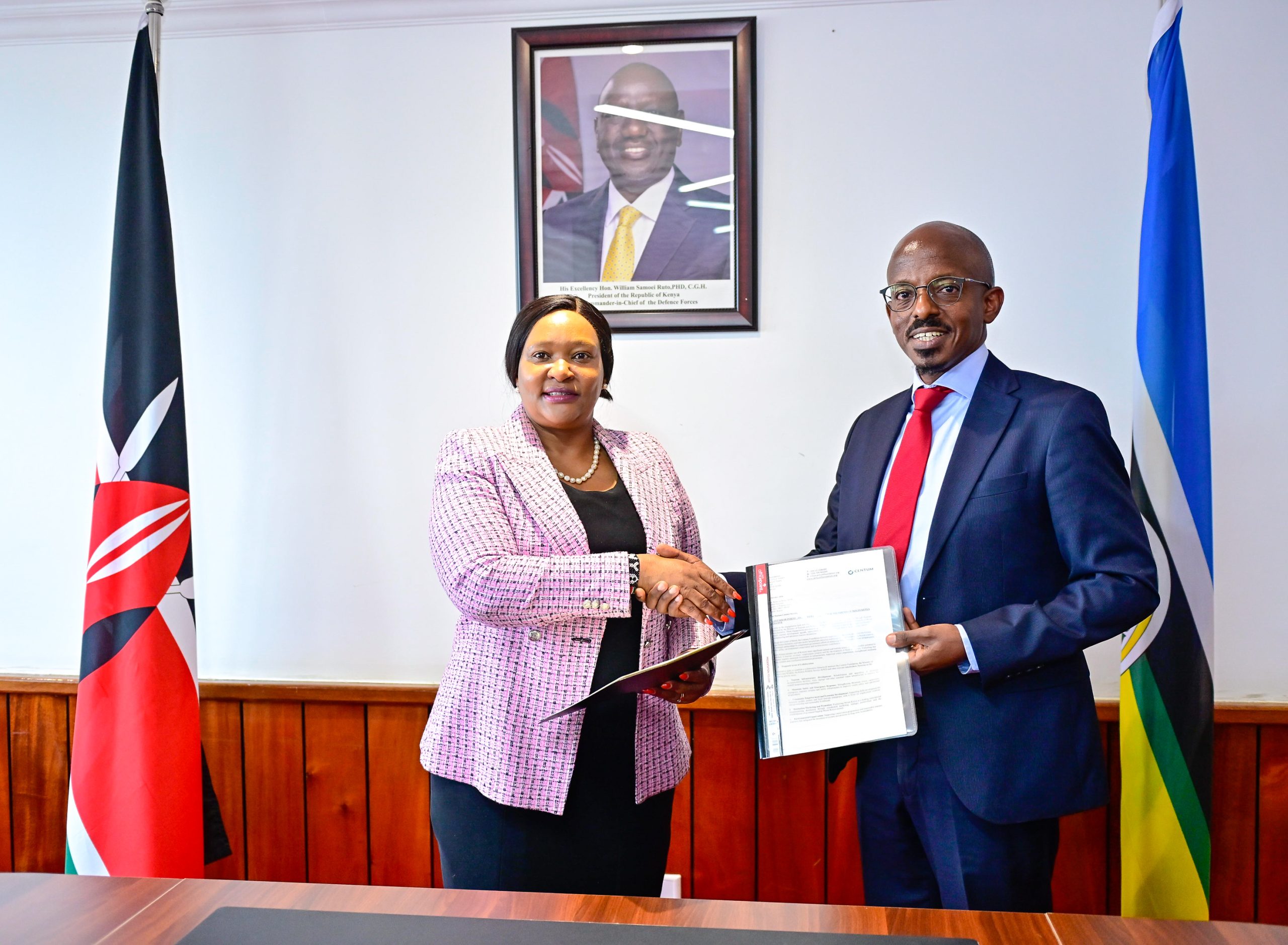
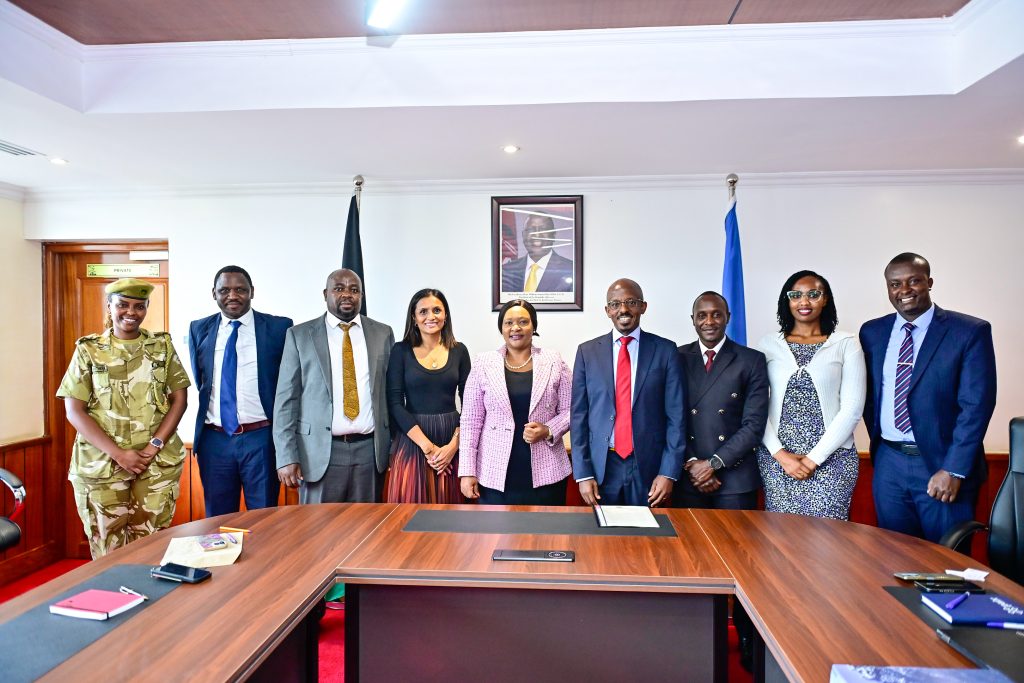
Cabinet Secretary for Tourism and Wildlife Rebecca Miano and the Centum Foundation yesterday signed a strategic partnership agreement establishing the Friends of Mount Kenya Initiative
A new partnership between the government, Centum Foundation and conservation bodies targets 100,000 annual visitors and thousands of jobs from Africa’s second-highest peak
By Waithaka Kariuki
The government has formalised a partnership with the Centum Foundation to mobilise one million US dollars for the development of Mount Kenya as a global adventure tourism destination, in what officials describe as the most structured effort yet to unlock the commercial and conservation potential of one of Africa’s most significant natural landmarks.
Cabinet Secretary for Tourism and Wildlife Rebecca Miano and the Centum Foundation yesterday signed a strategic partnership agreement establishing the Friends of Mount Kenya Initiative, a five-year programme that will bring together the Kenya Wildlife Service, the Kenya Tourism Board and a range of corporate, development and conservation partners to upgrade infrastructure, improve visitor safety and expand economic opportunity for communities living around the mountain.
Mount Kenya is Africa’s second-highest peak and a UNESCO World Heritage Site. It is also, by any honest assessment, an underperforming national asset. The mountain supports the water catchment systems that supply more than seven million Kenyans, sustains agricultural and energy generation across much of the central region, and sits at the centre of one of the continent’s most recognisable natural landscapes. Yet its annual visitor numbers remain a fraction of what comparable mountain destinations attract internationally, constrained by ageing infrastructure, inadequate trail marking, limited emergency response capacity and a global profile that has never matched the mountain’s actual scale or significance.
The Friends of Mount Kenya Initiative is designed to change that, deliberately and in stages. The programme’s initial phase will focus on practical, high-impact improvements: better connectivity between entry points and key trails, systematic trail marking, upgraded sanitation facilities, strengthened emergency and rescue response, improved visitor information and the professional development of mountain guides and porters. These are the foundational conditions that serious adventure tourists expect and that Mount Kenya currently struggles to provide consistently. Larger infrastructure investments will follow once the baseline is in place.
The economic projections attached to the initiative are substantial, though officials have been careful to present them as illustrative scenarios rather than guaranteed outcomes. Modelling developed for the programme suggests that increasing annual visitation to 100,000 — a target that would represent a significant but achievable step up from current levels — could generate between KSh4.4B and KSh6.6B in annual tourism expenditure, support between 5,300 and 7,800 direct and indirect jobs, produce between KSh660 million and KSh1.05B in government revenue, and deliver between KSh890 million and KSh1.55B in revenues for small and medium enterprises in the surrounding communities. The caveats are appropriate — these outcomes depend on sustained investment, market development and further validation — but the order of magnitude is significant and the direction of travel is clear.
The structure of the partnership reflects a considered division of responsibilities. The Centum Foundation will lead resource mobilisation, programme coordination, governance and impact reporting, drawing on its network of corporate organisations, development partners and conservation institutions. The Ministry of Tourism and Wildlife will provide strategic policy oversight. The Kenya Wildlife Service will identify and implement priority interventions within its conservation and park management framework. The Kenya Tourism Board, through its Magical Kenya brand platform, will support destination positioning and international promotion — work that takes on additional importance given the global adventure tourism market’s rapid growth and the increasing competition among mountain destinations for high-value visitors.
The partnership follows a period of structured engagement with the Magical Kenya rebranding taskforce, led by MaryAnn Musangi, which examined opportunities to strengthen Kenya’s international tourism positioning and specifically identified Mount Kenya’s underexploited potential as a centrepiece of that effort. The connection between rebranding ambition and on-the-ground investment is an important one: destination marketing without the infrastructure to support visitor expectations is, at best, a short-term exercise. The Friends of Mount Kenya Initiative attempts to address both simultaneously.
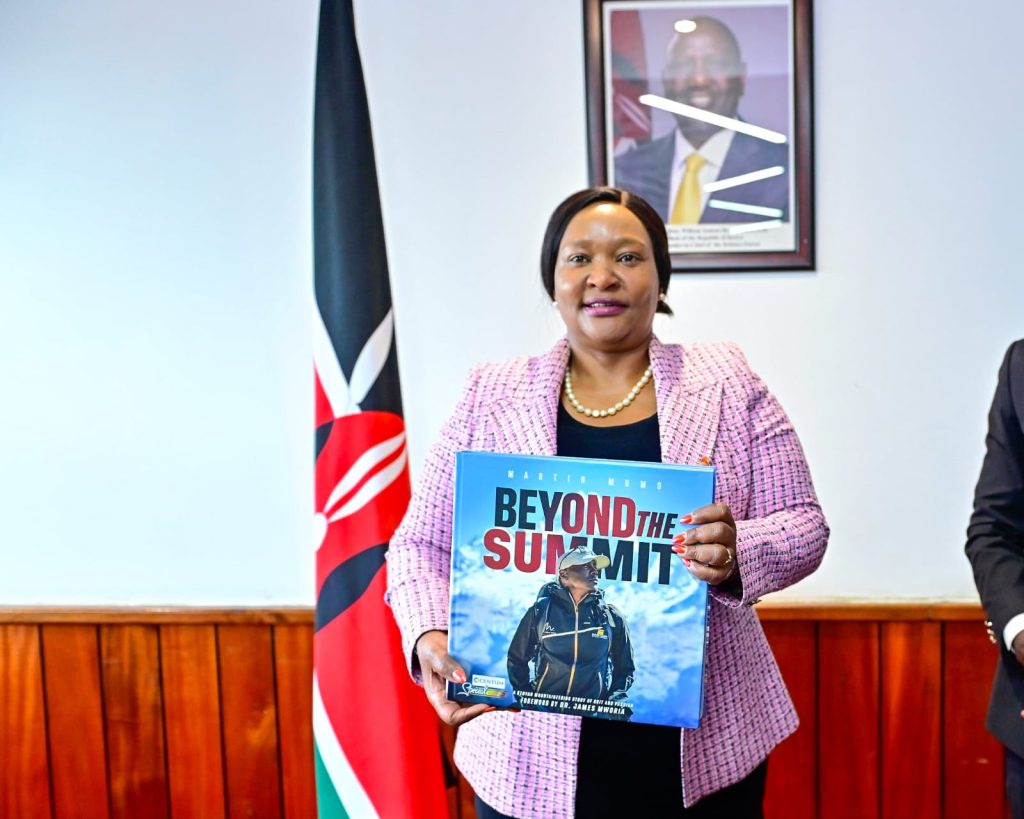
One of the more distinctive elements of the programme is its ambassador. Martin Mumo, head of tax at Centum Investment Company and a serious high-altitude mountaineer, will serve as the initiative’s public face and is planning a summit of Mount Everest in 2027 — an expedition that organisers intend to use as an international platform to raise global awareness of Mount Kenya and attract strategic partnerships. Mumo successfully summited Ama Dablam in Nepal in November 2025, one of the technically most demanding peaks in the Himalayas, as part of a broader ambition to climb all fourteen of the world’s mountains above 8,000 metres. The Everest expedition will mark the most visible moment in that journey and, if the programme’s architects manage the communications well, could provide the kind of sustained international coverage that money cannot simply buy.
The Centum Foundation delegation formalising the partnership includes Fred Murimi, managing partner at Centum Capital Partners and a foundation trustee; alongside Mumo, Martin Gitonga, head of risk, compliance and ESG at Centum Investment Company, and Mary Mwangi from the company’s brand and communications team.
An annual Friends of Mount Kenya Summit is planned as a recurring platform for investor engagement, progress reporting and visibility — a forum designed to keep the momentum of the initiative alive between formal programme milestones and to signal to the international market that Kenya is serious about this particular ambition.
The scale of what the initiative is attempting should not be underestimated. Transforming a mountain with genuine but unrealised potential into a globally competitive adventure tourism destination requires more than funding and goodwill — it requires sustained coordination across government, the private sector, conservation bodies and local communities over a period of years, with consistent delivery against targets that international investors and visitors will scrutinise closely.
But Mount Kenya has been waiting for precisely this kind of attention for a long time. The mountain is ready. The question now is whether the partnership behind the initiative has the endurance to match its ambition.
Similar Posts by The Mt Kenya Times:
- Ruto’s health ministry kills Murang’a’s digital hospitals
- Do you have a wealth vision? Or are you just working until you die?
- PS Isaboke lauds digital literacy programme in Kisii as 332 schools benefit
- “‘रूह से रू-ब-रू’”: The World of Emotions in Bharti Raina’s Poems and Ghazals
- The forgotten identity: Is Kenya doing enough to preserve Sengwer culture?
About the Author