Wiper Patriotic Front leader Kalonzo Musyoka yesterday met Farmers Party leader Kimani Ngunjiri
The Wiper leader’s alliance-building blitz reveals how seriously he is treating the road to August 2027
By David Kimani
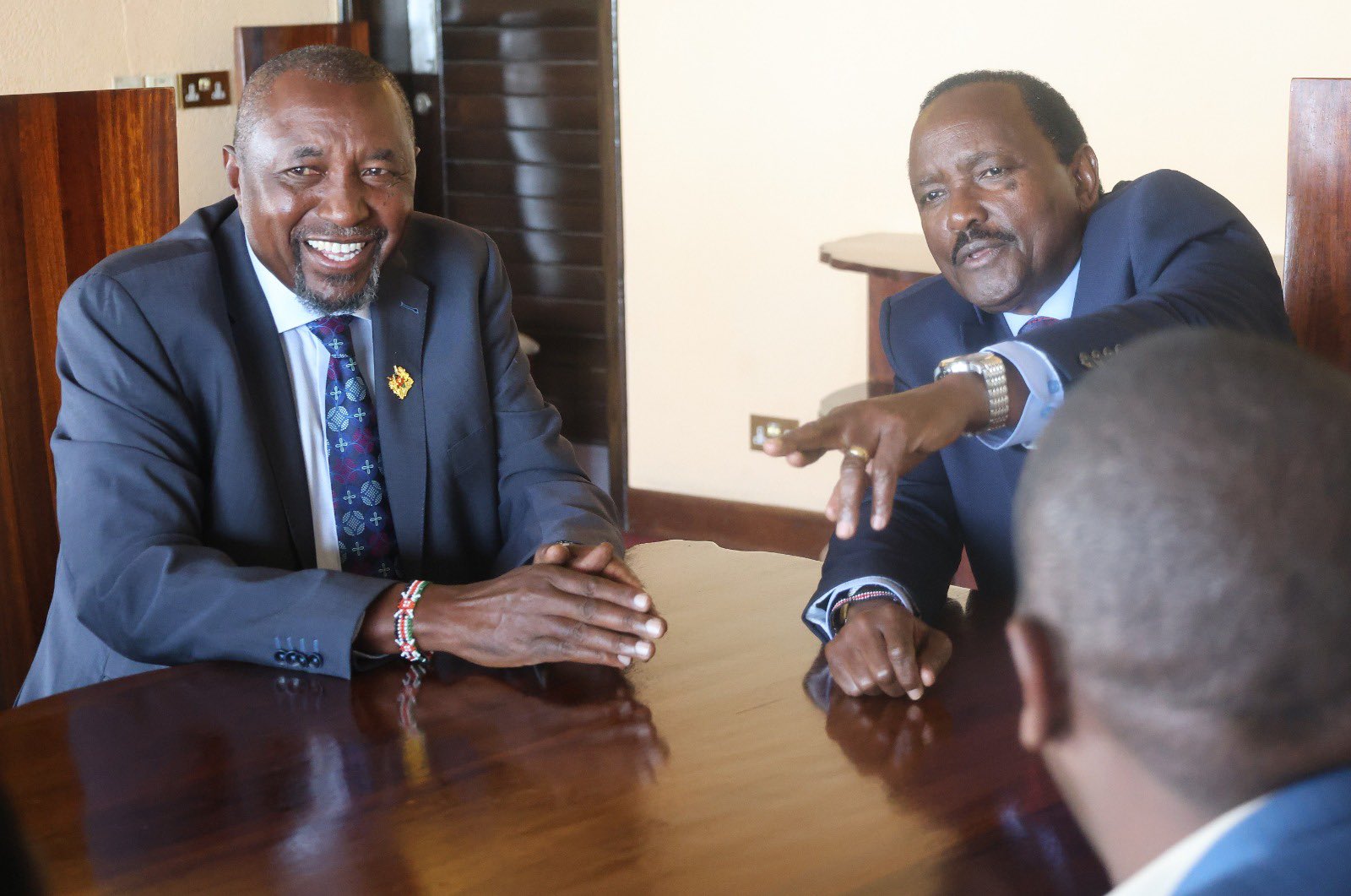
Wiper Patriotic Front leader Kalonzo Musyoka yesterday met Farmers Party leader Kimani Ngunjiri in Nairobi for talks on political intolerance and the deteriorating national mood, the latest in a rapid sequence of coalition-building engagements with less than a year to the August 10, 2027 general election.
Musyoka described the discussions as fruitful, saying the two leaders addressed growing political intolerance and hate speech that continues to go unchecked. He singled out remarks by Nominated MP Joseph Wainaina as deserving condemnation “in the strongest terms by all right-thinking Kenyans.” The meeting was also attended by WPF Spokesperson Ndegwa Njiru, party Treasurer Gideon Mulyungi and EALA MP Kennedy Kalonzo. Ngunjiri was accompanied by Farmers Party officials. “Together we shall Komboa Kenya,” Musyoka said after the talks.
The Ngunjiri meeting is one of several high-level engagements Musyoka has pursued this week. A day earlier, he held talks with British High Commissioner Matt Baugh in Nairobi, raising concerns about the preparedness of the Independent Electoral and Boundaries Commission and what he described as a dangerously hostile political environment ahead of 2027. On Tuesday, September 1, he led united opposition principals in their second round of consultative talks in as many weeks, as the movement deliberates on strategy and candidate selection.
Those sessions have exposed genuine fault lines. Musyoka has been proposing boardroom negotiations to identify a joint presidential candidate, while a faction led by Rigathi Gachagua and Fred Matiang’i has pushed for scientific polling. Gachagua has argued that serious talks should begin only after Christmas, citing the 2002 Narc model as his preferred template. The internal tension is real. Musyoka announced last December that the United Opposition would unveil its flagbearer by March 2026. Four months past that deadline, no announcement has come — and the delay has fed doubts about the coalition’s discipline and cohesion.
Yet the principals keep meeting, held together by a shared calculation: fragmentation hands President William Ruto precisely the advantage he needs. Musyoka has been direct about that danger. “The country is united against one person who pretends that he is busy uniting all Kenyans. We are going to do the necessary — and it is going to be bigger than 2002,” he said, invoking the coalition that swept Kanu from power under Mwai Kibaki. The comparison is deliberate. He has also warned allies against abandoning the front for individual gain. “You cannot betray Kenyans who are yearning for change. Kenyans have suffered enough,” he said during a recent visit to Kilifi County.
The Ngunjiri meeting fits a recognisable Musyoka pattern: steady, methodical outreach to smaller parties and regional formations, building a coalition one conversation at a time. It is patient, unglamorous work — but it is how durable alliances are constructed. Whether the finished product will be broad enough and united enough to defeat an incumbent with the full machinery of the state behind him remains Kenya’s defining political question as August 2027 approaches.
Similar Posts by The Mt Kenya Times:
- Mt Kenya Times ePAPER October 19, 2026
- DCP takes healthcare pledge to Murang’a heartland
- Sifuna bets his political life on a presidential run
- Ruto turns Nandi rally into opposition assault as 2027 battle lines harden
- Kenya’s Ebola cases climb to eight as outbreak spreads beyond health workers
About the Author