Court ruling clips Kenyatta’s wings at the worst possible moment
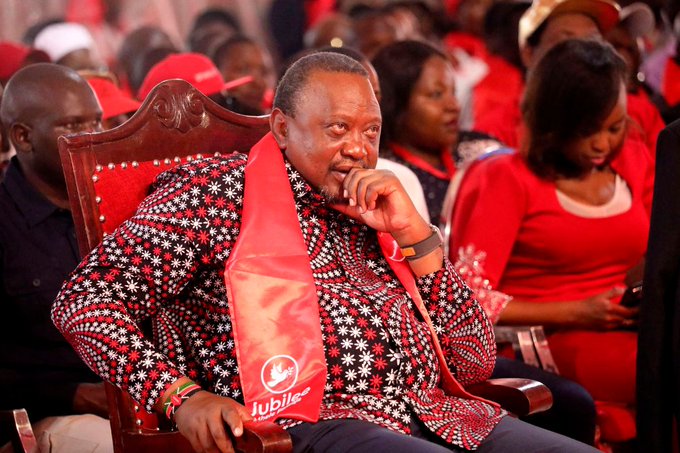
Former President Uhuru Kenyatta
A High Court judgment upholding the ban on retired presidents holding party office lands as Kenya’s 2027 succession race enters its most dangerous phase
By David Kimani
The High Court yesterday upheld a law barring retired presidents from holding political party leadership positions beyond six months after leaving office, a ruling that lands directly on Uhuru Kenyatta’s political operations at precisely the moment he needs institutional leverage most.
Justice Lawrence Mugambi dismissed a petition challenging Section 6 of the Presidential Retirement Benefits Act, ruling that the restriction does not violate the rights to freedom of association, political participation or equality. The judgment, delivered virtually in Nairobi on September 3, clarified that the law does not prohibit former presidents from joining or becoming members of a political party — it only bars them from holding party leadership positions beyond the six-month window prescribed by law after leaving State House.
The decision directly touches on the leadership dispute that has surrounded Jubilee Party since President William Ruto took office in September 2022. Kenyatta has been Jubilee’s party leader since its formation in 2017 and retained the position after retiring as president in September 2022, well beyond the period the law permits. He also serves as chairperson of the Azimio la Umoja–One Kenya Coalition Council, a role that Ruto’s allies have repeatedly cited as evidence of unlawful political activity.
Justice Mugambi was unambiguous about the ruling’s intent. “I do not think that this provision has outlived its usefulness,” he said, finding that the restriction met the constitutional proportionality test under Article 24. The court held that a former president belongs to a distinct constitutional category — one whose influence, networks and public standing set them apart from ordinary citizens — and that treating them differently under the law does not amount to unfair discrimination.
“A retired president belongs to a special constitutional category of citizens that enjoys constitutionally sanctioned benefits as a person who has held the highest office in the land,” Justice Mugambi stated. The restriction, he concluded, was proportionate to the democratic interest it was designed to protect.
The petition had been filed by Peter Odhiambo Agoro, Paul Muiruri Kiguathi and Damon Onyango Osawa, who argued that Section 6 unfairly singled out retired presidents and violated Articles 27, 36 and 38 of the Constitution, which protect equality, freedom of association and political rights respectively. The court dismissed the petition for lack of merit. Because the case was brought in the public interest, Justice Mugambi made no order as to costs.
Citing the law’s origin in 2003, shortly after the end of Daniel arap Moi’s 24-year rule, the court found the restriction intended to safeguard democracy by preventing former heads of state from exerting undue political influence. The historical reference is pointed — the law was written precisely because Kenya had watched what happened when a departing president retained the machinery of a ruling party and used it to shape the succession, a pattern that distorted democratic competition for years.
The ruling arrives at a moment of acute political sensitivity. Kenya is eleven months from a general election that will determine whether Ruto wins a second term or becomes the first incumbent ejected after a single presidential term. The opposition, fragmented but energised, is attempting to consolidate around credible challengers. Kenyatta’s informal authority — his Mount Kenya networks, his financial resources, his capacity to shape coalition conversations — remains considerable. But authority without formal institutional structure is harder to convert into organised electoral force at the granular level where Kenyan elections are actually won and lost.
The broad arithmetic of the 2027 election is already visible. Ruto enters the campaign as an incumbent whose economic record is fiercely contested. The cost of living remains the dominant concern for ordinary Kenyans, and the government’s fiscal decisions — including tax measures that triggered street protests — have left marks on his approval ratings that development project launches alone will not erase. An incumbent whose economic narrative is disputed fights a fundamentally different campaign from one who can point to broadly felt improvements in daily life.
Against that backdrop, the opposition’s central argument — that Ruto’s government has delivered hardship rather than transformation — is not without resonance. The Linda Mwananchi movement built around Nairobi Senator Edwin Sifuna has drawn large crowds on precisely that platform, channelling economic frustration into political energy. Former Deputy President Rigathi Gachagua, now firmly in the opposition, has been touring the country building a coalition he says is committed to ensuring Ruto serves only one term. Jubilee’s Fred Matiang’i has positioned himself as a presidential contender with establishment credibility and opposition backing.
For Kenyatta to be effective within this constellation, he needed institutional anchors — formal positions within party structures that give his endorsements organisational weight rather than merely symbolic significance. The court ruling removes that. He can still speak, endorse, fundraise and deploy his networks. What he cannot do is sit at the head of a party table and exercise the formal authority that converts political loyalty into structured electoral machinery.
The ruling therefore matters most not in what it prevents Kenyatta from saying but in what it prevents him from organising. Kenyan elections are won through delegate structures, party primaries, nomination processes and the ground-level logistics of getting voters to polling stations. All of those require institutional access. A former president operating purely through informal channels retains influence but loses control — and in the high-stakes, high-pressure environment of a contested election campaign, the difference between influence and control can determine outcomes.
Ruto’s allies have wasted no time framing the ruling as vindication. They have spent months arguing that Kenyatta was operating outside the constitutional boundaries intended for retired heads of state, and the court has now provided legal architecture for that argument. Whether that framing shifts votes in Mount Kenya, where Kenyatta’s personal loyalty networks remain deep, is a separate and harder question.
What the ruling does not resolve is the fundamental political tension driving Kenya’s pre-election landscape. Kenyatta and Ruto are engaged in a bitter, personal and high-stakes contest over who controls the succession — a contest that began long before the 2022 election and has intensified with each passing month. Courts can define the formal boundaries of political participation. They cannot determine where loyalty, money and ambition will flow when the campaign reaches its most intense stage.
Kenya has eleven months to discover whether the law’s architecture holds when genuine electoral pressure bears down on it. The ruling has set the legal framework. The political storm gathering around it has barely begun.
Similar Posts by The Mt Kenya Times:
- Mt Kenya Times ePAPER November 3, 2026
- Kang’ata: ‘I turned down the Deputy President’s job — it was a trap’
- World Bank’s KSh26B project to restore Kenya’s degraded landscapes and transform 750,000 lives
- Wiper sets final deadline for 2027 aspirants as Kenya’s electoral race begins in earnest
- Kalonzo draws his line in the sand
About the Author