Kuria’s rebuke of Kindiki on brews reopens the wound Gachagua left behind
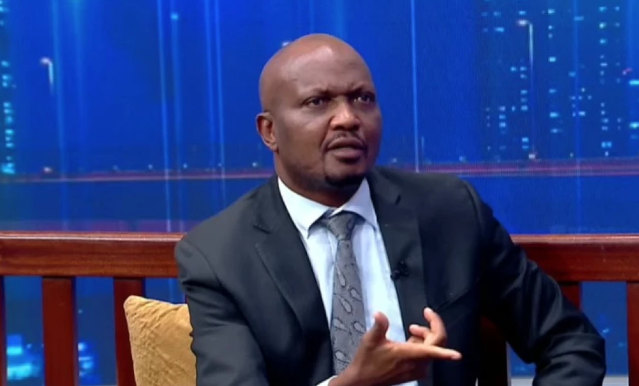
Former Cabinet Secretary Moses Kuria
A pointed comparison between two deputy presidents over illicit alcohol in Mt Kenya carries far more political charge than a social media post — it is a 2027 opening shot
By Alice Njoki
Former Cabinet Secretary Moses Kuria yesterday accused Deputy President Kithure Kindiki of failing to match his predecessor’s commitment to fighting illicit brews in the Mt Kenya region, in a public rebuke that strips away any pretence that the mountain’s political wounds from Rigathi Gachagua’s impeachment have healed.
Kuria’s criticism, delivered via a post on X, was carefully constructed. He was clear that he does not admire Gachagua’s political judgment — “he suffers from poor judgment and has a history of making bad choices for the community,” Kuria wrote — but he drew a sharp distinction between the man and the mission. “Rigathi Gachagua was serious about fighting illicit brews in Mt Kenya region,” Kuria said. “The current holder of that office is not.”
The accusation is not abstract. It lands in a region where illicit alcohol has claimed dozens of lives over the past three years, destroyed families and become one of the most emotive issues in grassroots politics. Kuria was reacting to a video circulating on social media showing a woman speaking from atop a grave, warning her community about the devastation alcohol had visited on her son before his recovery through faith. “This woman would not have gone through this pain,” Kuria said, had stronger action been taken against illicit brews.
To understand the weight of that comparison, one must revisit what Gachagua actually built on this issue. As Deputy President from 2022 until his impeachment in October last year, Gachagua made the fight against illicit alcohol one of the defining campaigns of his time in office. He personally visited Grace Wahu, an 85-year-old widow in Kiharu Constituency, Murang’a County, who had lost seven of her eleven sons to illicit brews — and pledged publicly that the scourge would be eradicated within six months. He threatened to interdict, not merely transfer, police commanders and chiefs who failed to act. He ordered bar closures and demanded vetting of liquor outlets across the region. Whatever political use he made of the campaign, the visibility and intensity of his personal engagement was undeniable.
Kindiki, who served as Interior Cabinet Secretary under Gachagua’s tenure and was then elevated to the deputy presidency following the impeachment, now finds himself measured against a standard his predecessor set deliberately and publicly. The irony is layered. As Interior CS, Kindiki was the minister responsible for implementing much of the enforcement machinery that Gachagua was directing from above — bar closures, police crackdowns, licensing reviews. Now, as Deputy President, he is being told that the machine he once operated is no longer running at the same speed.
The government has pointed to significant enforcement activity in recent months. Official figures released in September showed that 18,650 liquor outlets had been closed across the country, including 12,150 operating without licences and 6,500 licensed premises found to have breached the Alcohol Control Act. Fourteen illegal distilleries were shut down. Thousands of raids have been conducted and hundreds of thousands of litres of illegal alcohol seized. By any statistical measure, the crackdown is active.
But Kuria’s point is not about statistics. It is about ownership and intensity — about whether the Deputy President has made this issue his personal crusade the way Gachagua did, or whether it has become one item among many in a busy government portfolio. Communities on the mountain make that distinction. They remember Gachagua at the graveside of Mama Wahu. They remember his ultimatums to chiefs. They remember his warnings that the mountain’s political relevance depended on preserving its young men and women from alcohol and drugs. “We are losing our productive age groups at an alarming rate,” he said in 2024. That language spoke directly to parental fear, and it travelled.
Kindiki has visited Mount Kenya counties repeatedly since taking office — but the narrative of those visits has been dominated by political consolidation, security matters and the business of his coronation as the region’s spokesman rather than a sustained, visible personal campaign against illicit alcohol. That gap, real or perceived, is what Kuria has just driven a political wedge into.
The timing is not coincidental. Kenya is now less than a year from a general election in August 2027, and the contest for Mount Kenya’s loyalty is already fierce. Gachagua’s Democracy for the Citizens Party is recruiting aggressively across the region. Kindiki is attempting to consolidate the western flank of the mountain while holding his natural base in the east. Kuria himself remains an influential, unpredictable figure whose public commentary carries weight in Murang’a and Kiambu. When someone of his profile uses a social media post to draw a direct and unfavourable comparison between the sitting Deputy President and his impeached predecessor on an issue as emotional as illicit brews, the political intent is unmistakable.
For Kindiki, the challenge is not merely to demonstrate activity — the government’s numbers suggest activity is happening. The challenge is to demonstrate personal commitment of the kind that Mount Kenya communities translate into trust. That requires presence, specificity and the willingness to name names, visit graves, stand in churches and make the fight against illicit alcohol feel like a cause, not a policy.
Gachagua understood that distinction instinctively. Whether Kindiki can learn it before August 2027 is now, quietly but unmistakably, a political question.
Similar Posts by The Mt Kenya Times:
- Mt Kenya Times ePAPER September 21, 2026
- Gachagua accuses Ruto of using UNGA trip to seal niobium deal in Kwale
- Ichung’wah turns Uhuru’s ‘sponyo’ joke into a policy attack
- Nyoro storms Engineer as Njabini chaos signals the mountain is already at war with itself
- After the coronation, what next for Kindiki?
About the Author