Retirement is not a prison sentence: The Uhuru Kenyatta case and the defence of citizenship
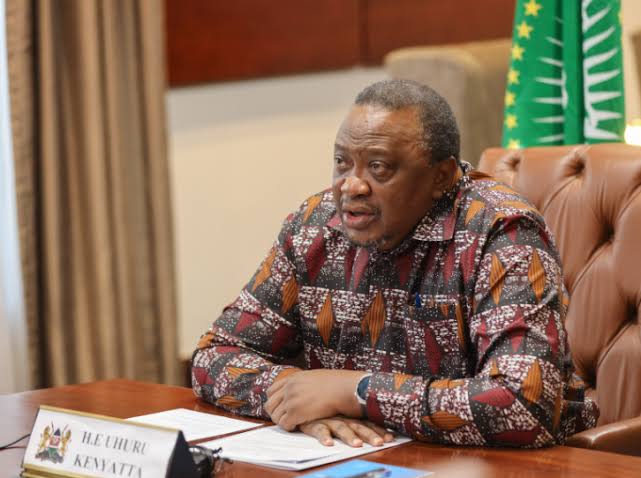
Retired President Uhuru Kenyatta
By Mr. Fredrick Kipchumba Chelimo PWD
Email: fkipchelimo@yahoo.com
“A democratic society does not imprison its citizens for having once served it; it honours their service, protects their rights and remembers that power is temporary, but citizenship is permanent.”
There are moments when a court ruling becomes larger than the dispute that brought it before the judges. It becomes a mirror through which a nation is compelled to examine its understanding of citizenship, power, constitutionalism and the meaning of retirement from public office. Kenya has reached such a moment. The High Court pronouncement of September 21, 2026, declaring key provisions of the Presidential Retirement Benefits Act unconstitutional, has brought renewed force to a principle I have long held: retirement from public office should never become isolation, confinement or political solitary confinement.
A person may retire from the presidency, Parliament, county government or any other public office, but that person does not retire from citizenship. Public office has a beginning and an end. Constitutional citizenship does not.
The circumstances surrounding retired President Uhuru Kenyatta provide perhaps the clearest contemporary illustration of this principle. Uhuru’s continued involvement in political affairs, including his position as Jubilee Party leader, became the subject of intense political and legal controversy. On September 14, 2026, Justice Lawrence Mugambi upheld the statutory restriction preventing a retired president from holding political party office beyond six months after leaving State House. Uhuru subsequently indicated that he would facilitate the handover of the Jubilee chairmanship, while making clear that he did not regard the judgment as extinguishing his wider political participation.
One day later, the political meaning of that controversy was already being interpreted through the language of constitutional democracy. Then, on September 21, Justice Bahati Mwamuye delivered a dramatically different High Court judgment, declaring Section 6 of the Presidential Retirement Benefits Act unconstitutional and void in its entirety. The same judgment declared Sections 4(1), 4(2) and 4(3), which provided mechanisms for withholding, reducing or withdrawing presidential retirement benefits, unconstitutional.
The contrast between the two decisions is itself important. It demonstrates that this was never merely a question about whether one former President should remain chairman of a political party. It exposed a much larger constitutional question: Can the State regulate the political life of a citizen merely because that citizen once occupied the highest elective office in the Republic?
Justice Mwamuye answered that question in favour of the continuing constitutional citizenship of the retired President. The court distinguished between the authority attached to the presidency and the influence that may remain with a former office-holder. Leaving State House ends executive authority. It does not extinguish citizenship, freedom of association or the right to participate in political life. That distinction is fundamental.
Uhuru Kenyatta is no longer President of Kenya. He cannot exercise presidential executive authority. He cannot command the State machinery. He cannot make decisions in the name of the presidency. But none of those propositions means that he ceased to be Kenyan, ceased to possess constitutional rights or became a person whom the State could place in political isolation. And this is where the Uhuru case transcends Uhuru himself.
Those who support him should not defend his constitutional rights merely because they support him. Those who oppose him should not deny those rights merely because they oppose him. Constitutionalism is tested precisely when the person whose rights are before the court is politically inconvenient to us. That is the real democratic test.
The controversy also reveals how dangerous it can become when retirement benefits are turned into instruments of political control. The Presidential Retirement Benefits Act contained provisions under which retirement benefits could be reduced or withdrawn in specified circumstances, including conduct connected to political-party activity. The September 21 judgment held that the challenged provisions could not stand against Article 151(3), which constitutionally protects the retirement benefits, facilities and privileges of former Presidents and Deputy Presidents from being varied to their disadvantage during their lifetime.
The court went further, finding the challenged mechanism inconsistent with constitutional protections including property rights and fair administrative action where it permitted adverse interference without adequate procedural safeguards. This is not a declaration that former presidents are above accountability. It is a declaration that accountability itself must operate within the Constitution. That distinction should matter to every Kenyan.
If a former President commits an offence, ordinary constitutional and legal mechanisms remain available. If a former office-holder abuses political influence, citizens retain the ballot, political competition and the law. What cannot become acceptable is the conversion of retirement benefits or political rights into instruments of punishment outside constitutional safeguards.
Indeed, Kenya has travelled this road before. In 2015, the High Court declared an amendment to the Presidential Retirement Benefits Act unconstitutional because Parliament had enacted legislation concerning State-officer benefits without involving the Salaries and Remuneration Commission as required by Article 230. The court emphasised that Parliament’s legislative authority remains subject to the Constitution. The message is therefore broader than the present political contest. Neither Parliament, the Executive nor any political faction is above the Constitution.
But there is another side to this conversation that Kenyans must not ignore. Constitutional protection of retirement benefits cannot become a licence for politicians to construct extravagant personal empires from public resources. Public office is a trust, not private property. Retirement should provide dignity and reasonable security, not become a permanent claim upon the taxpayer.
The distinction is simple but profound: a retired politician is entitled to citizenship, not ownership of the State; to lawful retirement benefits, not unlimited privilege; to political participation, not continuing executive authority. This is why the Uhuru Kenyatta case matters so deeply.
It has forced Kenya to confront whether political disagreement should determine the enjoyment of constitutional rights. It has reminded us that a person does not become constitutionally smaller after leaving office. And it has demonstrated that even retirement benefits enjoyed by the most powerful citizens remain subject to constitutional scrutiny.
For the Kenyan voter, there is an equally important lesson. We must stop defending constitutional rights only when they benefit our political allies. The right we deny an opponent today may be the right we desperately need tomorrow. A Constitution that protects only those we like is not a Constitution; it is a political weapon.
Kenya therefore needs a culture in which political retirement is understood as transition rather than exile. A President should leave office with dignity. A former leader should remain a citizen. Retirement benefits should be protected where constitutionally guaranteed and administered transparently. But no former office-holder should be transformed into a permanent beneficiary of the public treasury.
The Uhuru Kenyatta case should consequently not be reduced to a contest between Uhuru and his political opponents. It is a test of whether Kenya genuinely believes in constitutional citizenship. Governments change. Presidents change. Parties change. Political alliances collapse and reform. The occupant of State House changes. But citizenship remains.
Retirement should end tenure, not dignity; end authority, not citizenship; and end executive power, not constitutional rights. That is not a favour to Uhuru Kenyatta. It is a principle for every Kenyan.
Similar Posts by The Mt Kenya Times:
- After Madrid chaos derby: Mourinho pulls out the printer
- Smart classroom revolution hits Nyeri schools
- Taufiq Rafat: Voice of Pakistani English Literature
- Nomthandazo Mgcina: A young voice for education, sisterhood and youth empowerment
- Ronaldo, 41, back with Portugal as 1,000-goal milestone beckons
About the Author