Private school
Protect your school’s name like a priceless asset
Why reputation, not infrastructure, is the true measure of a school’s worth
By Ashford Kimani
In the private school sector, buildings go up in months. Buses are bought in days. Classrooms are furnished almost overnight. But one thing takes years to build and only minutes to destroy — a school’s name.
Reputation is the invisible currency that determines whether parents trust your institution or avoid it. It explains why some schools fill their rolls through word of mouth while others bleed enrolment despite aggressive marketing. In education, your school’s name is not merely part of your brand. It is your greatest asset.
That is why every private school leader must grasp this principle and hold it firmly: protect your school’s name like a priceless asset.
Reputation is built slowly, through daily consistency. It grows from how teachers treat learners, how administrators communicate with parents, how discipline cases are handled, and how the institution conducts itself during a crisis. Reputation is not created by slogans on banners. It is created by behaviour over time.
Many schools assume reputation rests solely on examination results. Academic performance matters greatly, but it is only one part of the equation. Some schools produce strong grades yet suffer poor public perception because parents feel dismissed, teachers feel oppressed, or learners feel emotionally unsafe.
Parents evaluate schools holistically. They pay attention to communication. They observe the cleanliness of the compound. They listen to how staff speak. They notice whether promises are honoured. They assess whether the school behaves professionally when things go wrong. Every interaction either adds to or subtracts from the institution’s image.
One careless incident can undo years of hard work.
A bullying case handled badly spreads rapidly across WhatsApp groups. A rude administrator can put off several prospective families. A teacher caught in misconduct attracts negative publicity. Financial dishonesty destroys credibility outright. In today’s digital environment, reputation travels faster than ever before.
Social media has made school branding acutely fragile. Parents share experiences instantly. Screenshots circulate without warning. Videos go viral within hours. Schools can no longer retreat behind silence or intimidation. Institutions that ignore this reality expose themselves to enormous risk.
Too often, school leaders begin caring about reputation only after damage has already been done. By then, rebuilding trust is expensive, slow, and sometimes impossible.
Protecting a school’s name demands intentional leadership.
First, schools must build a culture of professionalism. Every member of staff should understand that they represent the institution in public. The receptionist, the security guard, the driver, the teacher, the bursar, and the school head all shape perception. Parents judge schools through the people they encounter daily. A school may invest millions in infrastructure, yet one rude receptionist can shatter the impression within minutes.
Second, integrity must be non-negotiable. Schools should never manipulate marks, withhold important information from parents, or exploit families financially. Shortcuts may bring short-term gains, but the truth surfaces eventually. Once parents suspect dishonesty, confidence collapses quickly.
Transparency builds credibility. When mistakes occur — and they always will — responsible schools communicate honestly. They explain what happened, outline corrective steps, and reassure parents calmly. Attempting to conceal problems almost always worsens the public fallout.
Third, discipline must be both firm and humane. Schools that humiliate learners publicly eventually earn damaging reputations. Parents today are increasingly alert to emotional wellbeing and child protection. Harsh punishments, verbal abuse, and intimidation no longer inspire confidence. Parents want disciplined schools, yes — but they also want emotionally safe environments.
A further critical area is the gap between promises and reality. Some schools overstate their offering during admissions interviews — individual attention, excellent facilities, digital learning, personalised support — and then fail to deliver. Parents feel deceived. A strong reputation is built when schools consistently meet the expectations they have set.
This is why internal culture matters so deeply. Toxic environments leak outward. If teachers are unhappy, unsupported, and overworked, parents will sense it. If communication between departments is disorganised, parents will experience the frustration. If leadership lacks direction, the confusion becomes visible publicly. Healthy schools protect their reputation from the inside out.
Schools should also avoid unhealthy competition. Some institutions attempt to grow by spreading rumours about competitors or mocking neighbouring schools in public. Such behaviour almost always backfires — it signals insecurity and unprofessionalism. Strong schools concentrate on improving themselves rather than attacking others.
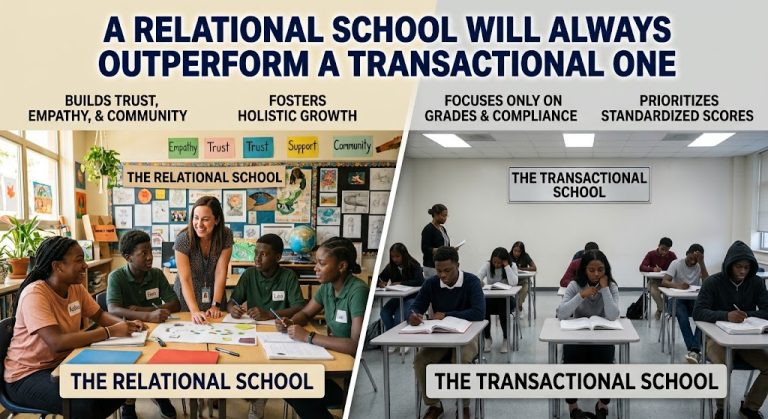
A good name also requires community trust. Schools should actively cultivate positive relationships with parents, faith communities, local leaders, alumni, and the wider neighbourhood. Institutions that remain disconnected from their communities find themselves without goodwill when controversy strikes. Schools with strong relational capital, by contrast, tend to recover from setbacks faster precisely because people trust their intentions.
Leaders must also recognise that reputation is shaped more decisively during difficult moments than during successful ones. Anyone can appear professional when everything runs smoothly. True character shows during a crisis. How does the school respond to accidents? How are complaints handled? Does leadership become defensive or accountable? Parents remember these moments long after the facts have faded.
Ultimately, a school’s name touches everything — admissions, staff retention, partnerships, parental loyalty, and long-term sustainability. A respected reputation opens doors that no advertising budget can unlock.
Wise school leaders guard their institution’s name with care. They understand that reputation is earned every day, but can vanish in an instant through arrogance, negligence, dishonesty, or weak leadership.
Buildings may attract parents initially. Reputation determines whether they stay.
In education, a trusted name is worth more than the most expensive infrastructure.
Similar Posts by The Mt Kenya Times:
- Seven women’s rights organisations in Africa launch coalition for gender equality and media sustainability
- Carrying babies while studying: The real struggles of student parents on Kenyan campuses
- Ruto: Why are some African leaders hesitating on the Lamu refinery?
- Your certificate has no power of its own: It borrows power from the brand you are killing
- Kinoti Marete backs Samburu security operation, rallies Meru aspirants to PPK
About the Author