When mum joins the content: How Gen Z are bringing parents online
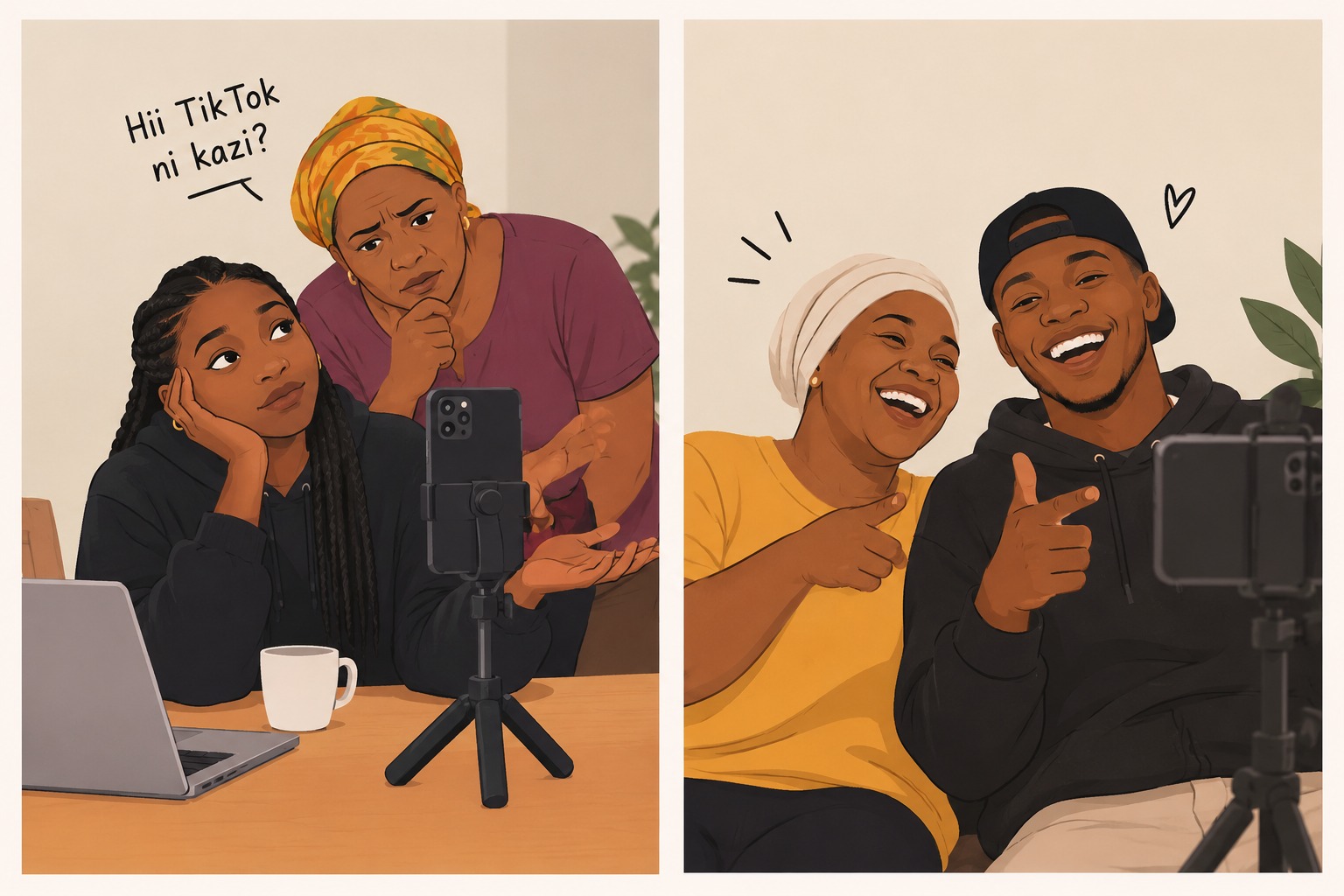
A generation that grew up on social media is now pulling their parents into the frame — and changing the meaning of work in the process
By Charles Irungu Gachango
For years, one of the most difficult things for a young person working online was explaining the job to their parents.
“What do you do?”
It was a seemingly innocent question. But for anyone whose career involved TikTok, YouTube or Instagram, answering it could require an entire presentation.
Content creation was not always recognised as a career. To many parents — particularly those raised with more traditional ideas of employment — a person sitting at home filming themselves on a phone hardly looked like someone going to work. The dreaded follow-up was never far away.
“But is that really a job?”
For Gen Z content creators, however, something interesting is happening.
The parents are joining in.
Mothers are appearing in TikTok videos. Fathers are becoming recurring characters in skits. Parents are reacting to their children’s online antics, participating in challenges and occasionally developing fan bases of their own. Some have gone from asking what their children do online to becoming part of the content themselves.
Beneath the humour lies a significant generational shift.
When your parent becomes part of the brand
The relationship between a content creator and their audience is built around personality. Followers want to see the person behind the account — their humour, their relationships, their family, their everyday life.
For some Gen Z creators, that naturally includes their parents.
A mother who was simply “Mum” at home can suddenly become a recognisable personality online. A father’s reaction to his daughter’s dating life generates thousands of views. A parent appearing in a skit becomes a recurring feature that audiences actively look forward to.
The appeal is partly authenticity. The internet has grown increasingly interested in content that feels less manufactured, and family interactions offer something difficult to script convincingly: familiarity.
There is something universally entertaining about watching a parent process the world through the eyes of their adult child. Sometimes they understand the assignment. Sometimes they absolutely do not. And sometimes that is precisely why the video works.
A different digital inheritance
This dynamic looks markedly different when set against the experience of older generations of creators.
For millennials who entered the digital space earlier, explaining online work to parents could be an uphill task. Their parents had grown up with a clearly defined relationship between education, employment and income. You went to school, earned a qualification, applied for a job and received a salary at the end of the month.
The idea that someone could build a career by creating videos, growing an audience and collaborating with brands was genuinely unfamiliar. Even today, some creators from older generations joke about parents who still cannot quite explain what their child does — even after years of brand partnerships and a sizeable following. At home, the summary remains: “They just know things about the internet.”
Gen Z entered adulthood in a different environment entirely. For them, social media was already deeply embedded in daily life. The smartphone was not merely a communication device. It was a camera, television, newsroom, marketplace, editing suite and business tool. The line between being “online” and being “at work” was already blurred before they ever started creating.
More than a cameo
Having a parent who understands — or at least participates in — a creator’s work can mean considerably more than securing a funny appearance.
It can represent acceptance.
A young creator whose parent willingly appears in their videos no longer has to compartmentalise that part of their professional life at home. The family becomes aware of the world the creator has built online, on their own terms.
There are practical benefits too. Parents who understand content creation may better appreciate why their child needs time to film, edit, attend events or maintain a consistent online presence. In an industry where work does not happen between eight in the morning and five in the afternoon, that understanding matters. The parent who once wondered why their child was permanently attached to a phone may eventually realise that the phone is, in fact, their office.
The other side of the frame
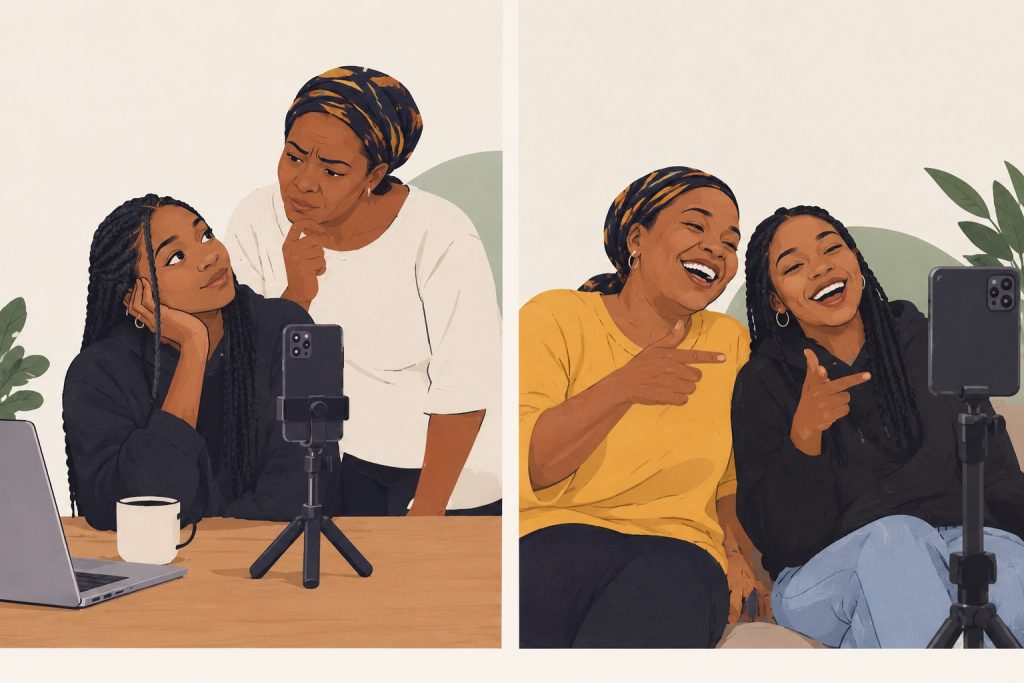 Not every creator wants their parents online. And not every parent wants to be there.
For some families, privacy remains a firm boundary. A creator may have tens of thousands of followers while their parents deliberately stay away from the spotlight. There are also deeper questions about where the family relationship ends and the performance begins.
Is Mum appearing because she genuinely enjoys it, or because the audience has come to expect her? What happens when a creator’s most popular content revolves around a parent? And if that content starts generating income, how does the family navigate the line between participation and commercialisation?
These questions grow sharper as creators turn everyday family moments into monetised entertainment. The fact that something is funny enough to go viral does not automatically mean it belongs online. For creators, the challenge is increasingly not just knowing how to make content — but knowing what should remain outside it.
A new definition of work
Still, the growing presence of parents in Gen Z content says something important about how work itself is changing.
The internet has created careers that previous generations could not have imagined. A person can now build an audience around comedy, fashion, food, beauty, gaming, commentary or simply their personality — and brands have followed those audiences. Content creation is no longer about posting for fun. For many young people, it has become part of a broader digital economy involving advertising, partnerships, events, affiliate marketing and entrepreneurship.
Parents witnessing their children build careers online are being forced to update their understanding of what employment can look like.
Some are still asking when their child will get a real job.
Others are already in the next video.
That difference may seem small. It represents something much larger.
The workplace is changing, and so is the definition of a colleague. For some Gen Z creators, that colleague might just be Mum.
And she already knows her lines.
Similar Posts by The Mt Kenya Times:
- Mt Kenya Times ePAPER September 30, 2026
- Ruto mocks UNGA critics: “That requires someone with sense”
- Media warns: Information gaps fuel 2027 disinformation risk
- Gachagua’s DCP holds strategic NEC meeting ahead of 2027 polls
- Sifuna’s unending party ownership hurdles
About the Author