Mombasa’s new energy mandate: Turning regional trade into shared prosperity
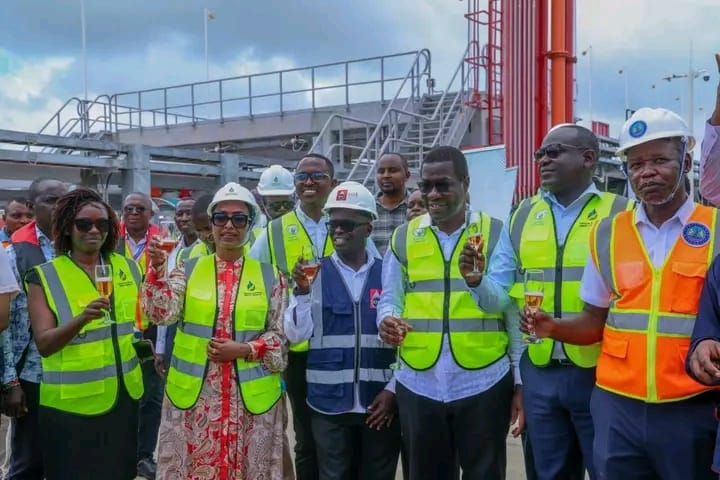
The arrival of MT Sea Wolf at Kipevu Oil Terminal 2
Rwanda’s first bulk petroleum cargo through Kipevu signals Kenya’s moment to lead — but the real test lies in what comes next
By James Kilonzo Bwire
The arrival of MT Sea Wolf at Kipevu Oil Terminal 2, carrying Rwanda’s first bulk consignment of refined petroleum products through Kenya, marks more than the beginning of a new commercial arrangement. It represents a practical demonstration of regional interdependence and a renewed opportunity for Kenya to place its infrastructure at the centre of East Africa’s economic transformation. The event, witnessed yesterday by Energy and Petroleum Cabinet Secretary Opiyo Wandayi, Rwanda’s Minister of State for Infrastructure Armand Zingiro, Kenya’s High Commissioner to Rwanda Janet Mwawasi Oben and representatives of the Kenya Ports Authority, Kenya Pipeline Company and the Energy and Petroleum Regulatory Authority, must be understood within a wider regional context. It is about how infrastructure, policy and diplomatic cooperation can combine to improve energy security, strengthen trade and generate shared economic value.
The first shipment confirms that Kenya’s port, pipeline and storage infrastructure is no longer simply a domestic asset. It is becoming a regional platform through which neighbouring countries access essential commodities, diversify supply arrangements and improve economic efficiency. Rwanda’s decision to use the Mombasa route gives practical meaning to the Northern Corridor’s role as an engine of regional commerce, demonstrating that the value of infrastructure is measured not only by what it delivers within national borders, but by the markets and communities it connects beyond them.
For Rwanda, dependable access to petroleum products is a component of economic stability. Fuel supports transport, agriculture, manufacturing, construction and public services. Any disruption in supply ripples into the cost of movement, the price of goods and the performance of businesses. By establishing a more structured supply route through Kenya, Rwanda gains flexibility in sourcing — and with it, a stronger capacity to plan energy needs, manage supply risks and sustain uninterrupted economic activity. For landlocked economies, that kind of arrangement is not a convenience. It is a strategic necessity.
For Kenya, the development deepens its claim as East Africa’s principal energy and logistics hub. The Port of Mombasa has long served as a gateway for the region, but its continued relevance depends on the ability of the port and connected institutions to deliver reliable, efficient and competitive services. Rwanda’s inaugural consignment places fresh scrutiny on whether Kenyan institutions can coordinate marine operations, product handling, storage, transportation, regulation and cross-border delivery as one integrated system rather than a collection of separate agencies.
That coordination will determine whether the route succeeds or stalls. The KPA must ensure efficient port operations and timely cargo handling. The KPC must provide dependable transportation and storage. The EPRA must maintain effective oversight and regulatory compliance. Customs, security and border management agencies must ensure their procedures do not introduce unnecessary delays or costs. Regional supply chains succeed when every institution understands that an administrative bottleneck at any single point can affect businesses, consumers and the credibility of the entire route.
The significance of MT Sea Wolf’s arrival therefore extends beyond one vessel and one cargo. It provides Kenya with an opportunity to examine the full logistics chain serving regional markets. A modern port alone does not guarantee regional leadership. Leadership requires predictable operations, transparent processes, competitive costs, efficient documentation, well-maintained infrastructure and a serious commitment to safety. Customers with alternative routes will judge Kenya not on the quality of a single facility, but on the reliability of the complete service over time.
The government-to-government framework underpinning the Rwanda arrangement reflects something important about strategic energy trade. Petroleum markets require commercial efficiency, but energy supply also carries a national security dimension. Governments must plan for changing market conditions, protect consumers from avoidable disruptions and maintain confidence in essential supply chains. A structured partnership provides a basis for long-term planning while allowing institutions and private sector actors to build the operational systems that efficient delivery requires. That framework must, however, remain guided by transparency and accountability. Regional energy arrangements should create value for consumers and businesses, not become closed systems that obscure costs or transfer inefficiency to the public.
Kenya should treat the Rwanda route not as an isolated fuel agreement but as part of a wider regional infrastructure strategy. The objective should be to develop an integrated logistics ecosystem capable of serving Rwanda and other markets across East and Central Africa. Every increase in regional transit activity generates demand for transport services, warehousing, maintenance, financial services and professional expertise. Counties along the Northern Corridor stand to benefit when regional trade is actively connected to local enterprise and employment — but only if Kenya deliberately creates those linkages rather than allowing cargo to pass through without touching local economies.
This requires a policy environment that supports local businesses while preserving efficiency and competitiveness. Small and medium-sized enterprises should have genuine opportunities to participate in regional logistics services. Young professionals need skills in supply chain management, engineering, information technology and regulatory compliance. Infrastructure development, approached this way, becomes a driver of human capital alongside the movement of goods.
The arrangement also carries diplomatic weight. Kenya and Rwanda maintain close relations, but practical economic cooperation gives those relations greater substance. This petroleum arrangement offers both countries an opportunity to build trust through dependable implementation and to open the way for future cooperation in electricity, renewable energy, transport and trade facilitation. Regional integration becomes meaningful through arrangements that respond to concrete needs, and energy supply is one of the most concrete needs a developing economy has.
That cooperation must nonetheless be pursued alongside the longer-term transition to cleaner and more sustainable energy systems. A stronger petroleum supply network should not delay that transition — it should provide stability as countries expand their energy systems and gradually reduce dependence on carbon-intensive fuels where alternatives are practical and affordable. Kenya’s opportunity lies in combining its petroleum logistics capacity with its broader energy strengths to become a regional centre not only for fuel distribution, but for energy investment, electricity trade and clean energy development.
The test for Kenya now is consistency. The success of the Mombasa route will not be determined by the symbolism of the inaugural cargo. It will be determined by the regularity of future deliveries, the efficiency of transit arrangements, the reliability of storage and pipeline services and the competitiveness of costs. Rwanda and other regional customers will assess Kenya on sustained performance, not ceremonial beginnings. Regional markets are competitive, and the Northern Corridor must remain commercially attractive through continuous improvement — reducing avoidable bureaucracy, investing in infrastructure before capacity becomes inadequate and using technology to improve supply chain visibility.
Kenya must seize this moment with ambition and a clear sense of responsibility. The arrival of Rwanda’s maiden petroleum cargo through Mombasa confirms the potential of the country’s infrastructure and the value of regional partnerships. If Kenya meets the duty that potential demands, Mombasa will grow as a true gateway for East African commerce — and the Northern Corridor will become an increasingly important channel for energy, trade and the kind of shared progress that turns geography into genuine opportunity.
Similar Posts by The Mt Kenya Times:
- Mt Kenya Times ePAPER October 1, 2026
- Museveni backs Lamu but keeps Uganda’s money at home
- Sifuna’s party wins its name — and Kenya’s opposition race begins in earnest
- Lamu’s $16B gamble: Africa’s biggest refinery divides the region
- Ruto launches KSh2.2 trillion Lamu refinery in East Africa’s biggest energy bet
About the Author