The Mt Kenya Times
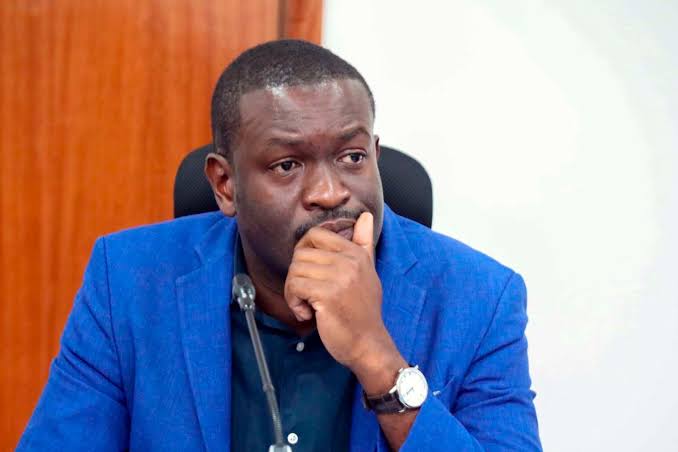
Interior Cabinet Secretary Kipchumba Murkomen
As Kenya moves towards a charged election cycle, the country’s greatest security challenge may not be violence itself — but whether citizens trust the institutions meant to prevent it
By Dennis Wendo
Kenya’s national security environment is entering a more complex phase. The threats facing the country can no longer be measured through crime statistics, terrorism incidents or physical violence alone. Political mobilisation, organised criminal networks, digital disinformation, economic grievances, public distrust and the conduct of security institutions themselves are becoming deeply interconnected elements of the country’s security landscape.
Interior Cabinet Secretary Kipchumba Murkomen has recently argued that security cannot be defined simply by the absence of violence. He has placed public trust, effective institutions, early risk detection and citizen participation at the centre of a broader approach to national security.
His remarks arrive at a significant moment. Kenya is moving into an increasingly charged electioneering period ahead of the 2027 general election, amid mounting concerns about political violence, organised criminal groups, disinformation and the capacity of institutions to protect both citizens and political freedoms.
Allegations involving abductions, enforced disappearances, extrajudicial killings and excessive use of force continue to feature prominently in public debate. Such claims should not automatically be treated as established fact — they require credible, independent and transparent investigation. Equally, serious allegations concerning the conduct of security agencies cannot simply be dismissed without scrutiny.
The credibility of a security institution is tested not only when it responds to external threats, but also when its own conduct comes under public examination.
This is where the 2010 Constitution becomes critical.
Article 244 requires the National Police Service to maintain the highest standards of professionalism and discipline, promote transparency and accountability, comply with constitutional standards on human rights and fundamental freedoms, and foster meaningful relationships with the wider society. These are not administrative formalities. They are the foundations upon which public confidence in security institutions is built.
The question, therefore, is not simply whether security agencies have the capacity to confront threats. It is whether citizens believe those agencies will exercise their powers lawfully, professionally and without bias.
That distinction becomes particularly important in an election period.
An election is not simply a competition between parties and candidates. It is also a test of institutions. The police, intelligence agencies, electoral bodies, courts, prosecutors, oversight authorities, political parties, the media and civil society all carry a role in maintaining an environment in which citizens can participate without fear.
Security agencies bear a particularly sensitive responsibility. They must prevent violence without suppressing legitimate political activity. They must respond to genuine threats without treating dissent as a security problem. They must investigate criminal conduct without political discrimination. They must maintain public order while respecting constitutional freedoms.
That is not an easy balance. It is, however, precisely why institutional integrity matters so much.
Kenya’s security situation must also be read within the broader Horn of Africa context. Threats increasingly operate in a grey zone where political interests, organised crime, information manipulation and physical violence can reinforce each other in ways that are difficult to untangle.
Disinformation deepens this challenge. It can generate fear, widen political and ethnic divisions and erode confidence in public institutions. Once trust is weakened, even legitimate security interventions can attract suspicion.
The country needs the capacity to identify coordinated information threats while simultaneously protecting legitimate political expression, journalism and dissent. A security response perceived as targeting free expression could deepen the very mistrust it is meant to address.
The same principle applies to policing. A citizen who believes that reporting a threat will bring protection becomes a genuine partner in national security. A citizen who fears that approaching security agencies may expose them to intimidation is unlikely to cooperate at all.
Public trust, therefore, is not a public relations issue. It is part of the national security architecture.
Murkomen’s emphasis on community engagement reflects this reality. He has argued that local police leadership and direct community interaction can strengthen the relationship between security agencies and the public. The National Police Service has also been promoting community-level security dialogue through initiatives such as Jukwaa la Usalama.
But trust cannot be built through messaging alone. It is built through conduct.
It grows when complaints are properly investigated. It grows when officers accused of abuse face due process. It grows when victims and their families receive credible answers. It grows when political violence is investigated regardless of who may benefit from it politically. It grows when the law is seen to apply consistently — to government supporters, opposition supporters and ordinary members of the public alike.
This is where civilian oversight becomes indispensable. The Independent Policing Oversight Authority is mandated to investigate deaths and serious injuries arising from police action, examine misconduct and monitor policing operations affecting members of the public.
The challenge is not necessarily the absence of laws or institutions. The harder question is whether existing institutions are sufficiently empowered, independent and effective to command public confidence — particularly as political temperatures rise towards 2027.
Kenya cannot afford a situation in which every security incident is reflexively interpreted through a political lens, while every official explanation is automatically rejected by sections of the public. The answer to that risk lies in institutional credibility.
When institutions are trusted, verified facts stand a better chance against rumour. When institutions are distrusted, rumour can carry more weight than fact. This is where the security implications of disinformation become most visible — and most dangerous.
The 2027 general election should be approached not merely as an electoral event requiring police deployment, but as a broader national resilience exercise.
Early warning systems should identify areas of political and communal tension before they escalate. Intelligence gathering should focus on genuine security threats rather than political profiling. Security agencies should maintain professional distance from partisan interests. Investigations into violence should be timely and credible. Oversight institutions should be free to operate without intimidation or interference. Citizens should have accessible, functioning mechanisms for reporting threats and seeking protection.
Political parties and candidates carry their own responsibilities — to discourage violence, to reject the use of organised groups and to ensure that political mobilisation does not become a gateway to criminality. Murkomen has publicly warned political actors against deploying organised groups and said security agencies are intensifying efforts to identify networks planning violence.
Civil society and the media carry a responsibility to scrutinise institutions while carefully distinguishing verified information from allegation and speculation. Citizens, too, must resist the circulation of unverified content capable of inflaming tensions.
Ultimately, Kenya’s security challenge ahead of 2027 is not simply how to prevent violence. It is how to prevent violence without compromising the constitutional values that security institutions are mandated to uphold.
A secure Kenya should be one in which citizens do not have to choose between security and liberty, between public order and accountability, or between national stability and constitutional rights.
The measure of a strong security institution is not only its capacity to confront threats. It is its integrity when exercising power.
As 2027 approaches, Kenya needs security institutions that citizens can trust, oversight bodies capable of independently demanding answers, political actors who understand the consequences of violent mobilisation, and an information environment in which verified facts can compete with manipulation.
The most durable security is not created when citizens fear the state. It is created when citizens trust public institutions to protect them, treat them fairly and remain answerable to the law.
That may ultimately be Kenya’s most important security test before the next general election.
Dennis Wendo is a governance and social policy commentator.
Similar Posts by The Mt Kenya Times:
- Sifuna’s unending party ownership hurdles
- From leading within to changing the world: The Fredah Mainah story
- Kagwe launches nationwide soil testing drive to guide fertiliser use
- Mombasa’s new energy mandate: Turning regional trade into shared prosperity
- Dangote refinery: Kenya’s biggest investment or another land conflict?
About the Author