Kagwe launches nationwide soil testing drive to guide fertiliser use
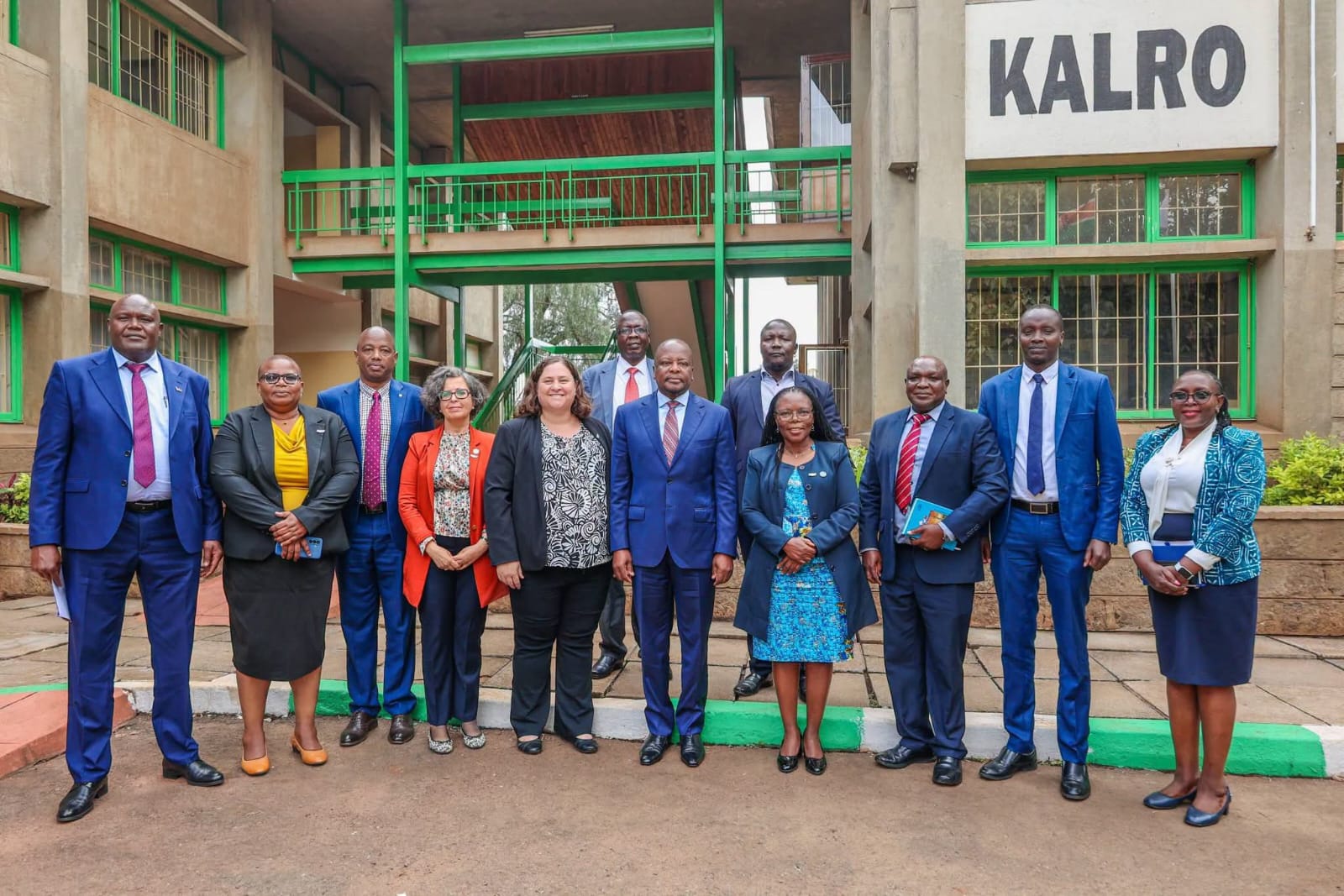
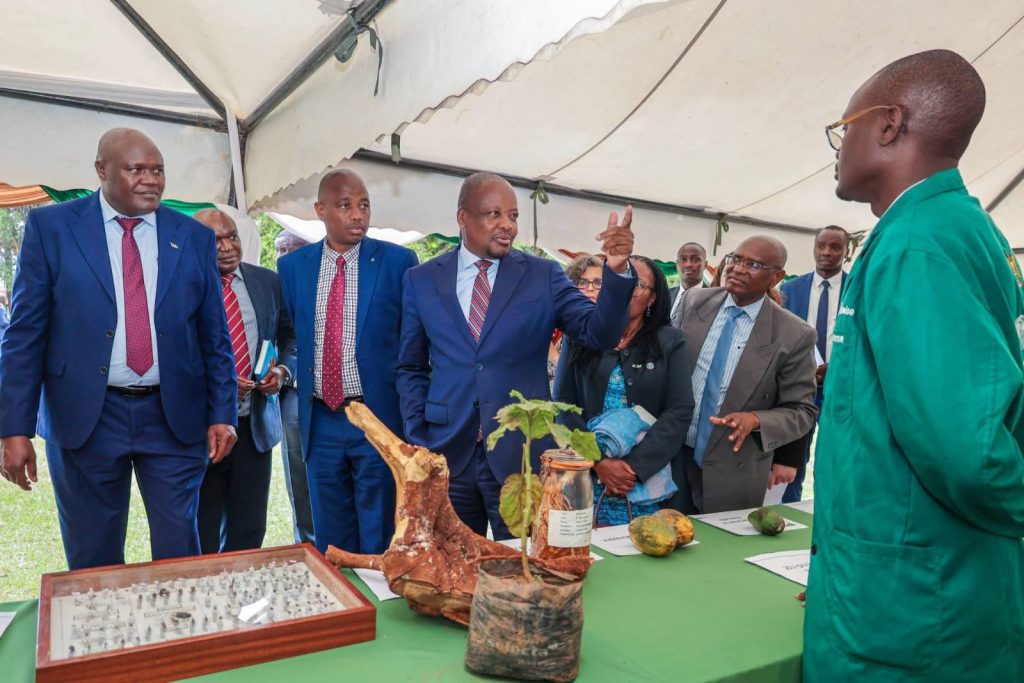
CS Mutahi Kagwe with KALRO officials and other stakeholders during the launching of nationalwide soil testing drive yesterday. Photos/Courtesy
Cabinet secretary warns that subsidised inputs without soil data amount to guesswork, not strategy
By Brian Gitonga
Agriculture and Livestock Development Cabinet Secretary Mutahi Kagwe yesterday launched a nationwide soil health initiative aimed at helping Kenyan farmers determine the right fertiliser for their land and improve agricultural productivity.
Dubbed Soil Mapping for Resilient Agrifood Systems, or SoilFER, the programme was launched at the Kenya Agricultural and Livestock Research Organisation national laboratories in Kabete, alongside the establishment of the National Soil Partnership, the National Soil Laboratory Network and the national rollout of the Global Soil Doctors Programme. Kagwe also handed over refurbished KALRO soil chemistry laboratories that received an investment of KSh220 million.
Kagwe said Kenya must move away from the entrenched practice of applying the same fertiliser across different farms without first establishing their soil conditions. He drew on personal experience to make the point.
“A bag of the wrong fertiliser, delivered on time, at half the price, to the wrong soil, is still the wrong fertiliser,” he said. “Subsidy without a soil test is sympathy. It is not strategy.”
Kagwe told those gathered that he had once farmed by following common practice in his area, buying whichever fertiliser neighbouring farmers were using. A soil test later revealed he had been applying nutrients already present in his soil while neglecting those that were deficient. “I was not farming. I was gambling. I was farming blind,” he said.
Drawing on his earlier tenure as Health Cabinet Secretary, Kagwe compared soil testing to medical diagnosis, arguing that farmers needed to understand the condition of their land before deciding which inputs to apply. “A soil test is as important as a medical diagnosis,” he said.
He said approximately 63 per cent of Kenya’s arable land is acidic, with nearly seven million acres classified as strongly acidic. Farmers working such soils, he warned, could continue spending on fertiliser without achieving expected yields if they failed to address underlying soil acidity. He urged the use of appropriate interventions, including lime where necessary, to restore organic matter and improve long-term soil health.
Kagwe said more than eight million farmers are registered on the Kenya Integrated Agricultural Management Information System, known as KIAMIS, and that the platform could eventually allow the government to tailor agricultural support to each farmer’s specific soil requirements. At the peak of a planting season, he said, more than 180,000 bags of subsidised fertiliser were being moved daily through National Cereals and Produce Board stores and registered outlets. The next step, he said, was to make that support more precise by linking input decisions to scientific soil data.
He directed KALRO to continue analysing approximately 77,000 soil samples collected from 45 counties and to publish county-level soil fertility maps for public use. The Ministry of Agriculture and KALRO will also work to link soil test results to KIAMIS so that, over time, subsidy allocations reflect the actual needs of individual farms.
The refurbished laboratories at Kabete are expected to shorten the time required to process samples and return results to farmers. Kagwe was pointed about the cost of slow turnaround. “A soil result that arrives after the rains have come is a historical document, not a farming decision,” he said.
The National Soil Partnership will bring together national and county governments, KALRO, universities, private sector players and other institutions involved in soil management. The National Soil Laboratory Network will establish common testing standards and strengthen the reliability of soil analysis across the country, while the Global Soil Doctors Programme will equip farmers with the practical knowledge to understand their soils and pass that knowledge on to others in their communities.
Kagwe urged county governments to co-finance soil testing services and bring them closer to farmers. He also warned that the government would sustain its crackdown on counterfeit, expired and substandard agricultural inputs, saying that accurate fertiliser recommendations would count for little if farmers subsequently purchased products whose contents did not match what was printed on the label.
He closed with a remark that captured the spirit of the initiative. “For a hundred years we have asked our soils what they can give us. Today we begin, at last, to ask them what they need.”
KALRO Board Chairman Benson Gichohi Ngure said smallholder farmers needed technologies and agricultural advice tailored to their specific soils and environments, an approach he said would help reduce unnecessary costs, improve yields, withstand climate shocks and strengthen livelihoods.
KALRO Director General Patrick Ketiem said SoilFER would address gaps in soil information by digitising soil maps, strengthening laboratories and conducting soil fertility trials to build a detailed picture of Kenya’s soils from the national level down to individual farms.
Kagwe also appealed to the Public Service Commission to allow KALRO to recruit additional researchers, saying the institution needed more expertise to make full use of approximately 170 pieces of research equipment expected to arrive. “We cannot invest in equipment and then lack the people to put it to work,” he said. The ceremony was attended by development partners from international organisations and a broad range of agricultural stakeholders.
Similar Posts by The Mt Kenya Times:
- Gachagua’s DCP holds strategic NEC meeting ahead of 2027 polls
- Sifuna’s unending party ownership hurdles
- From leading within to changing the world: The Fredah Mainah story
- Mombasa’s new energy mandate: Turning regional trade into shared prosperity
- Security test: Trust, integrity and the path to 2027
About the Author