Nairobi Senator Edwin Sifuna
The Equitable Party launch thrusts Nairobi’s senator into the frontline of a bruising electoral battle that will define who governs Kenya next
By James Mwangi
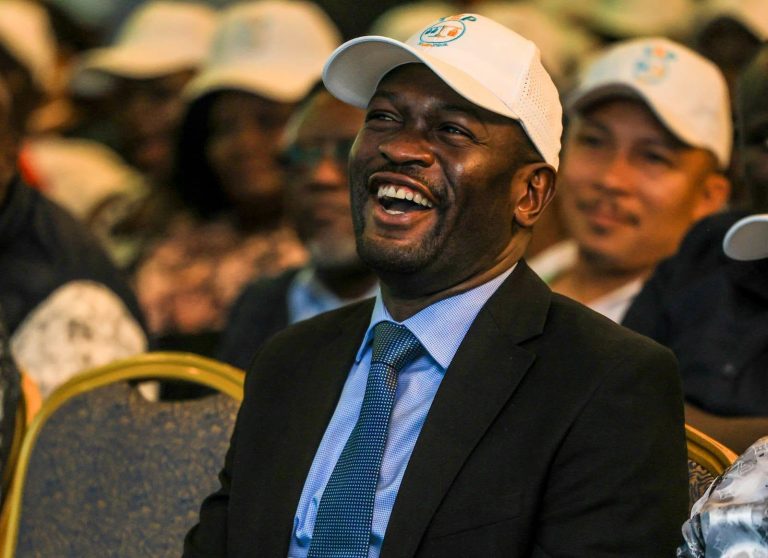
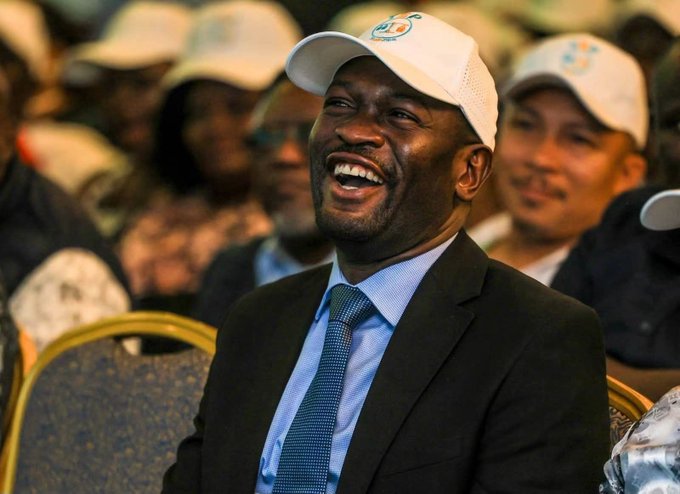
Nairobi Senator Edwin Sifuna yesterday formally launched The Equitable Party (TEP) as his presidential vehicle for the 2027 general election, ending months of legal delays and political uncertainty and marking the most significant escalation yet in Kenya’s gathering electoral storm.
The ceremony at the Stanley Hotel in Nairobi was more than a party launch. It was the opening salvo of what promises to be the most consequential electoral contest Kenya has seen since the 2002 election that swept Mwai Kibaki to power and ended two decades of Kanu rule. With ten months to polling day and a fractured but increasingly animated opposition assembling behind a single flag, the country’s political landscape shifted measurably on Sunday afternoon.
Suba South MP Caroli Omondi announced the formation during the ceremony, declaring Sifuna as its presidential candidate. “In this journey to deliver this change, we are going to be led by one, and I now want to declare here that this formation will be led by one presidential candidate, Edwin Watenya Sifuna; we shall be united in this course,” Omondi said.
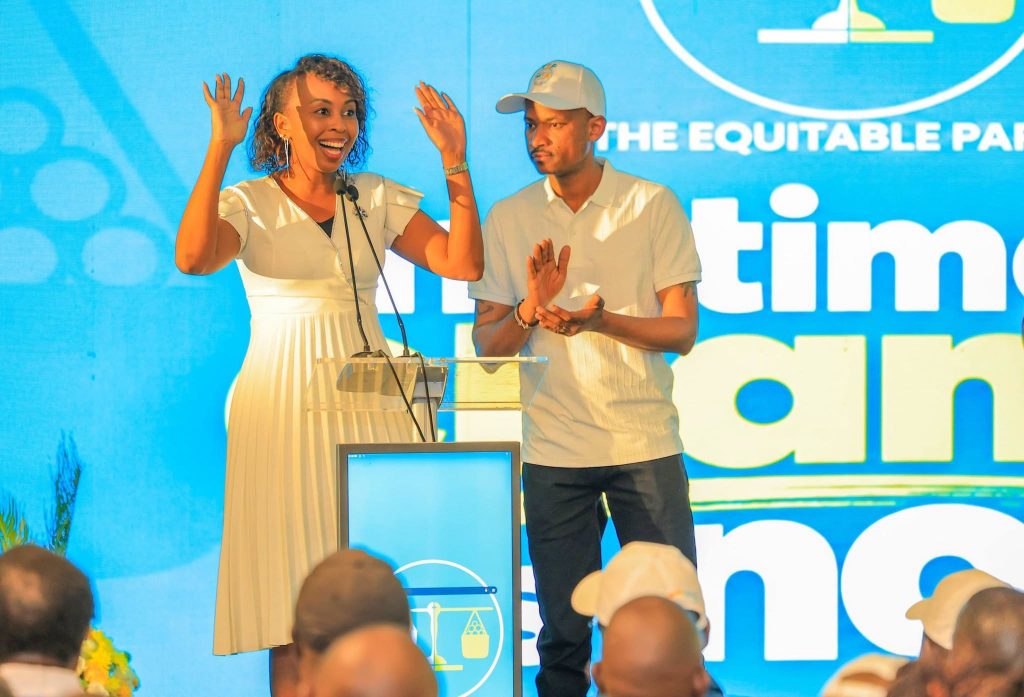
The path to the podium was not smooth. The launch followed legal challenges that had derailed Sifuna’s preferred Linda Mwananchi Movement vehicle, forcing a strategic pivot onto The Equitable Party, a registered entity that was reoriented under his leadership after months of regulatory delays and disputes with rival parties. Sifuna was defiant, vowing that hurdles would not stop The Equitable Party from contesting the 2027 election, saying that if more obstacles blocked the rebranding of the party, his team would retain the TEP identity and go to the ballot regardless.
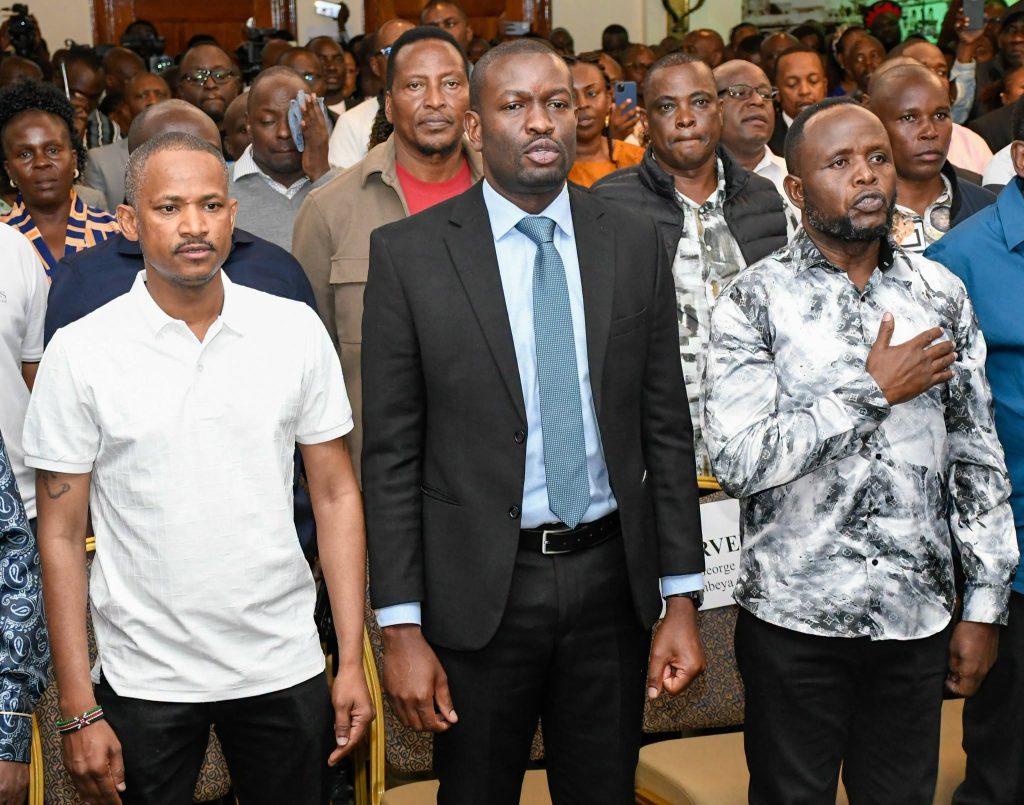
The hall was packed with the principals of the Linda Mwananchi Movement, a coalition that has spent the better part of a year building cross-regional support while testing the boundaries of what a unified opposition can look like in a country historically carved along ethnic fault lines. Among those present were Embakasi East MP Babu Owino, Siaya Governor James Orengo, Trans Nzoia Governor George Natembeya, Kakamega Senator Boni Khalwale, Vihiga Senator Godfrey Osotsi and Omondi. Kisii Senator Richard Onyonka was also in attendance in a show of solidarity that underscored the breadth of Sifuna’s Western alliance networks.
Each speaker framed the occasion not as a party formality but as the formal declaration of an alternative government in waiting. Orengo, the Siaya governor and one of Kenya’s most experienced constitutional litigators, challenged the team to adopt a national outlook. “You are in the right place, you are in the right movement and you have the right leadership to take you to the promised land, and we owe it to the people of Kenya,” he said.
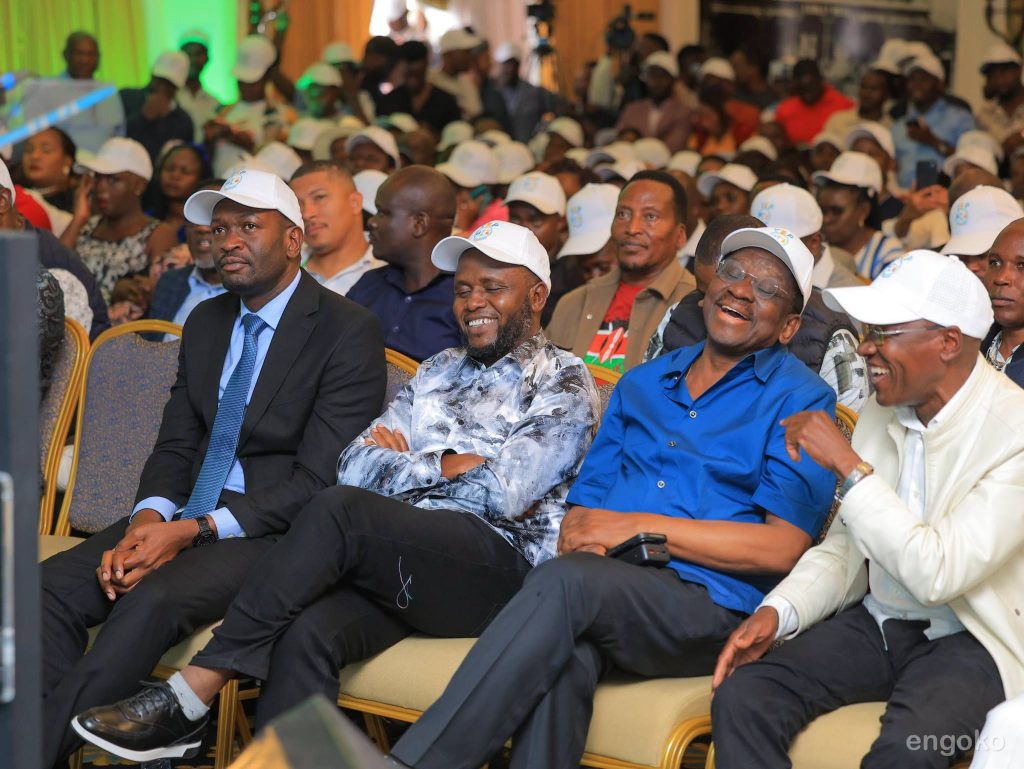
Natembeya, the Trans Nzoia governor who has emerged as one of Sifuna’s most vocal regional champions, urged opposition leaders to set aside individual ambitions and unite behind the senator. He went further, saying he would leave the country if President William Ruto retained the presidency because opposition leaders failed to consolidate. The remark drew laughter but carried an undertow of genuine anxiety about the consequences of a repeat of 2022, when a divided opposition handed Ruto a first-round victory.
Khalwale offered perhaps the most theatrical line of the day, addressing the incumbent directly. “Now Ruto, utado? Utado?” — loosely translated: “Now Ruto, what will you do?” — before turning to the youth in the crowd with a message about generational change. He also offered a striking piece of political intelligence, claiming that reported plans by Orengo, Owino and Natembeya to register separate parties had been deliberate decoys designed to confuse the Kenya Kwanza camp about the opposition’s true organisational strategy.
Sifuna himself was characteristically combative and strategically coy in equal measure. He declined to reveal the details of TEP’s policy platform, warning supporters against disclosing too much of the manifesto before its formal unveiling. “Let me not give away too much of our manifesto because Kasongo has become a copycat,” he said, deploying his now-familiar political nickname for the President. He presented TEP as a home for Kenyans who believe the country can do better, saying the party would focus on equal opportunity, youth participation, women’s leadership, regional dignity and national unity. “Young Kenyans should not be invited to political rallies; they must have a meaningful voice in shaping the leadership of this country,” Sifuna said.
The congratulations that poured in from outside the hall were as politically significant as the speeches inside. Former deputy president Rigathi Gachagua, who was removed from office by parliament in October 2024 and has since positioned himself as a leader of the Mt Kenya opposition bloc, welcomed the launch warmly. “My cousin, Senator Edwin Sifuna, congratulations are in order on the launch of your political party today. Democracy must prevail. To those who thought they could stop an idea whose time had come, we are sorry. Your time is up,” Gachagua wrote. He urged Sifuna to move quickly to build party structures and recruit strong candidates to dislodge what he called “Ruto sycophants and surrogates who have betrayed the electorate.” Gachagua described the TEP launch as “the real beginning” of Sifuna’s journey to national leadership and framed the coming election in stark terms: “It will be wantam and round one.”
The convergence of Gachagua’s Mt Kenya networks with Sifuna’s Western alliance is the central arithmetic of the opposition’s 2027 strategy. A recent survey found that a united opposition candidate could command as much as 76 per cent of the vote against Ruto, but cautioned that no single opposition figure has yet achieved the dominance needed to automatically unify the broader anti-incumbent bloc. The same analysis found that if the opposition fragments, the election is likely headed to a runoff between Ruto and Wiper Party leader Kalonzo Musyoka, with none of the candidates reaching the constitutional threshold of 50 per cent plus one vote in the first round.
Kalonzo has already signalled flexibility, indicating he would have no problem serving as Sifuna’s running mate if demographics and coalition arithmetic demanded it. “I have no problem deputising Sifuna, but you must take into account Kenya’s demographics,” he said, adding that a united opposition could replicate the decisive 2002 political moment. He described the United Alternative Government as “a government in waiting.”
Jubilee Deputy Leader Fred Matiang’i has also entered the coordination fold, meeting Sifuna and allied legislators to discuss strategic alignment ahead of 2027. “Our discussions focused on strengthening strategic coordination across the United Alternative Government and aligning our efforts as we continue to offer Kenyans a credible, principled, and people-centred alternative,” Matiang’i said after the meeting.
The challenge for Sifuna is threefold: sustaining coalition discipline among leaders with their own presidential ambitions, building TEP into a functional national party structure within ten months, and expanding his appeal beyond his urban and Western Kenya base into regions where he currently polls below his rivals. Surveys show that Kalonzo retains dominance in Lower Eastern, Matiang’i commands strong support in Kisii and parts of Nyanza, while Gachagua remains influential in sections of Mt Kenya. Sifuna’s candidacy draws primarily from urban centres and the Western bloc — a formidable base, but one that has historically needed cross-regional reinforcement to cross the constitutional threshold.
President Ruto, for his part, is not standing still. His Kenya Kwanza administration has been aggressively courting Western Kenya through development projects and political appointments, aware that Sifuna’s grip on the region is the cornerstone of the opposition’s electoral architecture. Natembeya dismissed Prime Cabinet Secretary Musalia Mudavadi and National Assembly Speaker Moses Wetang’ula as leaders who had lost touch with the region, saying Western Kenya is fully behind Sifuna. Whether that loyalty holds through ten months of intense government counter-programming will be a critical test.
The deeper story of TEP’s launch is not the party itself — it is what the occasion revealed about the state of Kenyan politics as the country enters its most contested electoral period in a generation. The opposition’s mood is not merely oppositional; it is purposeful and increasingly structured. The Linda Mwananchi Movement has developed a consistent message around the cost of living, corruption, unemployment and what its leaders characterise as a governance crisis under Ruto. Omondi, addressing the crowd, spoke of peace, justice, unity, liberty and plenty for all — the ideals embedded in Kenya’s national anthem — and argued that the country had yet to fully realise those aspirations under the current administration.
Kenya goes to the polls in August 2027. Between now and that date, the country will watch whether a coalition of ambitious, regionally anchored leaders can subordinate individual interests to a shared electoral project — and whether the man who was ousted from ODM, survived a bruising internal war and now stands at the head of a newly minted party can sustain the momentum of one very loud Sunday afternoon at the Stanley Hotel all the way to State House.
The rig is built. The road ahead is long.
Similar Posts by The Mt Kenya Times:
- The generation that wants freedom but fears family
- Kenya political weather — The winds are changing
- Building Africa’s Future: The remarkable rise of Professor Clemence Jaricha
- Mahrez agrees Qatar move to join Al-Shamal as free agent
- Portugal hold firm to down Norway without Ronaldo
About the Author