Nyoro turns on Ruto over Dangote deal, tea bonuses and broken promises
 The Mt Kenya Times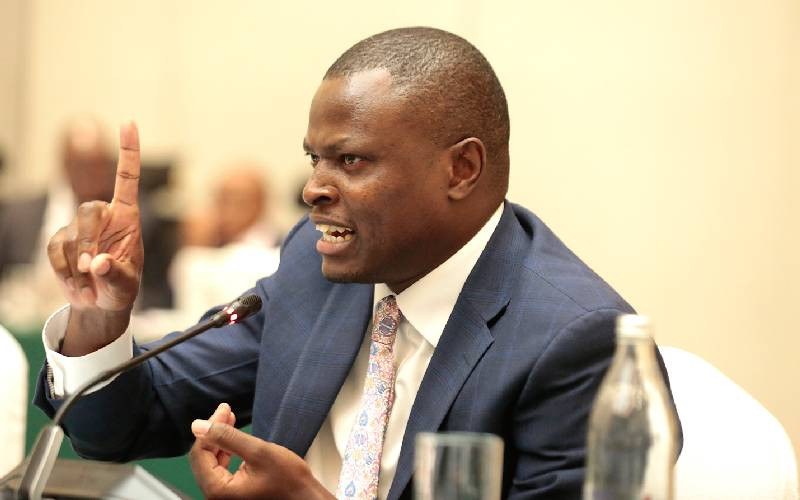
Kiharu MP Ndindi Nyoro

The Kiharu MP, once among the President’s most vocal champions, says he has seen enough — and is building a coalition to prove it
By Dennis Mutua
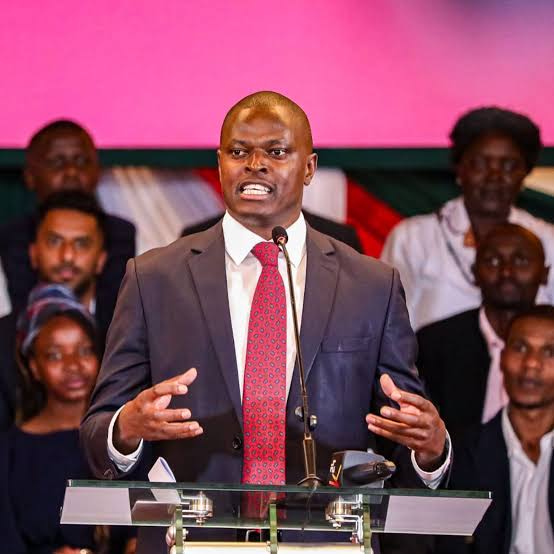
Kiharu MP Ndindi Nyoro yesterday dismissed claims that he is a political project, defended his growing opposition alliances and launched a broadside against President William Ruto’s administration over the Dangote investment deal, falling tea bonuses, the cost of education and what he described as a presidency that has abandoned the people who put it in power.
Speaking during a media interview at Lowlands Hotel in Chuka ahead of a tour of Meru County, Nyoro was unapologetic about his political evolution. He acknowledged that he was among the leaders who campaigned vigorously for Ruto during the 2022 presidential election but argued that the man who won that election was not the same man now governing the country. “I knew and supported Ruto, but I have now chosen to oppose him,” he said, framing the shift not as betrayal but as a response to what he characterised as a presidency that had departed from the will of the people.
The “project” tag, which critics have used to suggest that Nyoro’s opposition activities are being orchestrated and financed by others, drew a sharp response from the MP. He said he had anticipated the accusation and urged Kenyans to treat it as the political mudslinging it was. He insisted that his engagements with opposition leaders were aimed at building numbers and assembling a credible political force ahead of the 2027 general election, not at undermining any individual party or formation. He said his decision to retain his own party rather than fold into an established opposition outfit was deliberate, giving him the flexibility to engage diverse groups across the political spectrum. He claimed the party had attracted more than 2,000 aspirants nationally since its revival, presenting it as a growing national outfit rather than a regional vehicle.
On the Dangote investment, Nyoro was pointed and specific. He said he supported foreign investment in principle but questioned the terms and transparency of the deal the government had negotiated. He alleged that Ruto had a personal interest in the investment and challenged the administration to disclose the identities of its shareholders publicly. He also alleged that public funds had been used to compensate individuals who previously occupied land linked to the project — a claim the government has not publicly addressed. Most seriously, Nyoro alleged that an agreement tied to the investment could restrict Kenya’s ability to import petroleum products independently, potentially binding the country to source its supplies from Dangote. He gave the government a two-week ultimatum to release the full terms of the agreement, warning that he would make the details public himself if it failed to act.
When reminded that Ruto had pointed out that Nyoro himself holds shares in Kenya Power while questioning the Dangote deal’s ownership structure, the MP said the comparison was entirely misplaced. Kenya Power, he argued, is a publicly listed company whose shares are accessible to any Kenyan willing to invest. Dangote, he said, is a private investment whose ownership is not similarly open or transparent. The distinction, he maintained, was not a minor technicality but a fundamental question of public accountability.
Nyoro then turned to agriculture, where his frustration with the government was equally evident. He criticised the recently announced tea bonuses as among the lowest farmers had received in recent memory, accusing the administration of failing an entire sector while claiming to be transforming Kenyan agriculture. He also questioned why the country continues importing large quantities of maize when local production capacity exists, and levelled serious allegations at the government’s fertiliser subsidy programme. He claimed the programme had been converted into a commercial arrangement involving individuals close to the President, with farmers receiving less support than the scheme’s stated objectives promised. He said he had proposals to revive the tea sector and improve farmer earnings, and called for a genuine commitment to implementing them.
On education, Nyoro covered significant ground. He proposed that Early Childhood Development Education teachers be brought under the Teachers Service Commission, arguing the move would standardise and improve their pay and working conditions — a proposal that has long been discussed but repeatedly deferred. He went further, claiming that basic education could be made entirely free without additional taxation, saying the opposition had a costed plan to achieve this. He was particularly critical of the government’s approach to university financing, opposing what he described as an increasing shift toward a loan-based model that would require graduates to repay the cost of their education after securing employment. He said opposition Members of Parliament would reject any framework that institutionalised this approach and threw his support behind university workers currently on strike, criticising a government directive that had instructed universities to find the money to honour collective bargaining agreements from their own resources rather than from the national budget. Forcing universities to raise money from students to fund employee agreements negotiated at the national level, he argued, was neither fair nor sustainable.
The MP also addressed the insecurity crisis affecting herding communities, accusing the government of responding too slowly and too timidly to a situation that had been escalating for months. While acknowledging that a security operation was under way, he said statements had outpaced action and directed specific criticism at Interior Cabinet Secretary Kipchumba Murkomen’s handling of the crisis. He also took aim at what he described as inflammatory remarks by Cabinet Secretary Aden Duale, questioning why Ruto had not moved to rein in a member of his own Cabinet making divisive statements about regional political numbers. Nyoro argued that Mt Kenya had contributed decisively to Ruto’s 2022 victory and that Duale’s comments reflected an ingratitude that the region was entitled to call out.
He defended his current alignment with retired President Uhuru Kenyatta, acknowledging that he had previously opposed Kenyatta politically but arguing that the circumstances had changed. He and other leaders, he said, had been misled by Ruto and had since recognised what had happened. He dismissed suggestions that Kenyatta was financing the opposition as propaganda designed to discredit a legitimate political movement. The opposition, he maintained, would ultimately converge on a single presidential candidate to face Ruto in 2027, and the work of building the coalition capable of making that happen was already well advanced.
Whether Nyoro’s journey from Kenya Kwanza insider to opposition critic becomes one of the defining political stories of the 2027 cycle remains to be seen. What is clear is that he has made his choice — and he appears in no hurry to walk it back.
Similar Posts by The Mt Kenya Times:
- Mt Kenya Times ePAPER October 5, 2026
- Sharp school wins national award for career and workforce readiness
- Government takes diaspora jobs drive to the grassroots
- The stolen hands: How we killed the craftsman to create a clerk
- After nearly 60 years in darkness, Nyabiendi awaits the light
About the Author