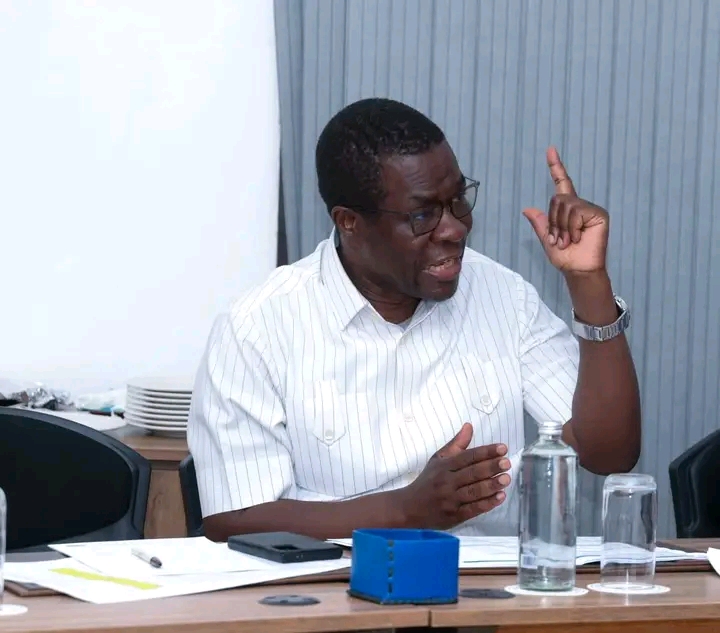
Mukama Phillip Kahigiriza
For generations, our education system buried footballers under chemistry textbooks and silenced carpenters with exam grades — and we called it progress
By Mukama Phillip Kahigiriza
Let me say what we have been afraid to say. The education system most of us went through was never designed for all of us.
It was not built to develop a nation. It was built to staff an office. At its root, it was a colonial project — constructed to produce clerks and typists for a master who was not us. It was never intended to make builders, farmers, welders, artists or creators. As Ngugi wa Thiong’o warned in Decolonising the Mind, it taught us to see ourselves through the eyes of another. As Paulo Freire described in Pedagogy of the Oppressed, it was banking education: the child arrives as an empty account, the teacher makes deposits, and the child withdraws everything in an examination room. That is not learning. That is rehearsal for obedience.
But this narrow colonial project swallowed everyone. It wrapped our grandparents, then our parents, then us, then our children inside one suffocating cocoon — a cocoon of fear, of caning, of cramming and of grade letters that determined human worth. For six decades we have been trapped inside it, and we are only now beginning to name what it cost us.
Where are our best craftsmen? Where are the skilled hands that every genuinely developed nation is built upon? We lost them. We lost them in primary school. A boy who could carve a bird from a piece of wood with a razor blade, who could dismantle and reassemble a broken radio with no formal training, was told he was a failure because he could not balance a chemical equation. We lost them in secondary school. A girl whose voice could hold an entire assembly in silence, whose feet moved a ball with instinctive elegance, was told she was useless because she could not label the reproductive parts of a flower.
We told an entire generation that their worth lived in a grade. That their future was a letter — F, P, C, D. So the footballer abandoned football trying to pass Chemistry. The debater lost his voice trying to survive Mathematics. The boy who could repair any engine in the village was shamed in front of his class because his essay had no proverb. He did not become a doctor. He also did not become a mechanic. We got a frustrated young man who hates books and has forgotten his gift.
As Howard Gardner argued in Frames of Mind, a child carries multiple intelligences, not one. When we measure fifty children with one ruler, we murder many geniuses. We built a system that looked at those fifty children with fifty different gifts and told forty of them they had failed — simply because they did not fit inside the narrow twenty percent box designed for office work. We created job seekers because we shamed job creators. We told the child who loved farming that agriculture was for the dull. We told the child who loved construction that building was for those who could not study. We told the child who loved football that the game was for hooligans. Then we turned around and asked why we import skilled workers from outside, why our stadiums are empty and why unemployment is a national crisis in a country bursting with young people.
We have unemployed graduates and unskilled communities existing simultaneously. That is not an accident. That is the logical outcome of a system that refused to value what hands can do.
A child arrives at school at four years old with brightness in his eyes. At four he shapes cattle from clay. At six he builds a toy car from wire. At ten he can draw, sing and construct things from nothing. By fifteen, after years of being instructed to sit still, to cram, to fear the cane and dread examinations, that brightness is gone. He is a frightened boy waiting to be labelled. We did not educate him. As John Holt observed in How Children Fail, we extinguished him.
Nobody becomes exceptional at something they are forced to endure. As Aristotle understood, where your talent meets the needs of the world, there lies your true vocation. Excellence is born from passion. Passion comes from freedom. And freedom arrives when a child is permitted to become who they were born to be. Sir Ken Robinson made this point as plainly as it has ever been made: schools, as currently structured, kill creativity. We have known this for decades. We have simply lacked the courage to act on it with sufficient urgency.
This is why the Competency-Based Curriculum must be embraced fully — not as a political slogan, not as an administrative burden, but as a genuine rescue operation for a generation whose gifts we have spent decades systematically suppressing. The CBC carries a revolutionary idea dressed in simple language: let a child do what they know best, discover their strength early and become an expert in it. As Maria Montessori demonstrated through a lifetime of practice, when a child follows genuine interest, they work with joy and develop into a master of their craft.
A child who loves building should be building from the age of ten, on a path toward becoming the finest mason, architect or engineer the country has produced. A child who loves football should be trained with exactly the same seriousness, the same institutional investment and the same social respect extended to a future surgeon. A child who loves to argue, to lead, to communicate should be nurtured from an early age into a lawyer, a statesman or a broadcaster. Imagine a school where the best farmer in the district teaches agriculture as a profession of dignity and pride. Where a carpenter teaches design. Where a professional footballer is regarded with the same esteem as a medical doctor. That is how countries build genuine wealth.
We do not need every young person struggling toward the same narrow corridor of medicine and law. We need excellent doctors, yes — but we equally need passionate farmers, world-class athletes, gifted artisans, fearless innovators and joyful teachers who love what they do. We need all of them, in abundance, operating at the height of their individual abilities. That is how a nation truly prospers.
Chinua Achebe understood what we still struggle to accept: a man who does not know where the rain began to beat him cannot know where he dried himself. Our rain began the moment we despised working hands and worshipped only the office. Our old system created clerks. We need a system that creates builders. Our old system taught children to cram. We need one that teaches them to think, to make, to solve. Our old system taught children to fear failure. We need one that teaches them to attempt, to fall, to rise and to build something lasting from the experience. As Thomas Edison reminded us, our greatest weakness is not in failing — it is in giving up.
We cannot afford to lose another generation to an examination paper. We cannot bury another footballer under a Chemistry textbook. We cannot silence another debater because Mathematics did not suit her mind. Let the child born to farm, farm — with knowledge, with modern tools and with the pride of feeding a nation. Let the child born to play, play — with discipline, with coaching and with the ambition of carrying a flag into stadiums the world is watching. Let the child born to build, build — roads, bridges, homes and industries that will long outlast the people who conceived them.
The future has never lived in the office alone. It lives in the field, in the workshop, in the studio, in the stadium — and in the hands of a child who has finally, mercifully, been allowed to become exactly who they were meant to be.
Give us back our stolen hands.
Similar Posts by The Mt Kenya Times:
- Mt Kenya Times ePAPER October 5, 2026
- Sharp school wins national award for career and workforce readiness
- Government takes diaspora jobs drive to the grassroots
- After nearly 60 years in darkness, Nyabiendi awaits the light
- Veterans to petition Ruto over Samburu cattle killings
About the Author