Kenya’s gender election crisis: Will 2027 finally break the deadlock?
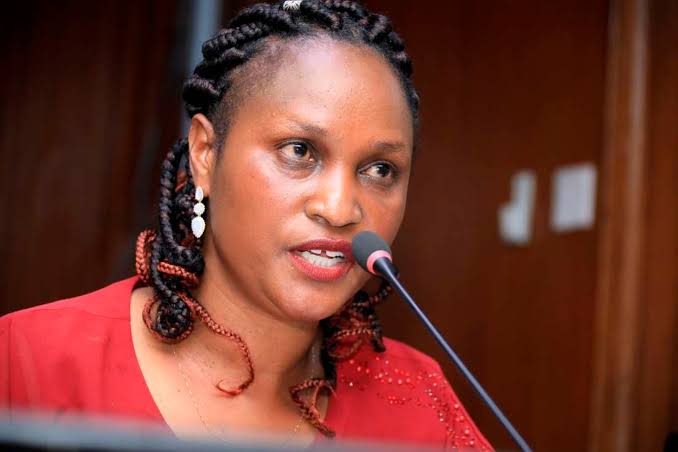
IEBC Commissioner Ann Nderitu
With August elections less than a year away, the constitutional promise of equal representation remains unmet — and the pressure on parties, Parliament and the IEBC has never been greater
By James Mwangi
The Independent Electoral and Boundaries Commission has warned political parties that their candidate nomination lists will face direct scrutiny against the constitutional two-thirds gender threshold ahead of the 2027 General Election, marking the most direct enforcement posture the commission has adopted since the requirement was enshrined in the Constitution in 2010.
The warning, delivered by IEBC Commissioner Ann Nderitu at a high-level policy dialogue convened by the National Gender and Equality Commission in Nairobi, signals that the commission intends to move beyond awareness-raising and into active gatekeeping — examining party lists before candidates proceed to the ballot rather than observing gender imbalances only after votes are counted and seats distributed.
“Political parties hold the stake to nominate candidates. We need to have serious negotiations with political parties so that they nominate women for areas that they are likely to have persons elected, because political parties have their strongholds,” Nderitu said.
The statement crystallises a long-running frustration that has shadowed Kenyan electoral politics for fifteen years. Article 27(8) of the Constitution requires the State to take legislative and other measures to ensure that no more than two-thirds of members of any elective or appointive body are of the same gender. The provision has been partially implemented in county assemblies through a gender top-up mechanism. In the National Assembly and Senate, it has remained, election after election, a constitutional aspiration without a legal vehicle to deliver it.
The 2027 election will be the fourth general election since the Constitution came into force. The pattern is now well established: the obligation is acknowledged, the debate is revived, proposals are tabled, Parliament finds reasons not to pass them, and the election proceeds with a legislative chamber that fails the constitutional test. The question being asked with increasing sharpness by gender advocates, constitutional commissions and development partners is whether 2027 will be different — or whether Kenya will simply repeat the cycle one more time with greater sophistication and equal ineffectiveness.
The dialogue that brought Nderitu’s remarks to public attention was attended by legislators, constitutional commissions, electoral institutions, women’s parliamentary groups and development partners. It was, by all accounts, a room full of people who understand the problem thoroughly. What it reflected, more than anything, is that Kenya’s gender representation challenge is not primarily a knowledge deficit. It is a political one.
NGEC chief executive Purity Ngina drew a distinction that goes to the heart of the deadlock. Individual voters, she argued, exercise a constitutional right when they choose their representatives. The State, separately and in addition to that right, carries a constitutional obligation to ensure that the final composition of Parliament reflects the two-thirds principle. These are not competing duties — they are parallel ones. The failure to implement the gender rule cannot therefore be justified by pointing to how voters chose to vote.
“The Constitution protects my right to choose my representative and at the same time, Article 27(8) requires the State to take legislative and other measures to implement the principle that not more than two-thirds of the members of elective or appointed bodies shall be of the same gender,” Ngina said. “We should not place that responsibility on the individual voter but to the State in accordance with the Constitution.”
This framing matters enormously in the context of the proposals now before Parliament. Critics of the top-up mechanism — which would add women to Parliament after an election to address any gender deficit — have long argued that it overrides the democratic will of the electorate. Ngina’s argument, and the constitutional logic underpinning it, is that the democratic will of the electorate and the State’s obligation to ensure representative composition are distinct matters, and that conflating them has served primarily to block implementation indefinitely.
Gender Cabinet Secretary Hanna Wendot said the government had submitted a report and draft legislative proposals to Parliament in 2024, proposing amendments to the Constitution, the Elections Act and the Political Parties Act. Among those proposals was a top-up arrangement for both the National Assembly and Senate, modelled on the mechanism that has worked in county assemblies. The proposals have not yet been enacted. Time is running short.
The proposed Election Laws (Amendment) Bill, 2026, contains provisions that would require political parties to comply with the two-thirds gender principle when submitting parliamentary nomination lists. If passed and enforced, the provision would give the IEBC the legal basis to do exactly what Nderitu described — to check lists at the point of entry rather than observe imbalances after the fact. It would also shift a significant portion of the responsibility for gender compliance onto parties themselves, where, as Nderitu correctly noted, the real leverage lies.
Political parties control who gets on the ballot. In a country where party strongholds are as entrenched as they are in Kenya — where certain parties can essentially deliver a seat in specific constituencies regardless of the individual candidate — the nomination decision is frequently the election decision. A woman nominated by the dominant party in a stronghold constituency has a realistic path to Parliament. A woman standing as an independent or for a marginal party in the same area has a far steeper climb. The IEBC’s push for parties to field women precisely in their areas of established dominance is therefore not a symbolic request. It is a structural intervention directed at the point where representation is actually determined.
NGEC chairperson Rehema Jaldesa, speaking at the same forum, did not attempt to disguise her exhaustion with a debate that has been running since 2010 without resolution. Her candour was striking and her question rhetorical only in form.
“Isn’t it fatiguing? Are you not as tired as me?” Jaldesa asked, describing the years of constitutional debate, legislative failure and electoral repetition that have surrounded a requirement that has been in force for fifteen years.
The fatigue is understandable and the frustration is legitimate. But fatigue has not produced urgency in Parliament, where the proposals that could resolve the matter have stalled repeatedly. The political economy of legislative change on gender representation is complicated by the fact that the legislators who must pass the reforms are predominantly male and represent a system that currently advantages them. Self-interest and constitutional obligation do not always align, and in this case they have consistently failed to do so.
For women considering the 2027 elections, the practical implications of all this uncertainty are significant. Gender advocates at the dialogue urged aspirants to be strategic — to align themselves with parties that hold genuine support in the constituencies they intend to contest, and to begin building those relationships now rather than waiting for the formal campaign period to begin. The structural environment may be imperfect, but within it, the choices aspirants make in the coming months will have direct consequences for whether the two-thirds principle inches closer to reality or recedes once more into the language of constitutional aspiration.
The 2027 general election is less than a year away. The IEBC’s preparations are underway. Parliament is debating. The proposals exist. What remains to be seen is whether the accumulated pressure of fifteen years of failure, the formal enforcement posture of the electoral commission and the imminence of another election cycle will finally produce what previous cycles did not: a legal framework that converts a constitutional obligation into an electoral reality.
Kenya has promised its women equal representation since 2010. The country is still waiting to deliver on that promise.
Similar Posts by The Mt Kenya Times:
- Mt Kenya Times ePAPER October 6, 2026
- Maraga takes anti-graft pledge to diaspora as US lobby group backs his 2027 bid
- Ruto pledges 50,000 teacher promotions and new career framework within two weeks
- Maharagwe number tatu: Decoding Chuka University’s campus food language
- PTSD and youth: The whispers we have not learned to hear
About the Author