Maraga takes anti-graft pledge to diaspora as US lobby group backs his 2027 bid
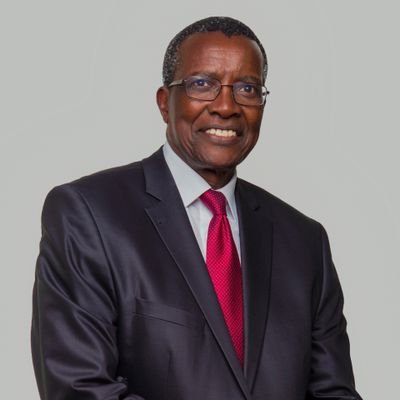
Former Chief Justice David Maraga
The former Chief Justice is campaigning in America with a blunt promise and registered foreign support — but the road to State House remains steep
By David Kimani
Former Chief Justice David Maraga has launched a three-week campaign tour of the United States, pledging to diaspora Kenyans that he will jail corrupt officials, protect public resources and bring Singapore-style accountability to Kenya if elected president in August 2027.
Speaking to supporters in the United States on Sunday, Maraga — the presidential flagbearer for the United Green Movement party — delivered a message stripped of political ambiguity. He would not steal. His family would not steal. Those he appointed to serve would not steal. And those who did would face consequences.
“I will not steal from you, my family to steal from you, or those I work with to steal from you,” Maraga told the gathering. “Kenyans have not given that money to you to put it in your pocket. I will guard that for you.”
The directness is deliberate and characteristic. Maraga built his public reputation on bluntness — most memorably in September 2017 when, as Chief Justice, he annulled the presidential election on constitutional grounds, a ruling that shook the political establishment and established him, in the eyes of many Kenyans, as an institution that could not be bought. Whether that judicial legacy translates into a viable presidential campaign is the central question his 2027 bid must answer, and his current American tour suggests he is at least serious about testing it.
His reference to Singapore and the late Lee Kuan Yew was pointed. The city-state’s transformation from a developing country into one of the world’s most prosperous and least corrupt economies is a model that Kenyan politicians invoke often and implement rarely. Maraga’s invocation of it was both aspirational and diagnostic — an implicit acknowledgement that Kenya’s failure to achieve comparable development is not a resource problem but a governance one.
“We are talking about Singapore in Kenya. You know what Lee Kuan Yew did to make Singapore admirable,” he said.
Lee governed Singapore for three decades with a combination of economic discipline, institutional integrity and zero tolerance for corruption that brooked no distinction between political allies and opponents. He prosecuted ministers, friends and civil servants alike. The result was a state in which public resources were managed with an efficiency that became the envy of the developing world. Maraga’s invocation of that model will resonate with diaspora Kenyans who have watched, from abroad, the systematic looting of a country whose potential they know intimately and whose failures they feel personally. Whether it resonates beyond the diaspora, with voters in Kisumu, Eldoret, Nakuru and Nairobi who have heard similar promises from many politicians before, is an altogether different question.
The tour has produced a tangible institutional development that goes beyond campaign speeches. Documents filed under the United States Foreign Agents Registration Act show that Vanguard Africa, a Washington-based democracy advocacy organisation, entered into a formal agreement with Friends of Maraga on September 2, 2026, to provide advisory, international advocacy and public engagement support. The filing, submitted to the US Department of Justice, states that the support will focus on elevating Maraga’s profile and ethical leadership and on supporting free and fair elections in Kenya. Vanguard Africa will provide the services on a pro bono basis until November 30, 2026, after which the two parties will review the arrangement at a strategy meeting scheduled for December.
The FARA registration is significant for several reasons. It signals that Maraga’s campaign has acquired a degree of international institutional support that most third-party candidates in Kenyan elections never achieve. It also introduces a layer of formal documentation and transparency — an irony that will not be lost on observers, given that the campaign’s central theme is accountability. Vanguard Africa describes itself as a non-profit dedicated to supporting democratic governance and free elections in Africa. Its decision to back Maraga pro bono reflects a judgment, at least at the organisational level, that his candidacy represents something worth investing in.
But the political mathematics of Kenya’s 2027 election are formidable, and Maraga’s path to State House runs through terrain that has defeated more established political figures than him. President William Ruto is seeking a second term from a position of institutional advantage. He controls state resources, commands the loyalty of a significant portion of the legislature and has spent much of 2026 making political peace with former adversaries — most recently attempting to broaden his coalition ahead of what promises to be a fiercely contested election.
The opposition landscape, meanwhile, is fragmented and still finding its post-Raila Odinga shape. The former Prime Minister’s death in October last year removed the single most powerful unifying force in Kenyan opposition politics. What has emerged in his absence is a field of ambitious figures — including Wiper leader Kalonzo Musyoka, who made an unsuccessful presidential run in 2022, EALA member Winnie Odinga, freshly anointed by Luo Council of Elders as her father’s political heir, and a constellation of smaller candidacies including Maraga’s — all competing for space in a political environment that has not yet produced a credible coalition capable of challenging Ruto’s incumbency.
Former Deputy President Rigathi Gachagua, impeached in October 2024 and now leading the Democracy for the Citizens Party, adds a further disruptive variable. His base in the Mount Kenya region — which delivered Ruto his decisive margin in 2022 — is no longer reliably in the president’s column, and the scramble for Central Kenya’s votes will be one of the defining contests of the 2027 cycle.
Maraga’s proposition is different in kind from most of his competitors. He is not positioning himself as the standard-bearer of a regional bloc or as the culmination of a long-running political alliance. He is presenting himself as a character candidate — a man whose record speaks for itself and whose appeal, if it exists, must cross ethnic and regional lines to mean anything at the ballot box. That is a harder pitch in Kenyan politics, where identity networks remain powerful determinants of electoral outcomes, but it is not an impossible one. The 2017 election nullification made Maraga a national figure in a way that transcends the usual categories.
The diaspora, for its part, is a constituency worth courting. Kenyans abroad remit billions of shillings home annually and carry significant influence over family voting decisions in their home counties. A diaspora that is energised behind a candidate can translate into material and political support that extends well beyond the votes of non-resident citizens. Maraga appears to understand this, and the three-week American tour, combined with the Vanguard Africa partnership, suggests a campaign that is thinking about how to build international credibility alongside domestic momentum.
Whether it is enough will depend on what happens in Kenya over the next ten months. The coalition negotiations, the legislative battles over electoral law, the gender representation debate and the ongoing economic pressures on ordinary Kenyans will all shape the political environment into which every candidate, including Maraga, must ultimately make their case.
He arrives back from America with a pledge, a partner and a story. The question Kenya’s voters will answer in August is whether that is enough.
Similar Posts by The Mt Kenya Times:
- Mt Kenya Times ePAPER October 6, 2026
- Kenya’s gender election crisis: Will 2027 finally break the deadlock?
- Ruto pledges 50,000 teacher promotions and new career framework within two weeks
- Maharagwe number tatu: Decoding Chuka University’s campus food language
- PTSD and youth: The whispers we have not learned to hear
About the Author