Maharagwe number tatu: Decoding Chuka University’s campus food language
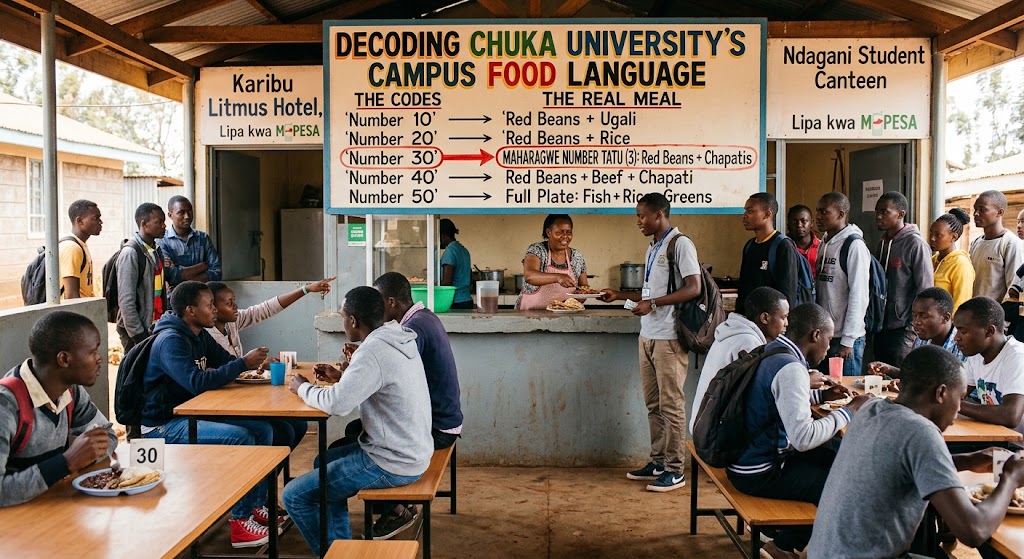
Around Ndagani’s hotels, what you order matters far less than knowing the code
By Sallo Gobana
Walk into a hotel near Chuka University and order a meal the conventional way, and you may be met with blank stares. For first-year students, getting food around campus can feel less like placing an order and more like attempting to crack a secret code — because, in a very real sense, it is.
The system is built around price, not product. At Litmus Hotel in Ndagani, located along the busy Meru-Nairobi Highway, the numbers on a customer’s lips do not correspond to items on any menu. They correspond to how much money that customer is willing to spend. A viral video of the ordering system at Litmus brought the practice to wider public attention, but for regular customers and hotel staff, it has long been an unremarkable part of daily life.
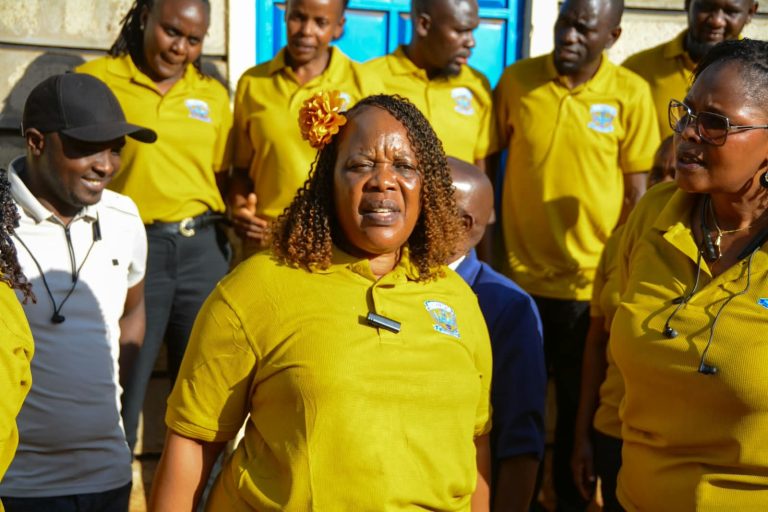
Cheryl Bwana, a hotel attendant known to everyone as Cheche, explains it plainly. “Namba tano, tunamaanisha 50. Namba tatu, tunamaanisha 30” — number five means 50 shillings, number three means 30. The logic is discreet by design. Some customers, she says, simply do not want those around them to know how much they are spending. A person eating a 20-shilling meal would prefer their neighbour not know the details. The coded language makes that possible without awkwardness.
What began as a quiet workaround has, over time, become part of the social fabric of eating around campus. Regular customers walk in and ask confidently for “number two beef” or “number five” without a second thought. First-year students, encountering the system for the first time, often need a swift tutorial from a classmate or an amused attendant before the logic clicks.
The confusion can produce genuinely funny moments. At Kings B along Ndagani Marine Road, owner David Githaiga recalls a first-year student who spotted what she thought was an extraordinary bargain. Told that “choma” cost 55 shillings, she asked whether she could get a kilogram of it — imagining she had stumbled upon some impossibly cheap nyama choma. What she did not yet know was that at Kings B, “choma” refers to chapati served with cereal soup, not roasted meat. The misunderstanding, Githaiga recalls with a grin, is far from unusual.
His hotel takes a more flexible approach than some. Rather than fixed combinations tied to price points, Githaiga lets customers build their own meals according to preference and budget. The vocabulary is different but the underlying principle is the same — students should be able to eat with whatever they have in their pockets, without having to explain or justify it.
Cheche is equally clear on that point. The system at Litmus, she says, has been in place for years and has never been about excluding anyone. “Hata kama ukiwa na 50, 30. Litmus, utapata chakula 30, chakula 20. So nyote mwakaribishwa Litmus” — even if you have just 20 or 30 shillings, there is something for you. Everyone is welcome.
That accessibility is the quiet heart of the whole culture. Behind the comedy of confused first-years and the novelty of a price-coded menu lies something more straightforward: a student population managing tight budgets in a way that preserves a measure of dignity. The coded language means nobody has to announce how little they have. A 20-shilling meal arrives without ceremony, ordered the same way as a 50-shilling one, and nobody at the next table is any the wiser.
Learning the codes, for most students, happens naturally — through daily meals, overheard conversations and the gentle correction of more experienced comrades. By the time a student reaches their second or third year, the language is second nature. By the time they graduate, it is part of what they remember.
Around the hotels of Ndagani, ordering food has always been about more than food. It is about belonging, about navigating student life on whatever resources you have, and about speaking the language of the place you now call home. In Chuka, you do not just order a meal. You have to know how to ask for it.
Similar Posts by The Mt Kenya Times:
- Mt Kenya Times ePAPER October 6, 2026
- Maraga takes anti-graft pledge to diaspora as US lobby group backs his 2027 bid
- Kenya’s gender election crisis: Will 2027 finally break the deadlock?
- Ruto pledges 50,000 teacher promotions and new career framework within two weeks
- PTSD and youth: The whispers we have not learned to hear
About the Author