Kenya’s clean energy push hinges on quality standards, says Kinyanjui
 The Mt Kenya Times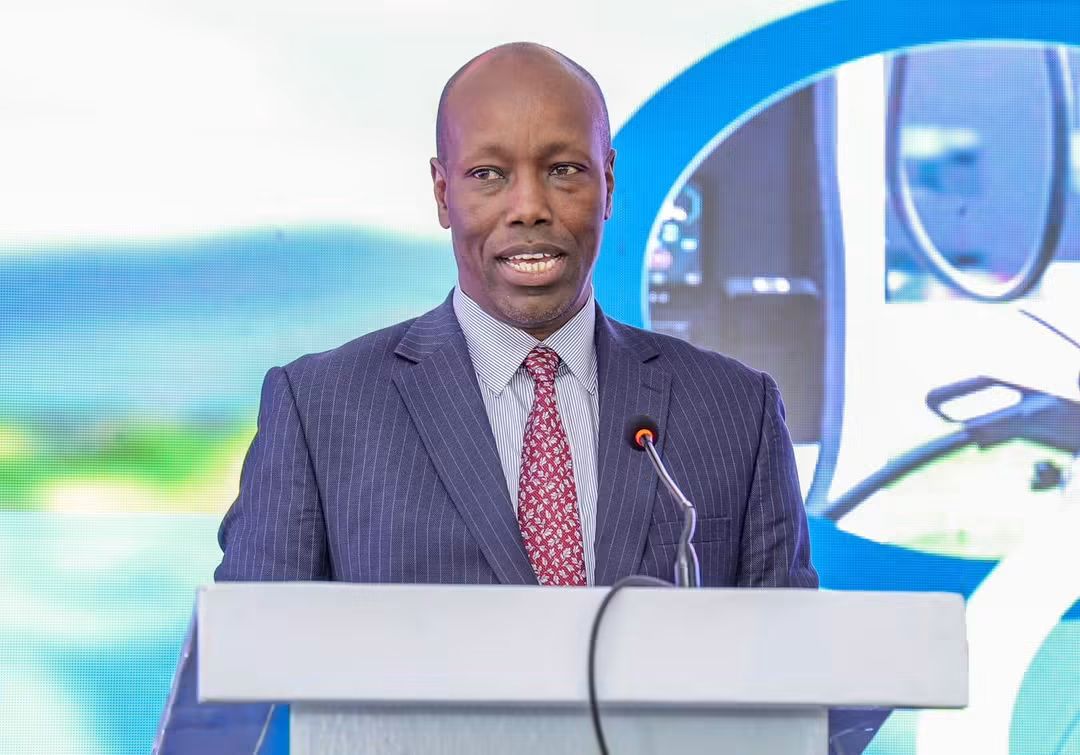
Trade and Industry Lee Kinyanjui
Kenya’s clean energy push hinges on quality standards, says Kinyanjui
Cabinet secretary and KEBS chief tell industry that affordable power must translate into real jobs and lower costs
By John Kariuki
Kenya’s government yesterday reaffirmed its commitment to making the country’s transition to affordable, clean and reliable energy a driver of industrial transformation and inclusive growth, with quality standards placed at the centre of that ambition.
The declaration came during the World Standards Day 2026 celebrations held at the Eka Hotel in Nairobi, where Cabinet Secretary for Investments, Trade and Industry Lee Kinyanjui and Kenya Bureau of Standards Director General Esther Ngari led stakeholders in marking the global observance under the theme: “Shared Vision For A Better World: Spotlight On SDG 7 — Affordable And Clean Energy.”
The event brought together Principal Secretary for Industry Juma Mukhwana, National Standards Council Chairperson Chris Wamalwa, former International Organization for Standardization president Eng. Eddy Njoroge, representatives of international organisations, industry leaders, development partners, the diplomatic community, academia, technical committees and consumer organisations.
In his keynote address, Kinyanjui said this year’s theme aligned closely with Kenya’s Bottom-Up Economic Transformation Agenda, arguing that energy was not merely a social service but a critical productive input that determined the cost of manufacturing, shaped investment decisions and defined the competitiveness of Kenyan products in regional and international markets.
Kenya has made measurable progress on its energy mix. According to data from the Energy and Petroleum Regulatory Authority, geothermal accounted for 39.51 per cent of electricity generated in the 2024/2025 financial year, hydropower contributed 24.21 per cent and wind 13.18 per cent — giving the country a renewable energy foundation that Kinyanjui said provided a genuine competitive edge in attracting green investment.
“This renewable-energy foundation gives Kenya an important advantage,” he said. “However, the real test is whether energy progress translates into lower production costs, stronger industries, more investment, jobs and better livelihoods.”
The government’s National Energy Compact 2025–2030 targets universal access to electricity and clean cooking by 2030, 5,952 megawatts of renewable electricity generation capacity and a full transition to a clean national grid. Kinyanjui acknowledged that achieving those targets would require massive investment, innovation and skills development, but stressed that a strong quality infrastructure was equally indispensable.
For his ministry, he said, the link between energy and industry was direct. Investors needed confidence that infrastructure and equipment were reliable. Manufacturers needed efficient systems to manage costs. Consumers needed assurance that electrical, solar and other energy products were safe and would perform as intended. Standards, he argued, provided precisely that assurance — setting clear requirements for quality, safety, efficiency and compatibility across electrical installations, renewable energy technologies, battery storage, electric mobility, clean cooking and energy-efficient industrial equipment.
“We must therefore move beyond measuring energy progress only by the capacity installed,” Kinyanjui said. “We must increasingly measure its contribution to productivity, industrial growth, employment and household welfare.”
He elaborated on how dependable energy underpinned progress across every priority of the government’s agenda — supporting irrigation, cold storage and post-harvest preservation in agriculture; reducing operating costs in manufacturing; and enabling longer hours and better equipment for small and medium enterprises. He cautioned, however, that standards must not become an unnecessary obstacle to enterprise. “We must combine clear requirements with awareness, training and accessible compliance services,” he said. “Our businesses should be equipped not merely to meet minimum requirements, but to compete confidently.”

Ngari, speaking on behalf of KEBS, described World Standards Day as an opportunity to recognise the foundational role standards play in making modern life safer, more efficient and more sustainable. She framed energy as woven into the fabric of daily life — illuminating homes, powering hospitals, sustaining industries and connecting communities to the digital economy. For a small enterprise, she said, reliable electricity meant longer operating hours and improved productivity. For a rural household, a dependable solar system provided light for children to study. For a manufacturer, energy efficiency meant lower production costs.
But she was direct about the risks of progress without quality assurance. “A solar panel that fails prematurely, a battery that does not deliver expected performance, or an electrical appliance that presents a safety risk can turn an investment in progress into a source of loss and disappointment,” Ngari warned. Inefficient equipment, she added, could increase operating costs for households and businesses, undermining the very affordability the energy transition sought to deliver.
“Standards are the bridge between the promise of technology and the benefits people actually experience,” she said, describing KEBS’s collaboration with EPRA on fuel quality as a practical illustration of how complementary institutional mandates could protect consumers, ensure fair trade and advance environmental objectives.
Ngari reaffirmed that KEBS would continue to develop and adopt standards, undertake conformity assessment and enforce applicable standards under its statutory mandate. She framed compliance not as a burden but as an investment. “For manufacturers, compliance should be understood not merely as an obligation, but as an investment in productivity, market access and reputation,” she said. “For consumers, it is an important safeguard. For the country, it is part of the foundation for sustainable industrial growth.”
Both leaders called for a whole-of-society approach in which government provided an enabling environment, industry invested in quality and efficiency, technical institutions offered credible assurance and consumers were empowered to recognise and demand compliant products. They emphasised the particular need to ensure that smaller enterprises could access the knowledge and technical support required to meet standards, so that Kenya’s quality-driven energy transition opened doors for Kenyan businesses rather than closing them.
Kinyanjui closed with a definition of progress that was deliberately grounded. “The true measure of progress will be practical: a small enterprise with lower energy costs; a manufacturer that competes more effectively; a farmer who preserves more of their harvest; a young person who secures work in a growing green economy; and a Kenyan product trusted in international markets.”
Ngari echoed the sentiment. “A better energy future is not measured by electricity generated alone, but by the lives improved, the businesses strengthened and the opportunities created.”
Similar Posts by The Mt Kenya Times:
- The critical role of teachers in preventing examination malpractice
- SUPKEM calls for political cooperation over division
- Miano hails Sofy Unicharm launch as win for women and local industry
- Mt Kenya Times ePAPER October 14, 2026
- Kalonzo takes Kenya’s economic case to London
About the Author