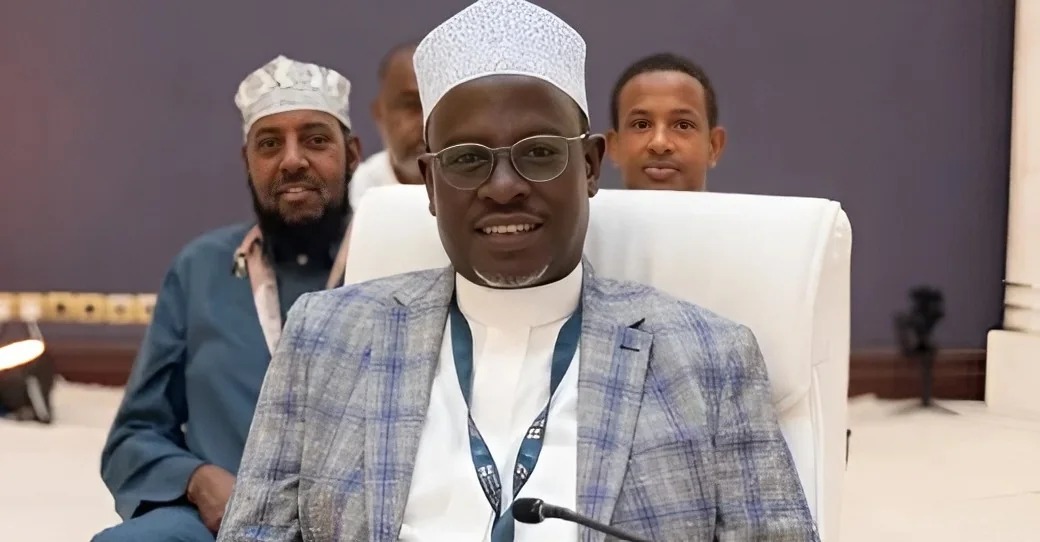
National Chairman Hassan Kirua Ole Naado
Muslim council’s annual meeting urges Kenya’s leaders to put citizens before power
By Grace Wanja
The Supreme Council of Kenya Muslims concluded its Annual General Meeting yesterday at the Weston Hotel in Nairobi, using the occasion to deliver a pointed assessment of the country’s political climate and call on both the ruling administration and the opposition to place national welfare above partisan interests.
The meeting, which drew delegates, scholars and leadership structures from all 47 counties, served as both an institutional audit and a public statement on the state of the nation. As Kenya’s apex umbrella body for Muslim organisations, SUPKEM used the platform to reflect on what it described as a critical and consequential moment in the country’s political trajectory.
In a statement signed by National Chairman Hassan Kirua Ole Naado, the council said it had observed with concern the emergence of political realignments driven more by self-preservation than by public service. It warned that vulnerable citizens were being left exposed to economic hardship and social fragmentation as a consequence of what it termed endless political friction.
“Kenya cannot afford the luxury of endless political friction at the expense of national development, ethnic harmony, and ethical governance,” the statement read, framing leadership as a trust — or amanah — that those in power must honour not merely before their electorates but before a higher authority.
The council anchored its recommendations in a Quranic injunction from Surah Al-Ma’idah: the principle of cooperation in righteousness and piety while rejecting cooperation in sin and aggression. It described this as a roadmap not only for the Muslim community but for the country’s political class and civil society at large.
SUPKEM’s formal recommendations were direct. On what it called cooperation for the common good, the council urged the government and opposition to forge a principled consensus on the rising cost of living, healthcare reform and youth unemployment — stressing that any cooperation must deliver relief to ordinary Kenyans rather than serve as a cover for power-sharing arrangements.
The council also issued a strong condemnation of political strategies that exploit ethnic or religious divisions, calling on all political actors to abandon inflammatory language that it said threatened national peace. In a further recommendation on accountability, SUPKEM demanded transparency in the management of public resources, describing corruption as a severe moral failing, and called for independent oversight institutions to be strengthened and insulated from political interference.
The meeting took place against a backdrop of shifting political alliances and sustained public frustration over the cost of living, which has remained a dominant concern since last year’s finance bill protests. SUPKEM’s intervention reflects a broader pattern of religious institutions stepping into the political discourse at moments of national tension, a role the council said it regarded as inseparable from its mandate to nurture a united and ethically grounded community that actively contributes to Kenyan society.
The council said it would continue to monitor national developments and engage with relevant institutions in pursuit of peace, equitable governance and moral leadership.
Similar Posts by The Mt Kenya Times:
- The public-private divide in competition law: Reconstructing rights-based private remedies for anticompetitive harm in Kenya and the East African Community
- The critical role of teachers in preventing examination malpractice
- Miano hails Sofy Unicharm launch as win for women and local industry
- Kenya’s clean energy push hinges on quality standards, says Kinyanjui
- Mt Kenya Times ePAPER October 14, 2026
About the Author