The Mt Kenya Times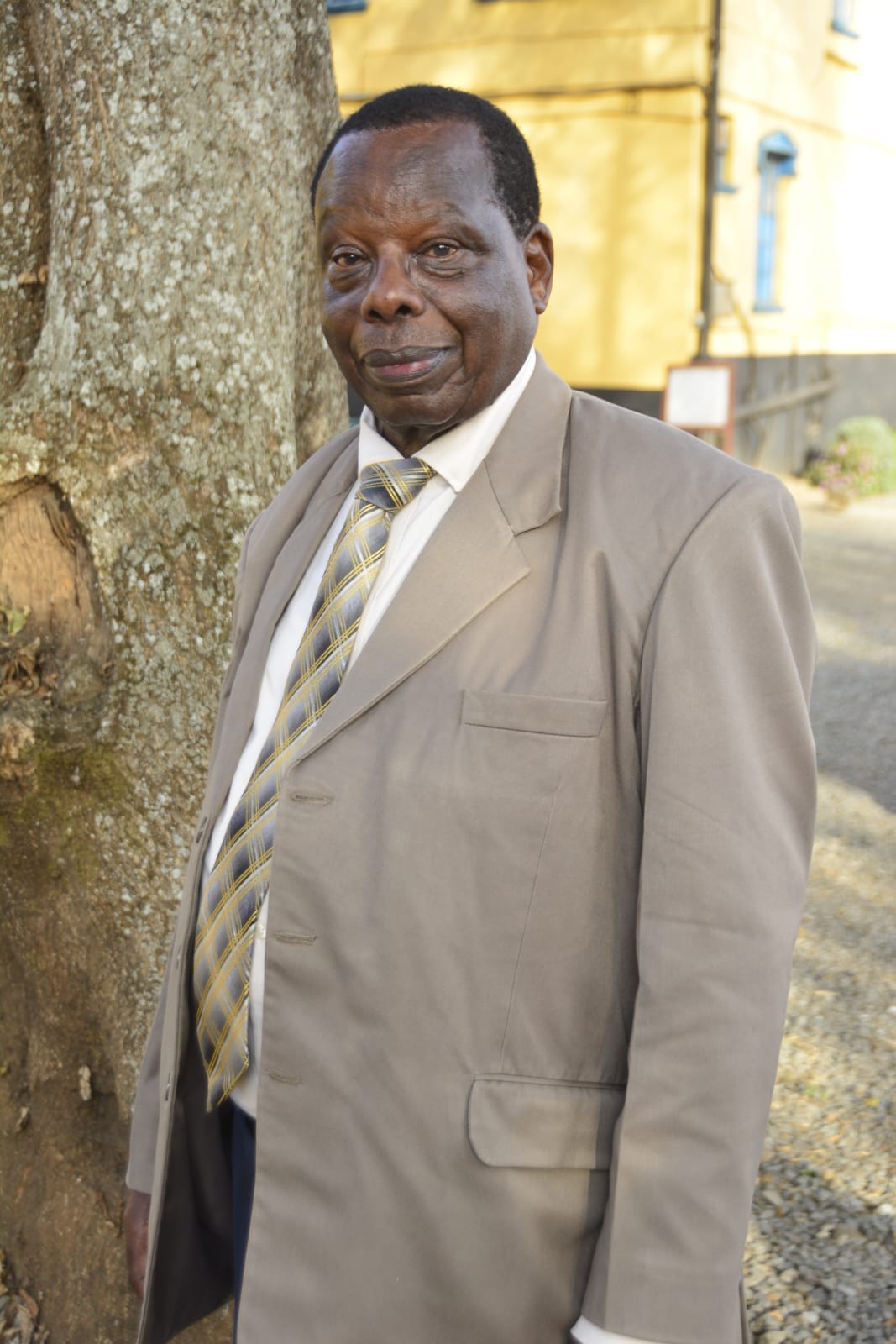
Independent Presidential Candidate Rev. Dr. David Muhia Githii on this photo taken on Tuesday 13th October 2026.
Former PCEA moderator enters race as independent, vowing to fight corruption and reshape public service delivery
By John Kariuki
Former Presbyterian Church of East Africa (PCEA) Moderator David Muhia Githii yesterday announced his intention to contest the presidency in the 2027 General Election as an independent candidate, calling on Kenyans to prioritise integrity, accountability and service to citizens when choosing their next leader.
Githii made the declaration at a press briefing in Kiambu County, where he outlined his intention to enter the presidential race outside established political parties and laid out a governance philosophy he said would distinguish his campaign from those of party-backed aspirants.
Speaking to The Mt Kenya Times in an exclusive interview, Githii explained that his proposed approach to governance would be anchored in listening to citizens, assessing their needs, conducting research, consulting relevant stakeholders and implementing practical solutions. He was emphatic that the process would not be selective — it would apply across all government ministries and sectors of the economy without exception.
“I will vie as an independent candidate, and I will fight corruption and improve the healthcare of the country,” he said, identifying two priorities at the centre of his presidential bid.
The former church leader said Kenya needed a fundamentally different approach to political leadership, arguing that the country should elect leaders whose decisions are guided by integrity and the interests of citizens rather than loyalty to political factions. His declaration introduces another prospective contender into the race for State House as political activity gradually intensifies ahead of the 2027 General Election.
Central to Githii’s emerging political message is his decision to pursue the presidency without aligning himself with any political camp. He argues that independent candidates hold a distinct advantage because they are not tied to party patronage, which can influence political decisions and distort the priorities of elected leaders once in office.
In Kenya’s competitive political environment, party structures play a significant role in candidate nominations, coalition negotiations and campaign mobilisation. Candidates seeking office through political parties must operate within those structures, and the obligations that flow from party affiliation can shape governance decisions long after an election is won. Githii says his independence from those arrangements would allow him to govern without those constraints.
However, running independently carries its own demands. Presidential aspirants outside established parties must organise their campaigns, mobilise resources, build nationwide support networks and satisfy constitutional and electoral requirements for nomination. Under Kenya’s Constitution, independent presidential candidates must secure support from a prescribed number of registered voters drawn from a majority of counties — a threshold that will test the organisational reach of his nascent campaign.
Githii will therefore face the task of demonstrating how his stated independence would translate into practical governance principles, and how he intends to build the infrastructure necessary to mount a credible national campaign.
Corruption is among the concerns he has placed at the centre of his presidential ambition. He has linked his decision to seek the country’s highest office to what he describes as the urgent need for proper leadership, arguing that Kenya needs leaders who can be trusted to manage public resources responsibly and who place the welfare of ordinary citizens at the heart of public decision-making.
The emphasis on integrity comes amid longstanding public debate over the management of public resources, accountability in government institutions and the effectiveness of measures intended to prevent the misuse of public funds. For Githii, the process of addressing such challenges would begin with listening to the people affected, assessing the problems, undertaking research and consulting relevant stakeholders before implementing solutions — an approach he says would guide decision-making throughout government rather than being confined to selected sectors.
Githii cited healthcare and education as examples of how his proposed administration would approach national challenges. In the healthcare sector, he said effective reform must begin with listening to patients, healthcare workers and other stakeholders, assessing the challenges affecting service delivery, conducting research and consulting relevant experts before any intervention is designed or implemented.
Healthcare remains a major national concern, with persistent questions surrounding access to treatment, affordability of medicines, the welfare of healthcare workers and the long-term sustainability of health financing. Githii’s proposed approach would require a detailed assessment of those challenges before determining appropriate interventions — a departure, he argues, from a political culture that too often announces solutions before understanding problems.
Similarly, in education, his process would involve listening to learners, parents, teachers, school administrators and other stakeholders to establish the challenges affecting learning outcomes and identify practical responses. Education policy in Kenya encompasses school financing, teacher recruitment and deployment, learning facilities, curriculum implementation and opportunities for young people to acquire relevant skills — all areas he says would be subjected to the same consultative framework.
Rather than treating healthcare and education as isolated campaign pledges, Githii said the same process of listening, assessing, researching, consulting and implementing would serve as a common framework for developing and executing public policy across all government departments. Translating that framework into measurable results, however, would require clear policy proposals, implementation timelines, budgetary commitments and mechanisms for evaluating performance — details that his campaign will be expected to produce as 2027 draws closer.
Githii brings a background in church administration, education and previous political contests to his latest declaration. He served as PCEA Moderator from 2003 to 2009, leading one of Kenya’s most established religious institutions for six years. In the 2013 General Election, he contested the Kiambu gubernatorial seat on a United Democratic Forum ticket, finishing fourth. He subsequently announced a presidential bid ahead of the 2022 General Election before withdrawing from that race.
His latest declaration signals a renewed attempt to pursue national political leadership, this time with an explicit and unambiguous commitment to running as an independent. For voters assessing his candidature, his record in church leadership and previous campaigns forms part of his public background — but the test ahead is whether he can convert a consultative governance philosophy into a concrete, costed national programme capable of winning the confidence of Kenyans across the country’s diverse regions.
As the campaign season takes shape, Githii’s ability to translate his principles into detailed policies, measurable targets and a credible organisational presence will be central to how the electorate evaluates his presidential ambition.
Similar Posts by The Mt Kenya Times:
- Television or the internet: The battle for young minds
- Atlético punish United with 2-0 Champions League win
- Maresca joins Guardiola, Ancelotti and Solskjær in Premier League record books
- Nail care business opens at Masinde Muliro University
- The 21st century classroom: From rules to relationships
About the Author