Ruto calls Kenyatta a conman as Kenya’s 2027 battle begins in earnest
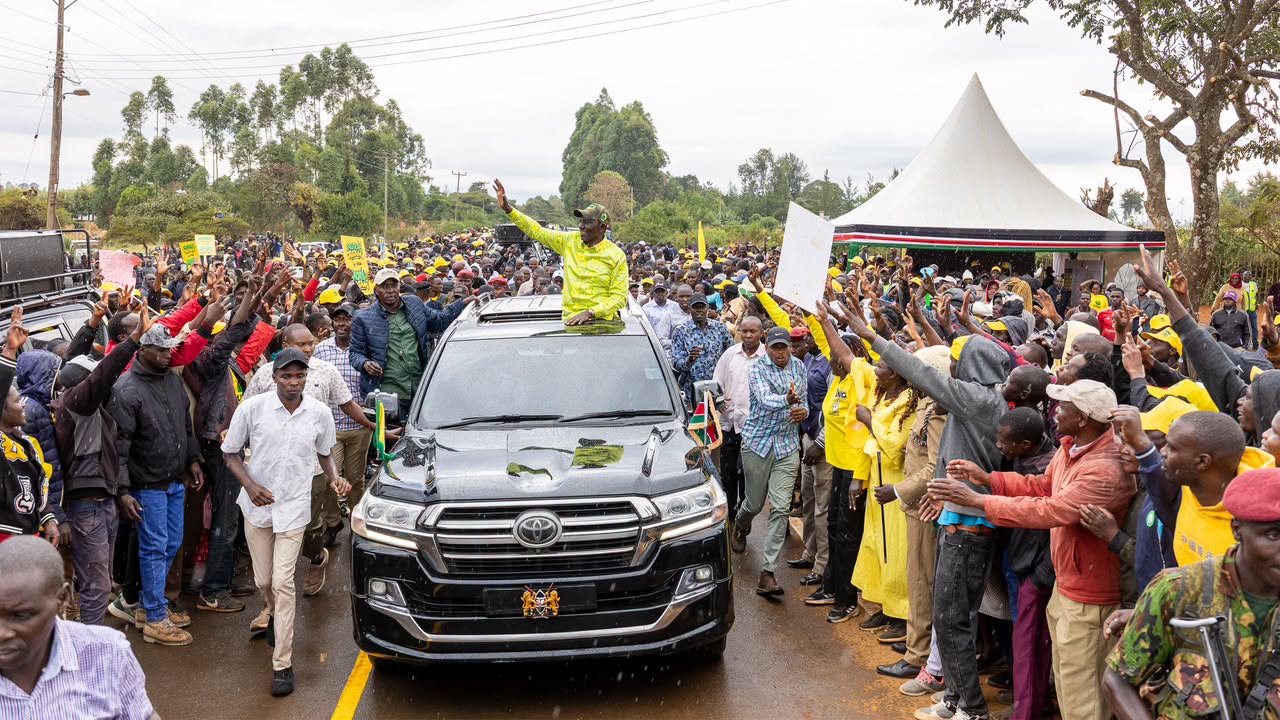
President William Ruto
The President’s blistering North Rift offensive signals a political season of personal scores, realigning loyalties and a governing coalition fighting to hold its ground
By David Kimani
President William Ruto launched the most personal and unrestrained attack of his presidency against former President Uhuru Kenyatta yesterday, branding him a serial political deceiver and warning opposition leaders now aligned with Kenyatta that they were courting the same betrayal he says he suffered — as Kenya’s 2027 general election campaign began in all but name.
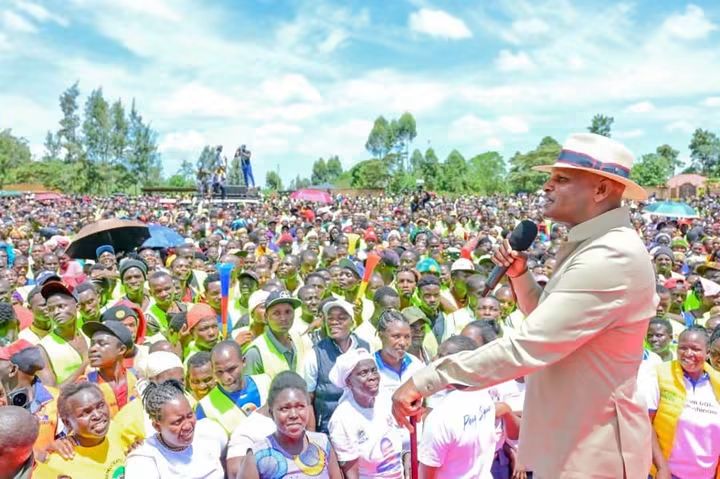
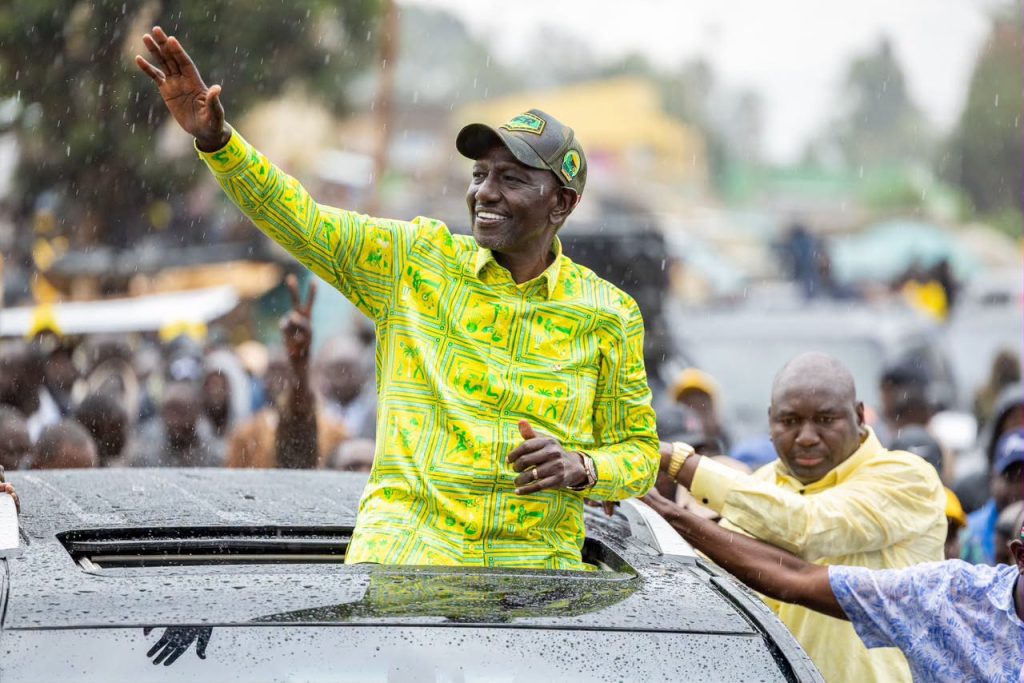
Speaking to thousands of supporters across Nandi and Uasin Gishu counties on the opening day of a ten-day North Rift development tour, Ruto abandoned the careful language of incumbency and reached instead for the raw idiom of the campaign trail. The message was pointed, personal and clearly designed to reframe the political contest ahead as a referendum on loyalty, trust and the character of the man most analysts still consider the most consequential broker in Kenyan opposition politics.
“I, William Ruto, voted for you four times. I stood with you in your quest for leadership. I stood with you in 2013 and 2017. You deceived me,” Ruto told the crowd, addressing Kenyatta directly in Swahili. “You said ten years for Uhuru and ten for Ruto. When my time came, you betrayed me, you abandoned me, you told Kenyans not to vote for me.”
The accusations strip away any residual pretence that the two men, who governed together for a decade and whose political partnership once seemed unbreakable, retain any relationship beyond mutual political hostility. For Ruto, the timing is deliberate. With just under a year before the August 2027 election, the President is moving to disqualify Kenyatta as a credible political sponsor before the opposition has had sufficient time to coalesce around a unified candidate.
His warning to opposition figures currently working with Kenyatta was delivered with a theatrical directness that drew roars from the North Rift faithful. “Those people running around with Uhuru Kenyatta should ask me. That man is a very big conman. If he betrayed me after I campaigned for him, will he not finish them before breakfast?” The language was calculated. It was also, by the standards of Kenyan presidential rhetoric, extraordinarily blunt.
Ruto extended the charge beyond his own experience, accusing Kenyatta of having deceived former Prime Minister Raila Odinga, Wiper Democratic Movement leader Stephen Kalonzo Musyoka and former Interior Cabinet Secretary Fred Matiang’i in succession. “You deceived Raila Odinga, you deceived Kalonzo Musyoka, you deceived Matiang’i. You are the one who sent him abroad. My friend, leave me alone,” he said. The claim about Matiang’i — who departed Kenya under circumstances that remain contested — will reverberate in political circles for days.
The intervention carries significant electoral logic. Kenya’s 2027 race is shaping up as a three-way contest between Ruto’s Kenya Kwanza coalition, a reconstituted opposition whose shape remains fluid, and the wild card of Kenyatta’s political weight, which he has so far declined to attach formally to any candidate. By portraying Kenyatta as politically toxic, Ruto is attempting to quarantine that influence before it can be directed effectively against him.
The broader political landscape into which these attacks land is one of considerable volatility. The opposition remains fractured following the death of Raila Odinga — whose first anniversary is being marked on Thursday in Bondo, Siaya County, at a commemoration Ruto and Kenyatta are both expected to attend. That occasion will be watched intensely for signals about whether either man is prepared to modulate his public posture, or whether Thursday becomes another staging ground for the confrontation that has been building throughout the year.
Kenyatta has not responded publicly to yesterday’s remarks. His allies were similarly quiet. But the political temperature his silence is now operating within has risen several degrees.
Ruto used the North Rift tour to do what incumbent presidents in democratic contests must do: appear above the fray while simultaneously conducting politics at full intensity. The development launches — roads, markets and electricity connections under the Last Mile Connectivity Programme — provided the governing optics. The Kenyatta attack provided the political substance. Interior Cabinet Secretary Kipchumba Murkomen reinforced the civic mobilisation message, urging residents to acquire national identification documents and announcing plans to launch digital birth certificates during Mashujaa Day celebrations. Kapsaret MP Oscar Sudi, accompanying the President, dismissed opposition claims about their numerical strength in the region, insisting that Ruto’s support base in the North Rift remained formidable and unshaken.
That claim will be tested. Uasin Gishu and Nandi have historically been among Ruto’s most reliable strongholds, and the reception he received yesterday suggests that base remains energised. But the 2027 race will not be decided in the Rift Valley alone. Ruto needs to consolidate his Mt Kenya flank, navigate the complex politics of the Coast and Western Kenya, and manage the internal dynamics of a broad governing coalition that has shown periodic signs of strain.
The opposition, meanwhile, faces its own reckoning. Without Odinga, the field lacks a figure of equivalent national stature and cross-regional appeal. Kalonzo has positioned himself as a serious contender, as his London engagements this week — including a reception at the House of Commons on Kenya’s potential as a regional financial hub — were designed to demonstrate. Other names circulate, but none has yet consolidated the kind of coalition that could credibly challenge a sitting president deploying the full resources of incumbency.
What Ruto’s broadside against Kenyatta has done is clarify the emotional register of the campaign to come. This will not be a technocratic contest about economic management or service delivery, though those issues will feature in the manifesto rhetoric. It will be a deeply personal political war, shaped by old alliances, perceived treacheries and a fight over whose version of recent Kenyan political history the electorate chooses to believe.
The 2027 election is still ten months away. But in the heat of the North Rift yesterday, William Ruto made clear that he has no intention of waiting for it to begin.
Similar Posts by The Mt Kenya Times:
- Mt Kenya Times ePAPER October 13, 2026
- Ruto commissions Uasin Gishu dam to boost year-round farming
- Electricity access must lead to local opportunity
- God had to break your marriage to save your mother’s house
- Meru commissioner urges residents to act before the rains claim more lives
About the Author