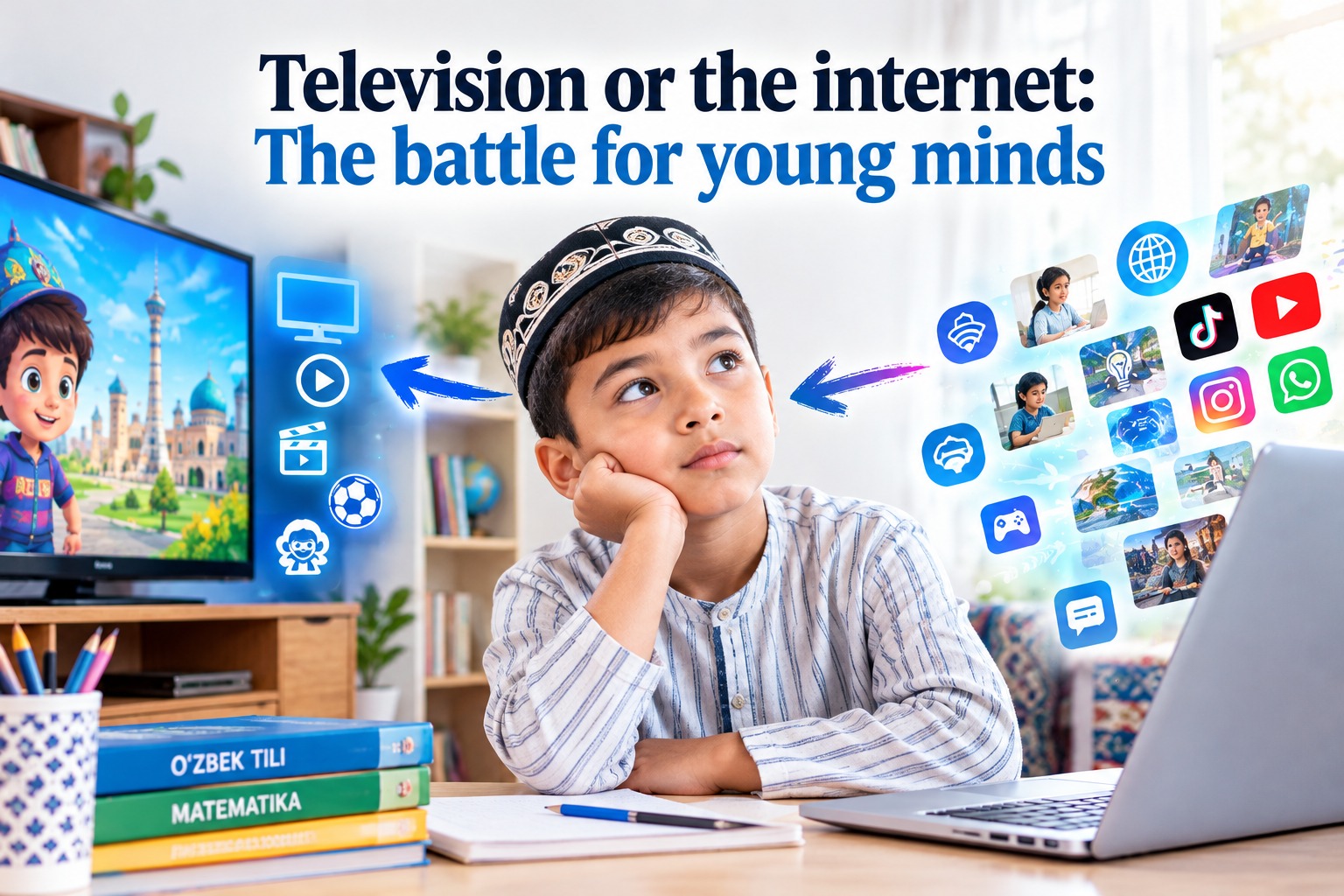
The debate over how best to shape the values and worldview of the next generation grows sharper as digital access expands
By Abdullayeva Sarvinoz Aktamjon
The question of how best to nurture the spiritual and moral development of young people has never been more contested. As the sources competing for the attention of the younger generation multiply, two broad schools of thought have emerged — those who trust traditional television to provide safe, curated content, and those who argue that the free flow of information, particularly through the internet, is the more powerful and relevant force in modern upbringing.
Those who favour traditional television make a case rooted in safety and reliability. Programmes broadcast on established television channels pass through editorial and specialist review before reaching audiences, providing a layer of assurance that the content aligns with accepted cultural values and moral norms. In Uzbekistan, for instance, channels dedicated to history, culture and national heritage give young viewers a structured introduction to their own identity and past, free from the disruptive algorithms that compete for attention on digital platforms. For advocates of this approach, the consistency and intentionality of curated broadcast content remains its greatest strength.
The second school of thought takes a different view, arguing that the open information environment of the internet is not a threat to young people but an opportunity. Exposure to a variety of perspectives, they contend, builds critical thinking and equips young people to analyse information independently rather than accepting a single, pre-approved narrative. Access to the world’s largest libraries and educational platforms is available within seconds through a global network — a resource no single broadcaster can replicate. Researchers in education have noted that adolescents who engage purposefully with open information sources tend to acquire foreign languages and contemporary knowledge significantly faster than those who rely exclusively on traditional media, with some studies suggesting the gap is substantial.
The distinction between the two positions is not simply about technology. It reflects deeper assumptions about how character is formed. One view holds that young people need to be guided and protected, their intellectual diet carefully managed by responsible adults and institutions. The other holds that genuine intellectual and moral development requires exposure to complexity, contradiction and choice — that a generation raised on pre-edited content will be ill-equipped for the demands of an interconnected world.
There is merit in both positions, and the tension between them is unlikely to be resolved by choosing one side entirely. Unfiltered access to the internet carries genuine risks. Misinformation, harmful content and addictive algorithms are not abstract concerns — they are documented features of the digital landscape that affect young users daily. At the same time, a media environment built entirely on restriction and curation cannot produce the adaptable, critically minded individuals that modern society requires.
The more productive framing may be the one offered by media literacy advocates: rather than asking whether young people should access free information, the question is whether they are being equipped to navigate it wisely. A generation that can evaluate sources, identify bias, distinguish credible information from manipulation and engage critically with what they encounter online is far better prepared for the challenges ahead than one that has simply been shielded from difficulty.
As the Uzbek educator Abdulla Avloni observed, education is a matter of life and salvation. In today’s information age, that salvation lies not in closing doors but in teaching young people how to walk through them with discernment, confidence and purpose.
Similar Posts by The Mt Kenya Times:
- Kenya’s dairy crisis: Why the milk is running dry
- Ebola in Kenya: Are we really ready?
- Silence and stress: How quiet can heal — and how it can harm
- Trans-Nzoia: Why Kenya’s breadbasket has no maize this season
- Atlético punish United with 2-0 Champions League win
About the Author