Drought has devastated the North Rift’s harvest, cutting national maize output in half and pushing farmers, dairy producers and consumers toward a deepening crisis
By Simon Juma
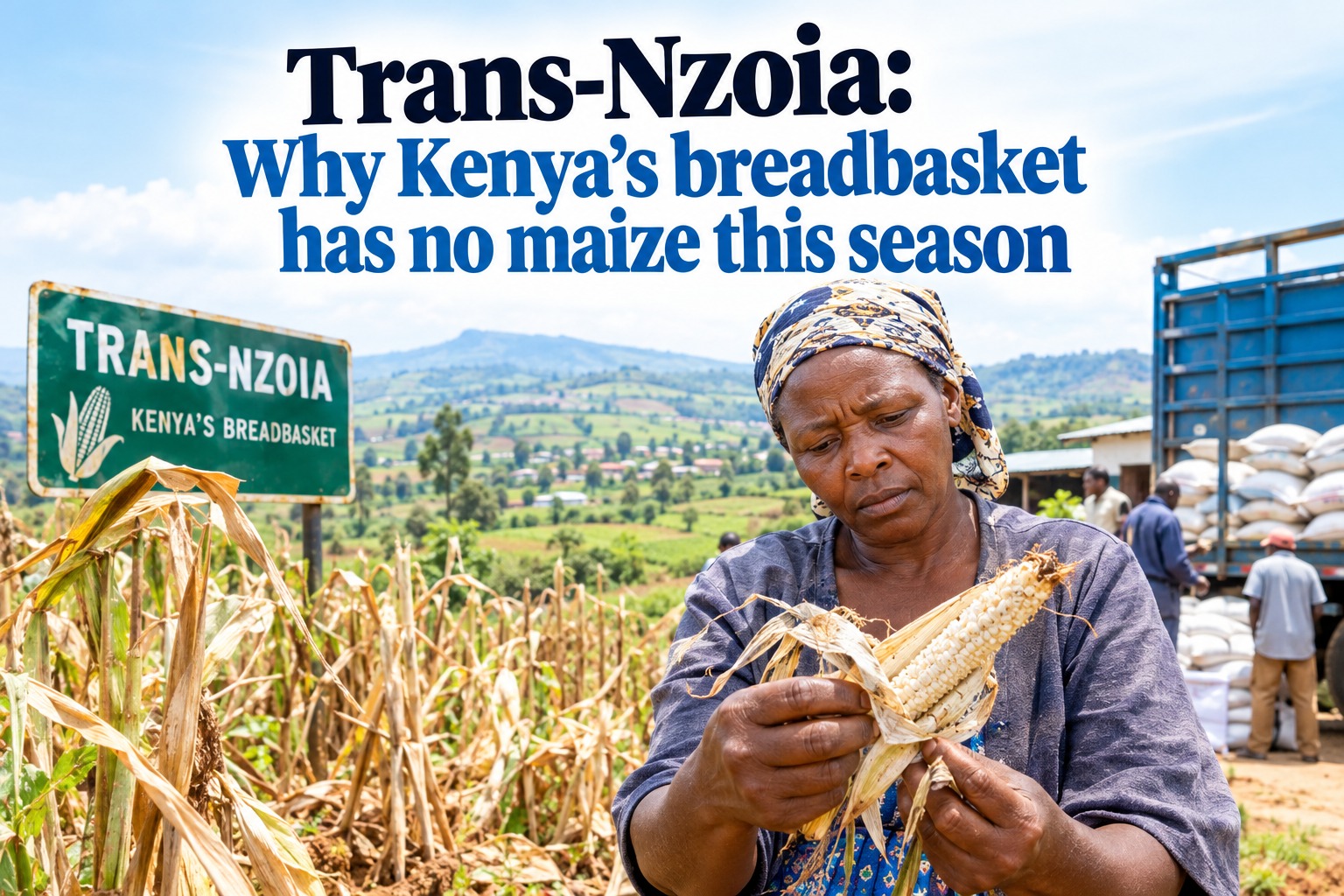
Trans-Nzoia is known as Kenya’s breadbasket — the county that feeds the nation. When Trans-Nzoia sneezes, Kenya catches a cold. This season, Trans-Nzoia is not sneezing. It is crying. There is no maize.
For the first time in many years, the endless green plantations stretching from Kitale to Endebess to Kwanza have turned brown, dry and empty. Farmers are counting losses, not bags.
According to the Trans-Nzoia County Department of Agriculture, more than 50,000 acres out of the 250,000 acres under maize have been destroyed by prolonged drought — 20 per cent of the county’s entire maize crop wiped out before maturity. The county normally produces over seven million bags annually, but this year production is projected to fall by more than 40 per cent.
The reason is straightforward. The March-to-May long rains, the lifeline of North Rift farmers, were inadequate and poorly distributed. Crops were stressed, withered and died in the field.
In a good year, a farmer in Bidii harvests between 300 and 350 bags from ten acres. This season, getting 150 bags would be considered a minor miracle. Farmers who would normally collect 300 bags from 15 acres now expect barely 80. Some have abandoned the harvest altogether because the maize will rot and bring aflatoxin contamination.
This is not a Trans-Nzoia problem alone. It is a national disaster. Close to half of the planted area across Uasin Gishu, Trans-Nzoia and Nakuru has been lost. Kenya’s national maize production forecast has crashed from 4.5 million metric tonnes to just 2.2 million metric tonnes — a 51 per cent drop that will be felt in every household in the country.
The consequences are already unfolding across three distinct groups. Farmers invested everything this season — subsidised fertiliser, certified seeds, ploughing costs and labour — only to watch their crops wither. Many borrowed to finance the planting and now face the coming months without the income to repay. The losses are not abstract; they are devastating and personal.
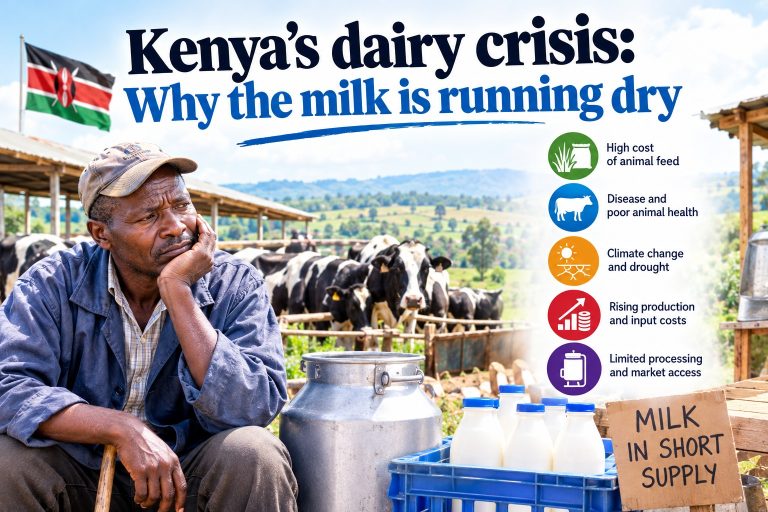
Dairy farmers face a separate but related crisis. In Trans-Nzoia, maize is not only food for people — it is feed for livestock. With the crop failing, fodder has disappeared. Daily milk output on affected farms has dropped from 700 litres to 460 litres, while the price of dairy meal has risen from KSh2,500 to KSh3,000 per bag, compressing margins that were already thin.
For the ordinary consumer, less maize means higher unga prices at a time when household budgets are already stretched. The government has announced plans to import up to 25 million 90-kilogramme bags to bridge the deficit — a measure that may stabilise short-term supply but one that has historically undermined local farmers by suppressing the prices they depend on to recover their costs.
Three interventions are urgently needed. The National Cereals and Produce Board must reopen its drying facilities to salvage what remains of the harvest. Investment in irrigation infrastructure and drought-resistant maize varieties must be accelerated to reduce the county’s exposure to future rainfall failure. And the NCPB must commit to purchasing maize at a fair price of KSh4,500 per 90-kilogramme bag to give farmers a fighting chance of recovering their losses.
Trans-Nzoia has fed Kenya for decades without complaint. This season, it is Trans-Nzoia that needs help. If the county is left to absorb this crisis alone, the hunger that follows will not stop at its borders.
Similar Posts by The Mt Kenya Times:
- Strike pause, brooms out: Laikipia students clean up local market
- Kenya’s dairy crisis: Why the milk is running dry
- Ebola in Kenya: Are we really ready?
- Silence and stress: How quiet can heal — and how it can harm
- Television or the internet: The battle for young minds
About the Author