Opposition cracks widen as Nyoro and Methu trade Ruto bribery claims
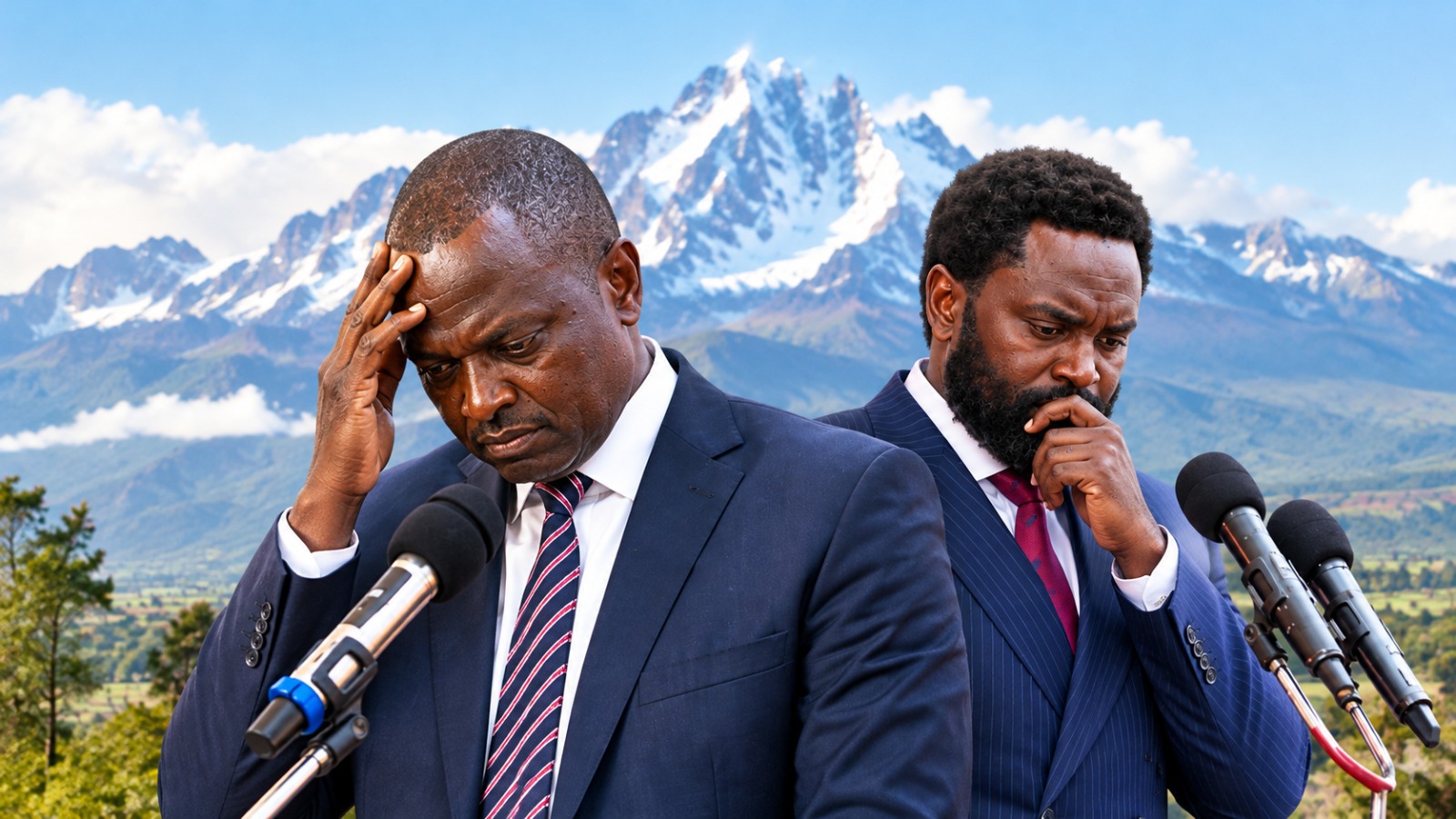
People's Party of Kenya leader Ndindi Nyoro and Democracy for the Citizens Party Secretary General John Methu.
A public brawl between two senior opposition figures over alleged state payments exposes the fragility of Kenya’s anti-government coalition with fourteen months to the election
By David Kimani
A damaging public confrontation between People’s Party of Kenya leader Ndindi Nyoro and Democracy for the Citizens Party Secretary General John Methu yesterday laid bare the deepening fractures within Kenya’s opposition, raising serious questions about whether the anti-government coalition can hold together long enough to mount a credible challenge in the August 2027 General Election.
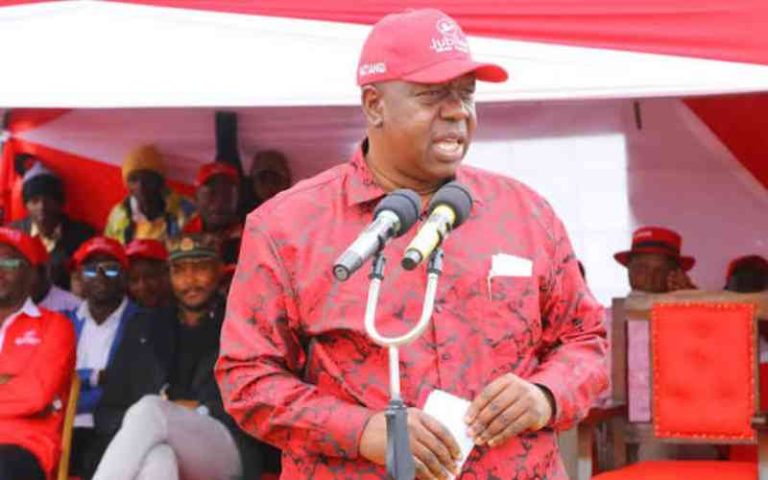
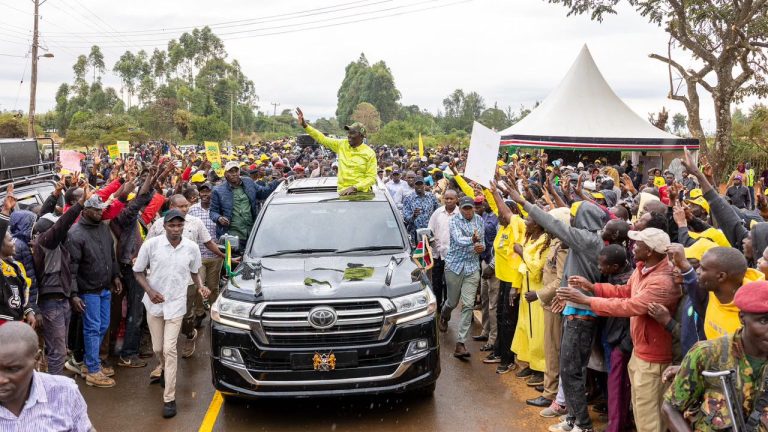
The dispute, which erupted in public view as Nyoro campaigned in Kajiado County alongside Jubilee Party leader Fred Matiang’i, centres on rival allegations of financial dealings with President William Ruto’s administration — accusations that, if true, would confirm what the opposition’s critics have long suspected: that the coalition assembled to unseat Ruto is being quietly dismantled from within before it has formally come together.
Methu fired the opening shot. Speaking on Citizen TV’s Sunday Live programme, the Nyandarua Senator claimed he had been approached by government operatives and offered KSh30 million to abstain during the impeachment proceedings against former Deputy President Rigathi Gachagua — and to establish a new political party designed to split the Mount Kenya vote ahead of 2027. He said he had consulted Nyoro, who advised against accepting the offer, only to watch Nyoro form his own party shortly afterwards.
“Ruto offered me KSh30 million to abstain from the impeachment process of Rigathi Gachagua,” Methu said. “Now it makes me wonder, because Ndindi Nyoro himself abstained. Maybe he had gotten the same offer. When we went to the Finance Bill he really opposed, and when the real thing came — the actual vote — he kept off.”
The implication was unmistakable: that Nyoro, far from being a committed opposition figure, is a state operative embedded within the coalition to weaken it from the inside.
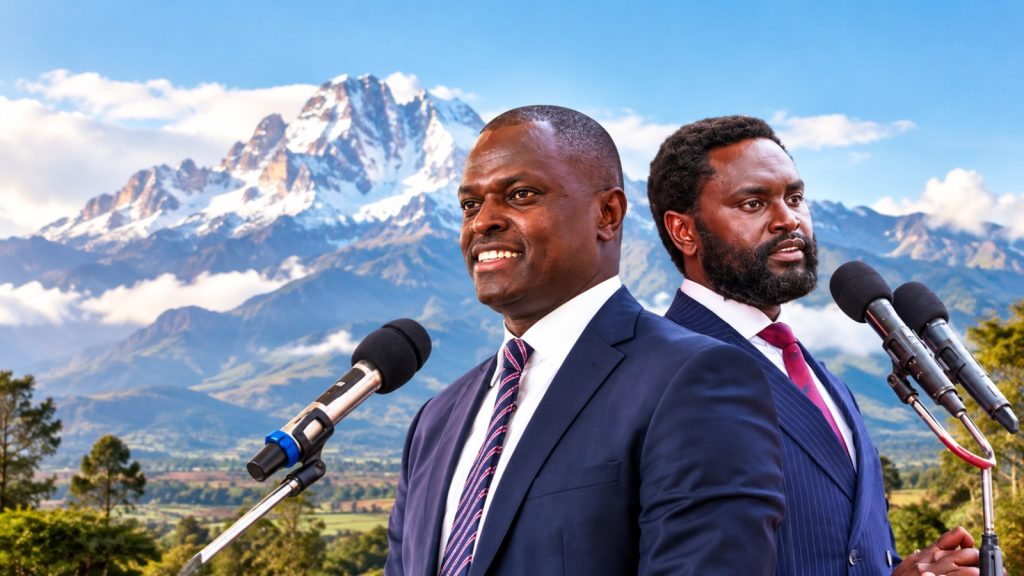
Nyoro’s response was equally direct and considerably more personal. Standing in Kajiado, he turned the allegations back on Methu with a series of specific counter-claims — that Methu had met Ruto, that his house was purchased for him by the President in 2024, and that money raised collectively for the Ol Kalou by-election had been misappropriated to buy a vehicle rather than support the campaign. He described Methu as a man lecturing the opposition on integrity while maintaining his own undisclosed arrangements with the government.
The exchange was conducted partly in Swahili — a signal that it was aimed as much at the grassroots political audience in Mount Kenya and beyond as at the media. Both men understand that in Kenyan politics, perception shapes reality long before facts are established. To be seen as the one exposing treachery is to claim the moral high ground, even when the accuser is simultaneously being accused.
What makes the confrontation particularly significant is its timing and its location in the political geography of 2027. Mount Kenya — the electoral heartland that delivered Ruto his 2022 victory in partnership with the Kenya Kwanza coalition — is now the most contested terrain in the country. Ruto won it comprehensively three years ago. His administration has since presided over economic conditions that have made that alliance deeply uncomfortable for many of its architects. The opposition’s central strategic objective is to peel that bloc away from the government and consolidate it behind a unified alternative. Any fragmentation of opposition leadership from within that region is, therefore, not merely a political embarrassment — it is a structural threat to the entire opposition project.
Matiang’i, who was present in Kajiado and who has emerged as one of the opposition’s most formidable organisational voices, attempted to contain the damage. “Whether you are in DCP, Wiper, DP, PLP or DAP-K, you are in our one family,” he said, appealing for restraint and focus. “Let us not spend too much of our time fighting. Let us speak to the people calmly, and in the end they will judge us.” It was the voice of a man who recognises that the opposition’s greatest vulnerability in 2027 will not come from Ruto’s political machine — it will come from its own internal contradictions.
Both Nyoro and Matiang’i also took aim at Ruto’s recent public commentary about former President Uhuru Kenyatta, signalling that the defence of Kenyatta’s legacy remains a point of opposition solidarity even as everything else fractures. “The President should do his work and stop the nonsense,” Matiang’i said. “That office he sits in is an office we respect.” The message was pointed: criticism of Ruto’s conduct in office is one of the few remaining adhesives holding the coalition together.
The deeper problem for the opposition is structural. Kenya’s political coalitions are historically transactional — assembled from parties with different regional bases, different ideological orientations and different calculations about what victory would mean for their leaders personally. The broad anti-government front forming around figures like Matiang’i, Kenyatta, Nyoro and Methu has never been tested by the disciplines of a formal coalition agreement, a shared manifesto or a jointly selected presidential candidate. It is, at this stage, less a coalition than a loose alignment of ambitions united primarily by opposition to the current administration.
That is a brittle foundation. And Ruto’s political strategists — who have demonstrated considerable skill in exploiting opposition divisions in previous cycles — will have watched yesterday’s events with satisfaction. If Nyoro and Methu are publicly trading allegations of state corruption and financial inducement fourteen months before the election, the question is not whether the opposition will face internal challenges. The question is whether it can survive them.
For ordinary Kenyans watching this unfold, the spectacle is a familiar and dispiriting one. A country grappling with the cost of living, rising unemployment and eroding public services deserves an opposition focused on articulating a credible governing alternative. What it is getting, at least this week, is a public row over who received money from whom — and when.
The 2027 election remains Kenya’s to shape. But the opposition’s window for building a genuinely unified front is narrowing, and it is the opposition, not the government, that is doing the narrowing.
Similar Posts by The Mt Kenya Times:
- Kalonzo takes Kenya’s economic case to London
- Court refuses to halt ruling on KSh204B Safaricom share sale
- Kenya’s budget watchdog flags record KSh209B in unplanned government spending
- Why helicopters crash more often than aeroplanes
- Matiang’i tells critics: Leave Uhuru to do his continental work
About the Author