How society treats people according to status a review of a Tale of Two Cities by Charles Dickens
Introduction
Charles Dickens was a British novelist and one of the most celebrated writers of the Victorian era. His early life exposed him to financial hardship: when his father was imprisoned for debt, Dickens had to work in a blacking (shoe-polish) factory at the age of twelve. He also spent time living with Elizabeth Roylance, who is often associated with the inspiration for Mrs. Pipchin in Dombey and Son. Dickens’s fiction frequently expresses sympathy for the poor and criticizes social injustice.
Historical Background and Central Ideas
A Tale of Two Cities is a historical novel set mainly in London and Paris before and during the French Revolution. It explores sacrifice, resurrection, love, revenge, and social injustice. Dickens was also influenced by his friend Wilkie Collins’s play The Frozen Deep, which features a man who gives his life to save his romantic rival. This idea of self-sacrifice is echoed in Sydney Carton’s final act.
The novel opens in 1775 with the famous contrast between the best and worst of times. Dickens places opposing conditions side by side to show the contradictions of the age: while some people enjoy privilege and comfort, others suffer from poverty, oppression, and insecurity. The opening establishes the novel’s concern with social inequality and political unrest.
Dr. Manette and the Idea of Resurrection
Jarvis Lorry travels to Dover to meet Lucie Manette and tells her that her father, Dr. Alexandre Manette, is alive. Dr. Manette has spent eighteen years imprisoned in the Bastille in Paris. The trauma of imprisonment has severely affected his mental health. When he is found, he has become withdrawn and is making shoes, repeatedly identifying himself by the prison designation “One Hundred and Five, North Tower.” Lucie’s care and affection gradually help him recover. His return to life gives the novel one of its central meanings of resurrection.
Charles Darnay and Sydney Carton
Charles Darnay is accused of passing secret information to the French, but he is acquitted in an English court. Sydney Carton, a brilliant but self-destructive lawyer who works with Mr. Stryver, resembles Darnay closely. Carton drinks heavily and believes that he has wasted his abilities. His life begins to take on new meaning after he falls in love with Lucie Manette. Although Lucie does not return his romantic feelings, Carton’s love becomes a source of moral renewal and eventually leads to his self-sacrifice.
Poverty and Class Conflict
Dickens presents the suffering of ordinary people in the Parisian neighbourhood of Saint Antoine. When a wine cask breaks outside the Defarges’ wine shop, poor people rush to drink the spilled wine. Someone writes the word “BLOOD” on a wall with the wine. This scene suggests both the people’s desperate poverty and the violence that will later engulf France.
The French aristocracy is represented by figures such as the Marquis St. Evrémonde, who treats ordinary people with contempt. When his carriage runs over and kills a child, he throws coins to the grieving father instead of showing compassion. This cruel response exposes the aristocracy’s indifference to human suffering and deepens public resentment. The Marquis is later murdered, while his nephew, Charles Darnay, rejects the family’s privilege and cruelty.
Madame Defarge, Revenge, and Revolution
Madame Defarge is a powerful figure of revolutionary anger and revenge. She knits the names of those marked for death into her work, symbolically recording the people whom the revolutionaries intend to punish. Her hatred of the Evrémonde family is rooted in the terrible crimes committed by Darnay’s father and uncle against her family. They abused a young woman, and the family’s suffering also included the death of her brother. Dr. Manette attempted to expose these crimes, but his knowledge led to his imprisonment.
Dickens shows that the society before the Revolution was violent on both sides of the English Channel. In France, people could face severe punishment for religious or political offences; in England, crimes such as theft could also lead to execution. These examples reveal the brutality of the legal systems of the time. Dickens does not present revolutionary violence as simple justice: he also shows how the desire for revenge can become cruel and destructive.
Darnay’s Trial and Carton’s Sacrifice
When Darnay returns to France to help Gabelle, he is arrested because of his family background. During his trial, Dr. Manette’s account of the Evrémonde family’s crimes is used against Darnay, and Darnay is sentenced to death. Madame Defarge also seeks to destroy Lucie and her family because of their connection to the doctor. Her attempt to confront Miss Pross ends in her own death after a struggle in which Madame Defarge’s gun goes off.
Carton enters the prison and arranges to take Darnay’s place. Because the two men look alike, Carton can exchange clothes with him and have him removed from the prison while Darnay is unconscious. Carton then goes to the guillotine in Darnay’s place. His final act transforms the life he once considered useless into one of courage and meaning. Through this sacrifice, Dickens presents the possibility of spiritual redemption.
Major Themes and Symbols
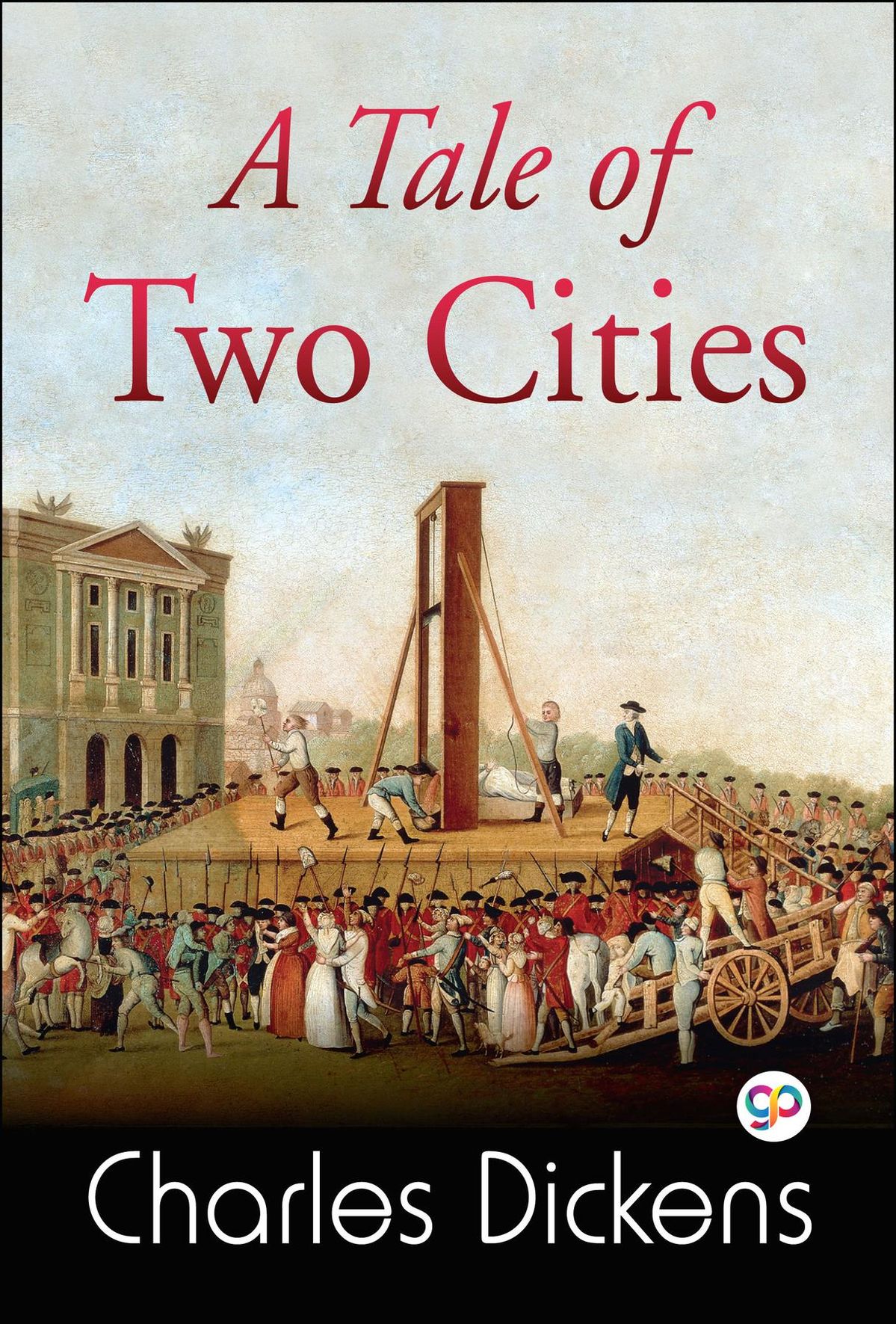
Resurrection is represented by Dr. Manette’s recovery and by Carton’s moral transformation. Sacrifice is most clearly expressed in Carton’s decision to die so that Darnay can live. Love and compassion appear through Lucie, whose care helps restore her father’s emotional life. The Bastille symbolizes political oppression and the suffering caused by arbitrary imprisonment, while the guillotine represents the Revolution’s violence and the cycle of revenge.
The episode involving Foulon, a hated official who is believed to have faked his death, further demonstrates the revolutionaries’ thirst for vengeance. When he is found, the crowd kills him. This episode shows how a population that has suffered oppression can itself become violent when revenge replaces justice.
Conclusion
A Tale of Two Cities remains a powerful literary work because it examines the relationship between social status, power, suffering, and justice. Before the French Revolution, aristocrats enjoy privilege while many ordinary people endure hunger and humiliation. Yet Dickens also warns that revolutionary anger can turn into indiscriminate cruelty. Through Lucie’s compassion and Sydney Carton’s selfless sacrifice, the novel suggests that love and moral courage can offer hope amid violence.
The novel also explores a form of love that does not demand possession. Carton accepts that Lucie will marry Darnay, but he still chooses to save Darnay’s life. His sacrifice gives him a sense of purpose and redemption. By bringing together social criticism, historical conflict, memorable characters, and the themes of resurrection and self-sacrifice, Dickens creates a moving account of human suffering and the possibility of moral renewal.
Submitted by: Laiba Zia, BS English, 4th Semester
Submitted to: Muhammad Adnan Gujjar
Lecturer, University of Chenab, Gujrat
Course: Victorian Novel
Similar Posts by The Mt Kenya Times:
- Eldoret hosts Kenya’s 63rd Mashujaa Day in historic North Rift celebration
- No matter how long the night, the day will come
- Why university students wear crocs and pyjamas
- Reading culture: Towards an enlightened generation
- Mashujaa Day 2026: Eldoret’s moment of national pride, the test of inclusion and the promises Kenya must now fulfil
About the Author