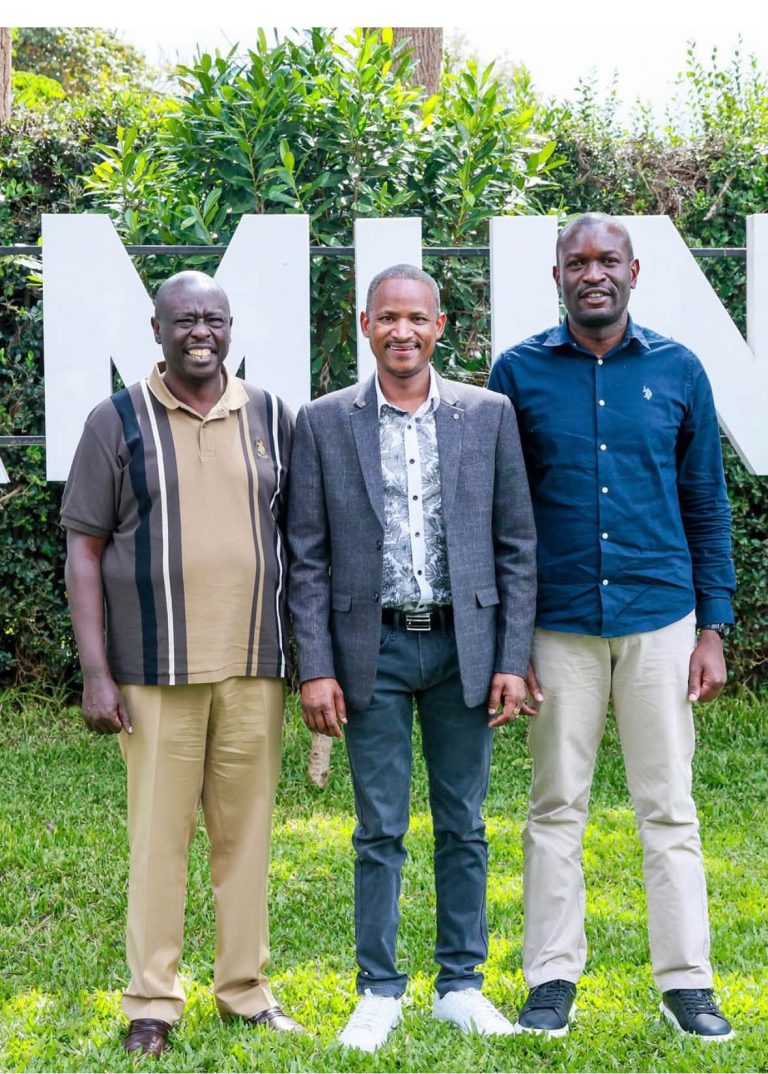
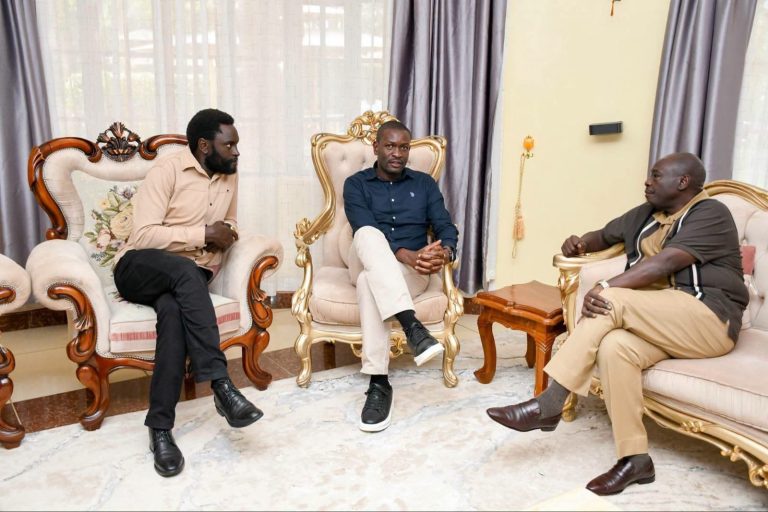
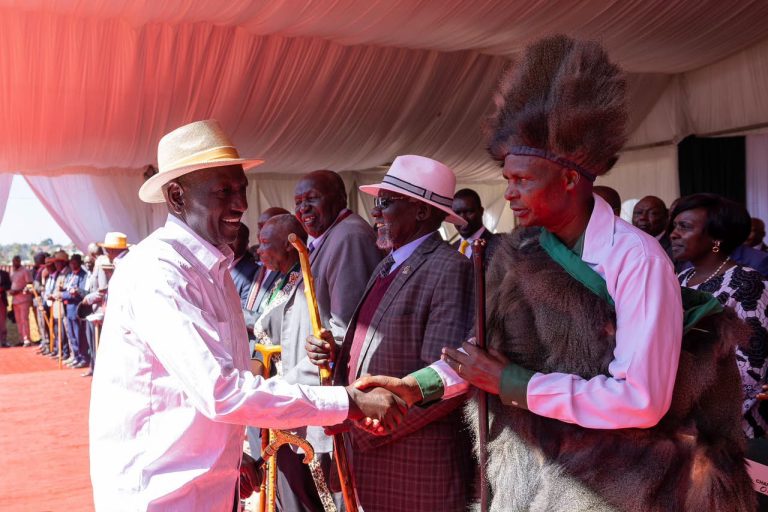
Nyoro breaks the table: Kenya’s 2027 race just got a third horse
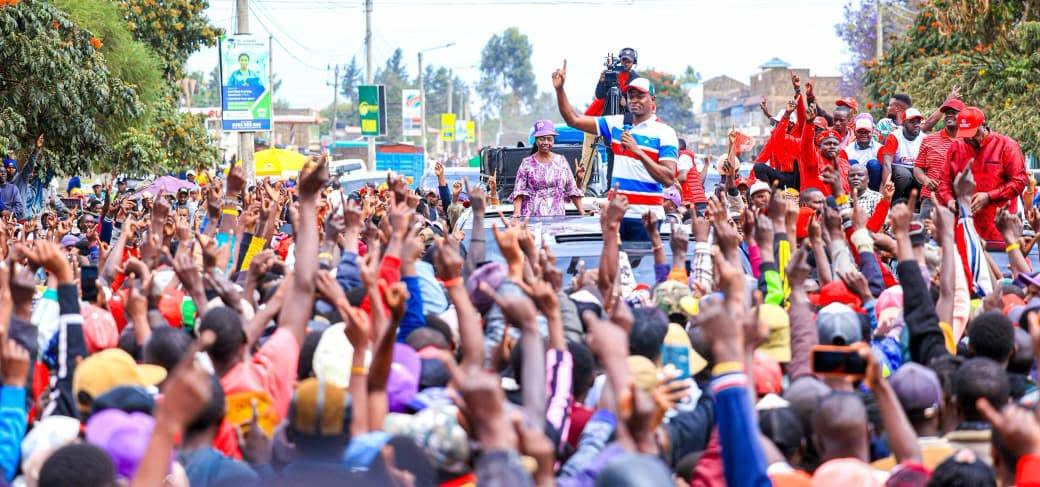
Ndindi Nyoro, Fred Matiang'i Martha Karua — the latest being a rally in Njoro, Nakuru County
With fourteen months to the August 2027 general election, a three-way contest is taking shape that could redraw the political map of Mount Kenya and determine who succeeds William Ruto
By David Kimani
Ndindi Nyoro, leader of the People’s Party of Kenya, has effectively signalled the emergence of a third political alliance through his sustained joint appearances with former Interior Cabinet Secretary Fred Matiang’i and People’s Liberation Party leader Martha Karua — the latest being a rally in Njoro, Nakuru County yesterday — a trajectory that observers interpret as a deliberate break from the opposition’s broader negotiating table ahead of the August 2027 general election.
The move had been telegraphed. Nyoro had warned publicly that if he was not accepted as a principal at the opposition’s negotiating table, he would break it. His actions now suggest he has done precisely that — positioning himself, Matiang’i and Karua as a distinct third force in what is rapidly crystallising into a tripartite race for State House.
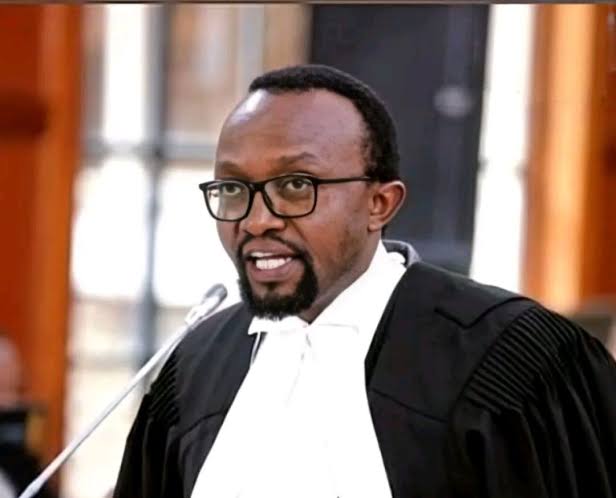
The clearest articulation of where Kenyan politics is heading came from lawyer Ndegwa Njiru, spokesman for the Wiper Patriotic Front. “From what I can see, and I readily admit I could be wrong, my crystal ball suggests that the forthcoming elections will crystallise into a three-axis contest,” Njiru wrote. “The Kalonzo–Rigathi–Sifuna axis; the Kindiki–Kasongo–Mudavadi axis; and the Martha–Matiang’i–Nyoro axis.”
If that reading proves accurate, Kenya is heading into its most fragmented presidential contest in years — one in which no single opposition bloc commands a decisive national coalition, and in which the Mount Kenya region, historically the country’s most consequential electoral battleground, will be the most fiercely contested prize of all.
Nyoro’s emerging alliance, however, faces immediate and serious questions about its electoral weight. Unlike the Kalonzo–Rigathi–Sifuna axis, which draws on Ukambani’s dense voter base, the Western Kenya networks of Edwin Sifuna and the residual political capital of former Deputy President Rigathi Gachagua’s Democracy for the Citizens Party, Nyoro’s grouping has not attracted a single sitting or former governor, senator or member of parliament of national standing. Karua, a respected constitutional lawyer and former justice minister, brings credibility and intellectual profile but has struggled to convert either into sustained electoral traction since her 2022 vice-presidential bid ended in defeat. Matiang’i’s Jubilee Party, once the dominant force in Mount Kenya politics, is a diminished vehicle whose grassroots infrastructure has been eroded by defections, disorganisation and the party’s complicated association with former President Uhuru Kenyatta’s political legacy.
In the language of political handicapping, as one analyst put it, the alliance is not arriving as a horse. It is arriving as a mule.
Nyoro’s own standing within the opposition has been dogged by persistent questions about his loyalties. He has faced repeated accusations of serving as a conduit for President William Ruto inside the opposition — accusations rooted in his perceived business associations with the President and what critics describe as a calculated reluctance to take positions on the defining political confrontations of the past two years. He was conspicuously absent during the impeachment proceedings against Gachagua and did not participate in the Finance Bill protests of 2024, a moment of national rupture that defined which politicians stood with the public and which did not. At the time, Nyoro chaired the National Assembly’s Finance and Budget Appropriations Committee — a position that made his silence during the Gen Z-led uprising all the more glaring to those watching closely from Mount Kenya.
His credibility deficit was further exposed during a public confrontation with John Methu, Secretary General of the Democracy for the Citizens Party. Methu accused Nyoro of being untrustworthy during a televised interview, a charge that landed with force given Methu’s own rapidly rising profile in the region. Nyoro responded at a rally in Kajiado and has sustained his attacks on Methu in subsequent public appearances. The masses, by most accounts, have not been persuaded.
Methu’s emergence is the most significant subplot in the Mount Kenya political story heading into 2027. When Gachagua’s impeachment galvanised the region and left a vacuum of credible leadership, voices within Mount Kenya urged Nyoro to step forward. He hesitated. Methu did not. At the Ol Kalou by-election, against a government-backed candidate supported by the full weight of the state — cash, development pledges, cabinet secretaries, principal secretaries and government administrators deployed in open defiance of electoral guidelines — Methu ran a campaign of striking discipline and courage. The result was a landslide: the DCP candidate won with approximately 85 per cent of the vote, delivering the party its first parliamentary seat and announcing Methu as a political force of genuine national consequence, despite documented incidents of police brutality against opposition supporters during the campaign.
The contrast between the two men could not be sharper. One is accused of sitting out the fights that mattered most. The other fought one of the most lopsided battles of the electoral cycle and won decisively.
As August 2027 approaches, the question for Nyoro’s alliance is not merely whether it can attract more principals to its banner. It is whether it can construct a credible narrative that persuades Mount Kenya voters — and voters beyond the region — that it represents a genuine political alternative rather than a spoiler operation that ultimately serves the incumbent. Karua and Matiang’i bring different strengths to the table, but both carry electoral histories that will be scrutinised intensely in a campaign environment where authenticity and track record will matter more than ever.
Kenya’s three-axis race is taking shape. Whether Nyoro’s alliance grows into a competitive force, or fragments before polling day under the weight of its own contradictions, will depend on decisions made in the months immediately ahead — and on whether the table he chose to break can be rebuilt into something more formidable than what it replaced.
Similar Posts by The Mt Kenya Times:
- Learners, teachers graduate from thrive for good organic farming training
- Future Is Female Mentorship Program opens applications for 6th edition, to unveil top 25 at Africa Fintech Summit in Kigali
- Best chances of mental wellness: Strategies for sustained well-being
- When police attack a journalist, democracy pays the price
- Kenya’s exam season: The weight students carry alone
About the Author