Anglican church tells Kenyans: The country is getting worse and silence is complicity
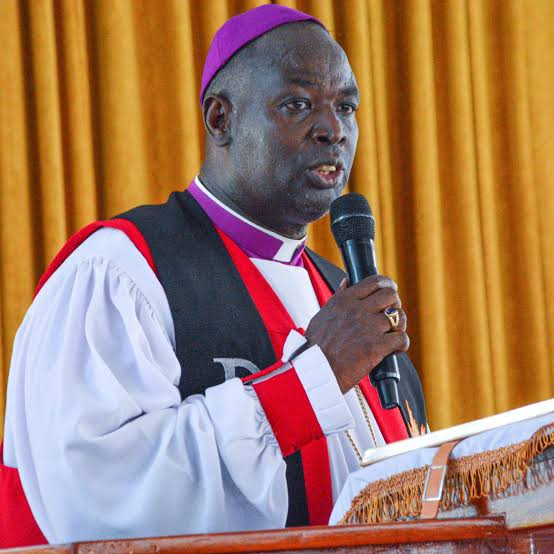
Anglican Church of Kenya Archbishop Jackson Ole Sapit
Archbishop Ole Sapit delivers the most direct institutional indictment of President Ruto’s administration yet, calling out a broken health system, a punishing tax burden and a parliament threatening church schools — with elections less than a year away
By Grace Wanja
Anglican Church of Kenya Archbishop Jackson Ole Sapit yesterday declared that Kenya is getting worse under President William Ruto’s administration, calling on citizens to hold the government accountable and warning that silence in the face of national suffering amounts to complicity.
Ole Sapit delivered the assessment at the Anglican Church Standing Committee of the Provincial Synod, one of the most authoritative gatherings in the church’s governance calendar. His address was among the most pointed institutional critiques of the Ruto administration to date — and it came at a moment of acute political sensitivity, with Kenya less than a year from a general election that is already reshaping alliances, testing institutions and generating the kind of public anger that fills church pews.
“Silence in the face of suffering is not neutrality; it is complicity,” Ole Sapit said. “Yet planting trees while uprooting justice is hypocrisy.” The language was deliberate and the target unmistakable. “It is time we accept that our country is getting worse. Millions of Kenyans continue to suffer under the weight of unemployment, rising costs, failing businesses and an increasing tax burden,” he added.
The archbishop’s remarks land against a backdrop of documented economic hardship. Kenya’s inflation has squeezed household budgets with particular severity in food and transport costs. Unemployment, especially among the youth, remains structurally high. Small businesses that survived the turbulence of the Covid-19 years have found the post-pandemic environment no easier, battered by tax measures that critics say have taken more from ordinary citizens than the state has delivered in return. Ole Sapit gave voice to a frustration felt well beyond Anglican congregations. “Kenyans wonder why they are paying taxes that impoverish citizens, but there is little to see, with public resources squandered,” he said.
On healthcare, the archbishop was unsparing. The Social Health Authority — the government’s flagship health financing reform, intended to replace the National Hospital Insurance Fund and expand coverage to millions — has been mired in implementation problems since its launch. Doctors, hospitals and patients have all reported dysfunction: claims delayed or rejected, facilities struggling to reconcile the new system with clinical realities, and the poor, whom SHA was designed most to help, finding the promised access no easier to obtain than before. “Persistent challenges within the health sector have exposed systemic weaknesses and inflicted great suffering upon citizens,” Ole Sapit said. “SHA is not working. The health sector is in shambles.”
That assessment echoes what the archbishop told Kenyans at the start of 2026, when he warned at a New Year service at All Saints Cathedral in Nairobi that SHA risked becoming “just a story” rather than a functioning healthcare system for every Kenyan. Ten months later, he has moved from caution to condemnation. The trajectory of that language tells its own story.
On education, Ole Sapit turned to a specific legislative threat that has alarmed faith-based institutions across denominations. A Bill currently before Parliament would, in its present form, give the state greater control over schools currently managed by religious organisations. The Anglican Church, like the Catholic Church and other denominations, operates hundreds of schools across Kenya — institutions that in many rural and underserved areas represent the only viable educational infrastructure available. “There is a Bill in Parliament that wants to take over religious-managed schools,” Ole Sapit said. “We condemn that move and call on MPs to put the Bill aside.”
The church’s intervention on that question is not merely institutional self-interest. Faith-based schools in Kenya have historically provided quality education at lower cost than many public alternatives, and their management structures — accountable to both congregations and educational standards — have often insulated them from the patronage pressures that affect public institutions. Transferring that management to state oversight raises legitimate questions about what would change, and for whom.
What gives Ole Sapit’s words additional weight is their consistency and their timing. This is not the first time the archbishop has stepped into the political arena in recent months. In March this year, he banned politicians from delivering speeches inside Anglican churches, directing that offerings by political figures would no longer be publicly announced — a measure aimed at preventing the church from becoming a campaign platform. “Let them work for Kenyans,” he said at the time. “We want to see roads being constructed, medicine in hospitals and the agenda which they promised us working.” In July, speaking in Busia County, he urged all leaders to adopt responsible language as the election season intensified, warning that reckless political rhetoric could threaten national peace. In September, at the centenary of St Luke’s Cathedral in Kitale, he called on citizens to judge their leaders by vision, policy and commitment to the common good rather than by ethnic loyalty.
The pattern is clear. Ole Sapit has positioned the Anglican Church not as a partisan actor but as a moral referee — one increasingly willing to call the score as it sees it. That role carries particular significance in a country where church leaders command genuine public authority and where the 2027 election is drawing in institutional voices that might in quieter times have remained on the margins of political discourse.
Kenya’s election season is now effectively underway. The opposition People’s United Opposition, anchored by former Deputy President Rigathi Gachagua, Wiper leader Kalonzo Musyoka and former Interior Cabinet Secretary Fred Matiangi, is building a platform around economic grievances. President Ruto’s Kenya Kwanza administration has pushed back, pointing to infrastructure projects, the bottom-up economic agenda and the macroeconomic stabilisation it credits itself with achieving. That debate will intensify through the months ahead.
Into that debate, Ole Sapit has now inserted the institutional voice of one of Kenya’s largest and most respected denominations. His message is not that the church is backing any candidate or coalition. It is something more fundamental: that the government has failed to deliver on its basic obligations to citizens, that public resources are being wasted while people suffer, and that the church will not pretend otherwise.
“Let us hold the government accountable,” he said. “This is evil and unacceptable.”
When an archbishop uses that language from a synod podium less than a year before a general election, politicians of every stripe would do well to listen carefully. Kenyan voters, many of them sitting in those same pews every Sunday, already have.
Similar Posts by The Mt Kenya Times:
- Kingdom Bank charts new path for MSME growth through chamber partnership
- Mt Kenya Times ePAPER September 25, 2026
- Babu Owino’s party predates Linda Mwananchi, clarification shows
- Sifuna set for UDP presidential unveiling as Western Kenya bids to field its own candidate
- Uganda neyoha? We only fix what kills the famous
About the Author