Breaking frontiers: The engineer building infrastructure and tearing down barriers
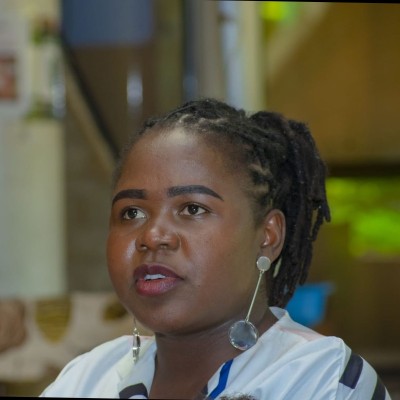
Phostine Wekesa

From the Kisumu oil jetty to global humanitarian projects, Phostine Wekesa is rewriting what leadership in engineering looks like
By David Nyaga
In the high-stakes world of global infrastructure, technical expertise is merely the entry ticket. Real leadership is forged at the intersection of complex problem-solving and the ability to hold your ground in unfamiliar, often hostile environments. Eng. Phostine Wekesa, a Senior Engineer and Member of the Institution of Civil Engineers (MICE), knows this better than most. Her journey from local field operations to managing multimillion-dollar international projects is not just a personal success story — it is a blueprint for what the future of engineering on this continent can look like.
Like many engineers, Wekesa’s character was shaped not in a lecture theatre but in the field. An early assignment at the Kisumu Oil Jetty — involving intricate long-pipeline installations and offshore bridge construction — was her first real test. Away from the safety net of heavy supervision, she was required to make independent technical decisions under intense pressure. When contractors disputed her design interpretations, she did not flinch. She went back to the drawings and the standards, and she held the line. “I learned that professional authority is not given,” she reflects. “It is earned through judgment.”
That foundational toughness would prove indispensable as her career went global. Working with the United Nations Office for Project Services (UNOPS) across Asia, the Pacific, and Africa, she operated in fragile, post-conflict, and disaster-affected settings where data is scarce, access is difficult, and the margin for error is essentially zero. It was in these environments that she developed what she calls disciplined adaptability — the ability to uphold rigorous engineering standards while remaining flexible enough to respond to conditions that no manual fully anticipates. It was also in these environments that she pursued international accreditation through the Institution of Civil Engineers, a credential she likens to a driving licence: a formal recognition of competence that also quietly, powerfully, builds confidence.
Perhaps nothing illustrates her philosophy more concretely than her leadership of a $100 million water infrastructure programme spanning multiple municipalities in a post-disaster setting. The terrain was difficult, the sites were scattered across vast distances, and the logistical challenges were relentless. She delivered it anyway — through meticulous coordination of multidisciplinary teams and an uncompromising commitment to quality. “Witnessing communities gain access to clean water close to their homes was the ultimate professional reward,” she says. For Wekesa, infrastructure is never just concrete and steel. It is dignity, delivered.
Her thinking on standards is equally nuanced. She respects international frameworks — the Eurocodes and their equivalents — but she does not treat them as gospel. Africa’s climates, materials, and construction realities are distinct, and she argues forcefully that the continent needs greater regional involvement in developing localised standards rather than simply importing codes written for other contexts. It is a position that reflects both her technical depth and her understanding that engineering, at its best, is always in conversation with the community it serves.
Off the job site, Wekesa channels her energy into the Madam Engineer Initiative, a platform she leads that is dedicated to mentorship, capacity building, and empowerment for female engineers. Through outreach and peer mentorship programmes, the initiative brings hands-on engineering exposure directly to girls in high schools, nurturing the pipeline of talent that the industry so urgently needs. In her own teams — which span engineers, environmental specialists, and quantity surveyors — she leads with inclusion, shared ownership, and cultural sensitivity, qualities she regards not as soft skills but as core professional competencies.
Her story, remarkable as it is, should not remain an exception. It must become the norm. The future of global infrastructure demands leaders who understand both technical complexity and the nuanced needs of communities — and that means building an industry where women are not merely tolerated but actively recruited, mentored, sponsored, and elevated. The Institution of Engineers of Kenya, its allied partners, and the broader engineering fraternity must move beyond symbolic gestures. Authentic mentorship, structured leadership pathways, and the deliberate dismantling of financial and institutional barriers are not aspirational extras. They are professional obligations.
The infrastructure of tomorrow will not build itself. Neither will the generation of engineers we need to build it.
Eng. Phostine Wekesa is a Senior Engineer and Member of the Institution of Civil Engineers (MICE), with extensive experience in humanitarian infrastructure and international development across Africa, Asia, and the Pacific.
Similar Posts by The Mt Kenya Times:
- Mt Kenya Times ePAPER October 26, 2026
- Sakaja challenges Kamukunji police over Eastleigh suspect bail
- Muturi demands binding livestreaming rules for 2027 polls to prevent repeat of 2022 chaos
- NTSA calls for road safety to be declared a national disaster after 24 die in Mtito Andei crash
- Ruku turns on Waiguru over deputy president ambitions: ‘That seat is not being contested for’
About the Author