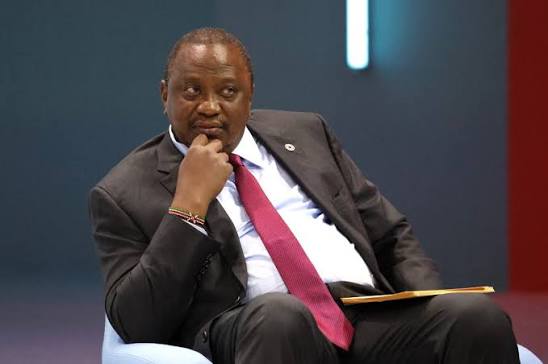
Former President Uhuru Kenyatta
Did Raila win in 2022? Ruto and Uhuru reopen an old debate
Four years after a settled election, a former president’s claim puts Kenya’s democratic institutions back under public scrutiny
By Collins Kibet
Did Raila Odinga really win the 2022 presidential election? That is the question former President Uhuru Kenyatta has put back on the national table, four years after Kenya’s electoral and judicial institutions appeared to have delivered a final, binding answer. The timing is striking. The implications are considerable. And for a country already navigating the complex political terrain ahead of a general election, the reopening of this particular wound deserves careful, honest examination.
On 22 September, Uhuru told a Jubilee Party meeting in Nairobi that he remained convinced the late Odinga had received the votes necessary to win the August 2022 presidential contest. He said he and his political allies had done everything possible to support Odinga’s presidential bid and that his personal belief about the outcome had not changed in the four years since polling day. The remarks were not a casual aside. They were delivered at a formal party gathering, before an audience of political associates, and they have since reverberated across Kenya’s political establishment.
But what do the official records say? The Independent Electoral and Boundaries Commission declared William Ruto the winner of the 9 August 2022 presidential election with 7,176,141 votes, representing 50.49 per cent of valid votes cast, against Odinga’s 6,942,930 votes, or 48.85 per cent. The margin was 233,211 votes. The result was challenged before the Supreme Court, which unanimously dismissed the presidential election petitions and upheld Ruto’s victory. Those are the facts on the public record. Uhuru’s remarks, however sincerely held, do not alter either finding.
If the Supreme Court settled the legal dispute, why is the political debate returning now? That is the central question this controversy raises. Uhuru’s remarks represent a political claim about what he believes happened in 2022, not a legal challenge to what institutions determined. They do not change the official election result or the Supreme Court’s determination. Yet they have reopened a conversation with significant political implications, particularly because Uhuru was the sitting president when the election took place, commanded enormous institutional authority at the time, and had actively and publicly supported Odinga’s presidential campaign against his own deputy.
Could Uhuru’s intervention therefore be about more than revisiting the past? The timing strongly suggests so. Kenya is moving steadily toward the 2027 General Election, with political alliances already being renegotiated, parties being reorganised and new coalitions taking shape. The political landscape of 2022 looks markedly different from the one now emerging. The former president’s remarks have drawn reactions from different political camps. ODM figures have called for further clarification on his claim. Other politicians have used the statement to reposition themselves in the evolving pre-election debate. It would be politically naive to read Uhuru’s remarks purely as a retrospective observation with no bearing on the present.
But perhaps another question deserves equal attention: why should Kenyans still care about the 2022 election? For millions of citizens, elections are not simply contests between political personalities or vehicles for elite ambition. They determine who controls the national government and shape decisions affecting taxation, employment, education, healthcare, infrastructure and the broader economy. When former national leaders reopen an old electoral dispute, it inevitably raises questions about public confidence in democratic institutions — the very institutions that Kenyans are expected to trust when they return to the polls in 2027. If those institutions can be reliably questioned by the very leaders who operated within them, the implications for civic trust are serious.
Yet should a political disagreement expressed four years later be treated as equivalent to an unresolved legal dispute? That distinction matters considerably and must not be blurred. The 2022 election was contested through mechanisms provided by the Constitution. Presidential election petitions were presented before the Supreme Court, legal arguments were heard over several days, evidence was examined and the court reached a unanimous decision. The IEBC’s official record identifies Ruto as the winner. That does not prevent individuals from holding different political opinions about what happened or why. Uhuru is entitled to his interpretation of the election, and other political actors are equally entitled to challenge that interpretation. However, competing political narratives must not be confused with, or presented as, a change in the official constitutional outcome. One is an opinion; the other is a determination made under law.
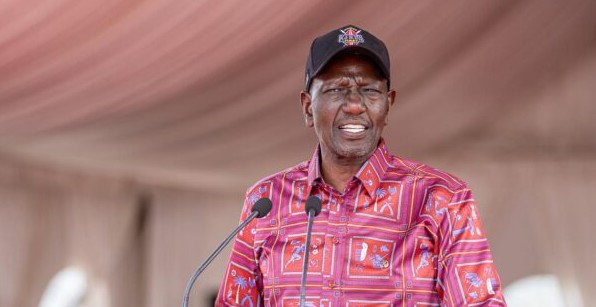
What exactly is Ruto saying in response? Yesterday, Ruto addressed a church service in Mwatate, Taita Taveta County, where he urged political leaders to be responsible and mindful of the influence their public statements carry on ordinary citizens. His remarks were widely interpreted as a direct response to the renewed debate following Uhuru’s comments at the Jubilee meeting, although Ruto did not name Uhuru directly in the remarks reported by Kenyan media. The presidential restraint was deliberate and noted. Why did Ruto choose not to relitigate the election numbers publicly? Could his measured response be a calculated attempt to shift the discussion away from the 2022 result and toward the broader accountability of political leaders to the public they serve? Or could his restraint itself deepen the political confrontation between himself and his former political patron by leaving Uhuru’s claim unanswered and, in some eyes, unchallenged?
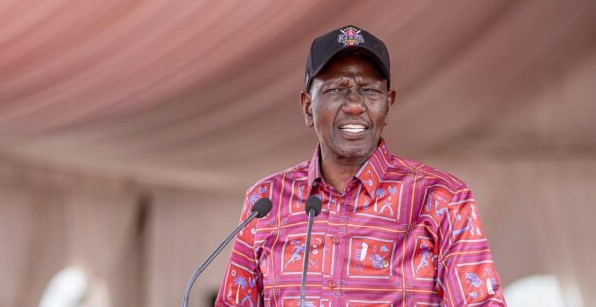
The relationship between Ruto and Uhuru makes the exchange between the two men particularly significant and historically layered. For nearly a decade, they were close political partners whose alliance defined Kenyan politics. Ruto served as Uhuru’s deputy president from 2013 until 2022, a period spanning two full terms and two successive election victories. They campaigned together in both the 2013 and 2017 elections and governed jointly under the Jubilee administration through some of Kenya’s most consequential policy moments. Their relationship, however, deteriorated sharply and publicly during Uhuru’s second term, most visibly after Uhuru extended a political handshake to Odinga in March 2018 — an act that fundamentally altered the geometry of Kenyan politics and signalled the beginning of the end of the Ruto-Uhuru partnership.
By 2022, the partnership had effectively collapsed. Uhuru supported Odinga openly and campaigned against his own deputy. Ruto, meanwhile, presented himself as the candidate of a new political movement — the Kenya Kwanza coalition — that defined itself against the political establishment both men had once built and led together. The 2022 election consequently became not only a presidential contest but a dramatic, public and deeply personal separation between a president and the man who had served beside him for nine years. The bitterness of that separation has not fully healed. Sunday’s exchange suggests it may never fully do so.
Could today’s disagreement therefore be another chapter in that long, unfinished political history between the two men? Almost certainly. There is also the separate but related question of Odinga’s legacy. The late opposition leader spent decades pursuing Kenya’s presidency with remarkable persistence. He came agonisingly close to victory several times across four presidential campaigns. His supporters consistently maintained that he had been denied victory through electoral manipulation in previous contests, most painfully in 2007, while his opponents rejected those claims. His death has now altered the political context in which his electoral record is discussed, mourned and remembered. The debate about 2022 is, among other things, a debate about how history will ultimately judge a man who gave much of his political life to the pursuit of the presidency.
Whether Uhuru’s statement is a genuine attempt to defend that legacy, or whether it serves an entirely different political purpose as Kenya approaches 2027, is a question only Uhuru can fully answer. What is clear is that the statement has landed in a highly charged political environment and will not simply fade from the conversation.
What can be firmly established is that Uhuru has publicly stated his belief that Odinga won the 2022 election. What can equally and objectively be established is that the official result declared Ruto the winner and that the Supreme Court unanimously upheld that outcome. Those represent two entirely distinct categories of information: one is a political assertion made by a private citizen, however influential; the other is the official constitutional determination made by independent institutions. The renewed debate therefore raises an uncomfortable but necessary question about Kenya’s political culture: why do electoral disputes sometimes remain alive long after institutions have delivered their verdict? Is it because political parties and their supporters never fully internalise or accept defeat? Is it because citizens retain genuine, unresolved questions about electoral processes and their integrity? Or is it because politicians discover that historical election controversies remain politically useful when preparing for the next contest?
Whatever the explanation in this particular case, the responsibility of political leaders remains considerable and non-negotiable. Kenya has experienced periods when disagreements over elections produced deep, violent and lasting national divisions. The wounds of 2007 and 2008 took years to address and left permanent marks on the country’s political psyche. That history makes responsible political communication not merely advisable but essential. Leaders command enormous public platforms. Statements from former and serving presidents shape, in real and measurable ways, how citizens understand, remember and relate to political events. Should political leaders therefore be expected to provide evidence when making serious claims about past elections? Should they be expected to distinguish clearly and consistently between what they personally believe and what official constitutional processes have formally determined? And should political parties devote more energy to explaining their plans for the future than to reopening unresolved battles over previous elections?
These questions are especially urgent as 2027 draws closer. For young Kenyans navigating unemployment, rising living costs, a heavy tax burden and limited economic opportunity, the most pressing question is unlikely to be who won an election four years ago. It is what political leaders actually intend to do about the challenges the country faces today and tomorrow. Will the next election produce better employment prospects for graduates entering a difficult labour market? Will the economy generate greater opportunities for young people currently locked out of formal work? Will public institutions earn greater trust through demonstrable accountability and transparency? Will political leaders compete on concrete policy platforms rather than personal loyalty networks? And will voters be offered genuine, meaningful choices about Kenya’s direction rather than recycled political personalities?
Still, the controversy cannot simply be dismissed or waved away as political noise. If a former president publicly asserts that another candidate won an election, Kenyans are fully entitled to ask what information informs and sustains that belief. If the claim is publicly challenged, the public deserves a factual, evidence-based discussion rather than competing political rhetoric. That is precisely why this renewed debate, uncomfortable as it is, presents a genuine opportunity for a deeper national conversation about elections, institutional credibility and political responsibility. Can Kenya strengthen public confidence in its electoral institutions before 2027? Can political leaders disagree vigorously without systematically undermining constitutional processes? Can former leaders speak freely and honestly about their experiences while carefully distinguishing personal assessments from official institutional findings? And can citizens establish and maintain a culture of demanding evidence whenever extraordinary claims enter the public arena?
The 2022 election has been determined through the constitutional process. Yet politically, its shadow refuses to lift entirely. Uhuru has reopened the conversation with his assertion that Odinga won, while Ruto has responded by calling for responsibility and care in political communication. Political parties across the spectrum have entered the debate, and Kenyans are once again discussing an election held four years ago. But perhaps the most important question is not simply whether Odinga really won in 2022. Perhaps the bigger and more consequential question is what Kenya must honestly learn from 2022 before it enters its next electoral contest.
If the country is to move forward with confidence, political disagreements must be tested rigorously against evidence, institutions must be respected by the very leaders who created and benefited from them, and voters must remain firmly at the centre of the democratic process. The debate over 2022 may well continue for some time yet. But Kenya’s future cannot remain permanently anchored to the unresolved arguments of its past.
Similar Posts by The Mt Kenya Times:
- The 2010 Constitution must evolve beyond winner takes all
- Dolly Parton, Múgithi and the soundtrack of Kikuyu homes
- The study of speech culture at the societal level
- Kenya political weather — The winds are changing
- Mbappé returns to Madrid for tests after knee tendon injury
About the Author